Al-Sa'b ibn Mu'adh Fortress: The Food Store, and a Name People Confuse
Short answer
The fort of al-Sa'b ibn Mu'adh stood in the al-Natat region of Khaybar and the sources record it as holding the richest food stores in the oasis. It fell after Na'im and al-Qamus. Al-Sa'b ibn Mu'adh was a chief of Khaybar, not the Ansari Companion Sa'd ibn Mu'adh. Visiting is not a rite of Hajj or Umrah.
Key takeaways
- ✓The fort stood in the al-Natat region of Khaybar and held the richest food stores in the oasis.
- ✓It fell after Na'im and al-Qamus, and the order the forts fell in has a logic to it rather than being a list.
- ✓Al-Sa'b ibn Mu'adh was a chief of Khaybar. Sa'd ibn Mu'adh was the Ansari Companion and leader of the Aws in Madinah.
- ✓The two names look almost identical in English and are on opposite sides. They get run together, and it is worth being careful.
- ✓A fort with walls is only as strong as what is inside it. Take the food stores and the question changes from whether the walls hold to how long they can eat.
- ✓The sources record that the besieging Muslims were themselves short of supplies, so taking this fort fed the army and starved the network at once.
- ✓We could not verify a marked or accessible site for this fort today. Treat the fort names as background, not a checklist.
Quick facts
- Location
- The al-Natat region of the Khaybar oasis
- What it held
- The richest food stores in Khaybar
- Order of fall
- After Na'im and al-Qamus
- Named after
- Al-Sa'b ibn Mu'adh, a chief of Khaybar
- Not to be confused with
- Sa'd ibn Mu'adh, the Ansari Companion
- A marked site today
- Not verified by us
- Part of Umrah or Hajj
- No
- Prescribed prayer or reward
- None
- Evidence level
- B. Recorded in the seerah; ground identification unverified
The fort of al-Sa'b ibn Mu'adh stood in the al-Natat region of Khaybar. The sources record it as holding the richest food stores in the oasis, and it fell after Na'im and al-Qamus.
Before anything else, a name that trips people up.
Not Sa'd ibn Mu'adh
Al-Sa'b ibn Mu'adh was a chief of Khaybar. The fort carries his name because it was his.
Sa'd ibn Mu'adh, may Allah be pleased with him, was the leader of the Aws in Madinah, the Companion who proposed the shelter at Badr and who answered for the Ansar on the road, and who died of the wound he took at the Trench.
The names look almost identical in English. They are two different people on opposite sides. We have seen the two run together more than once, and it is worth being careful about.
The seven forts
Khaybar was not a castle. It was an oasis defended by a set of strongholds, and the classical sources name seven: Na'im, al-Qamus, al-Katibah, al-Natat, al-Shiqq, al-Watih and al-Sulalim.
The oasis was organised into three regions, probably separated by natural barriers of desert, lava and marsh: al-Natat, al-Shiqq and al-Katibah.
The sources describe underground passages linking strongholds, used to move supplies between them during a siege. That is why the campaign was a sequence of operations rather than a single assault.
Why a food store decided things
This is the practical heart of a siege and it is rarely explained.
A fort with walls is only as strong as what is inside it. Take the stronghold holding the richest food supplies, and every other fort in the network has a new problem: not whether their walls will hold, but how many weeks they can eat.
The sources record that the besieging Muslims were themselves short of supplies at Khaybar. Taking al-Sa'b ibn Mu'adh solved two things at once: it fed the army and it starved the network.
That is why the order in which the forts fell is not a list of names. It is a sequence with a logic to it.
The site today
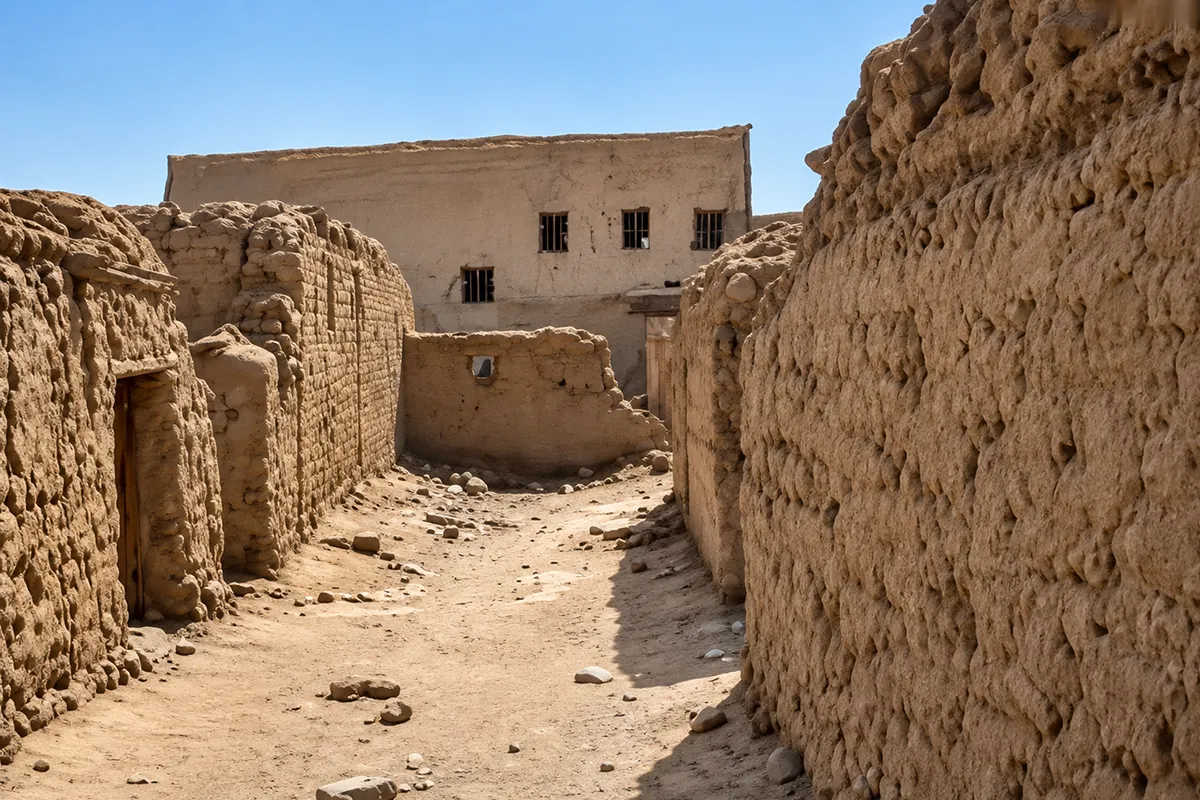
We could not verify a marked, signed or accessible site presented specifically as the fort of al-Sa'b ibn Mu'adh.
As with the other named strongholds, the oasis and the campaign are well documented while the identification of individual walls on the ground is a matter for archaeologists. The main fortress area at Khaybar is fenced off as unsafe and under study.
The evidence, plainly
- The fort in the al-Natat region, holding the richest food stores, falling after Na'im and al-Qamus: recorded in the seerah literature.
- The distinction between al-Sa'b ibn Mu'adh of Khaybar and Sa'd ibn Mu'adh the Ansari Companion: clear in the sources and worth stating plainly.
- A specific identified or accessible fort site today: not verified by us.
- Any prescribed prayer or reward for visiting: none.
Is visiting part of Hajj or Umrah?
No. Not a rite of either.
Honest verdict
This is a page about a name and a supply problem, and both are worth understanding before you visit Khaybar.
What you cannot do is stand in front of a wall and be confident it is this one. Go to Khaybar for the oasis, the lava fields and the layers of history, and treat the individual fort names as background rather than as a checklist.
Related
- The Khaybar guide — the oasis and the practicalities.
- Na'im Fort — the first to fall.
- The Battle of Khaybar — the campaign in detail.
- Sa'd ibn Mu'adh — the Companion, not the Khaybar chief.
Getting there, honestly
We do not run a scheduled service to Khaybar and there is no published Wadana Go fare for it.
What works is a private car arranged in advance from Madinah, treated as a long day out, or a hire car if you are comfortable driving in Saudi Arabia. Our guide on driving yourself versus a private driver sets out the trade-offs, and renting a car in Saudi Arabia covers the paperwork. Ask before you travel, not on the morning.
Our Beyond the Haramayn guide covers Khaybar alongside Badr, Taif, Tabuk and al-Hijr.
Accuracy note
The fort of al-Sa'b ibn Mu'adh in the al-Natat region of Khaybar, its holding of the richest food supplies in the oasis, and its fall after Na'im and al-Qamus, are recorded in the seerah literature. Al-Sa'b ibn Mu'adh was a chief of Khaybar and is a different person entirely from Sa'd ibn Mu'adh, the Ansari Companion and leader of the Aws in Madinah; the two names are close in English transliteration and are sometimes confused. The seven forts of Khaybar named in the classical sources are Na'im, al-Qamus, al-Katibah, al-Natat, al-Shiqq, al-Watih and al-Sulalim, with the oasis organised into the three regions of al-Natat, al-Shiqq and al-Katibah and underground passages linking strongholds. That the besieging Muslims were themselves short of supplies at Khaybar is recorded in the seerah literature. We could not verify a marked, signed or accessible site presented specifically as this fort today; the main fortress area at Khaybar is fenced off as unsafe and under archaeological study. Visiting is not a rite of Hajj or Umrah and no prescribed prayer or reward attaches to it. We do not run a scheduled service to Khaybar and have not quoted a fare. Content verified August 2026. Correction? Tell us.
Frequently asked questions
Planning a Saudi trip?
Pre-book a private car, find a stay, or ask us anything on WhatsApp.
Last updated: 4 September 2026·Sources reviewed by the Wadana Go editorial team.