Ashab al-Ukhdud: The Story With No Place and No Date
Short answer
Surah al-Buruj 85:4-9 describes the companions of the ditch: a trench of fire, and people sitting beside it watching what was done to believers whose only offence was faith in Allah. Sahih Muslim 3005 gives the long account of the boy, the magician and the monk. Neither names a place, a date or a king.
Key takeaways
- ✓Surah al-Buruj describes a ditch of fire and people sitting beside it, watching what was done to the believers.
- ✓The reason given is that they resented them only because they believed in Allah. There was no other grievance.
- ✓Sahih Muslim 3005 gives the long narration of Suhayb: the king, the ageing magician, the boy, and the monk he met on the way.
- ✓The boy tells the king how to kill him, and when it is done the watching crowd declares belief in the Lord of the boy.
- ✓The trenches follow. The boy dies, the believers are killed, and nobody is rescued.
- ✓The Qur'an's verdict is that the wrongdoers are cursed and the believers have the gardens. Victory here is not survival.
- ✓Neither the passage nor the hadith names a place, a date, a century or a king. Najran and Dhu Nuwas come from history and tafsir.
Quick facts
- The passage
- Surah al-Buruj 85:4-9
- Ukhdud means
- A long deep trench or ditch
- The narration
- Sahih Muslim 3005, from Suhayb
- The reason given
- They believed in Allah. Nothing else
- The detail that stings
- They sat beside it and watched
- Place named in the Qur'an
- None
- Date named
- None
- King named
- None, in either text
- Evidence level
- A for the passage and the narration
Surah al-Buruj tells a story without telling you where, when, or who.
That is deliberate, and it is worth noticing before anyone hands you a location.
What the Qur'an says
The passage is short and it is level A (85:4–9).
Ashab al-Ukhdud, the companions of the ditch, are cursed. The ditch is of fire, full of fuel. And then the detail that makes the passage what it is: they were sitting beside it, watching what they were doing to the believers.
Not doing it in a rage. Sitting, and watching.
Then the reason: they resented them only because they believed in Allah, the Almighty, the Praiseworthy. There was no other grievance. That was the whole offence.
The story in Sahih Muslim
The long narration of Suhayb in Sahih Muslim 3005 gives an account that scholars connect to this passage. Level A for the narration itself.
In summary: a king had a court magician who, growing old, asked for a boy to train. On the way to his lessons the boy passed a monk, listened, and was convinced by what he heard.
The boy came to believe in Allah, and remarkable things happened at his hands, including healing.
What follows is a series of attempts by the king to kill him, each of which fails. The boy finally tells the king how it can be done: gather the people, put him on a stake, and say in the name of Allah, the Lord of the boy.
The king does it. The boy dies. And the people who watched all say they believe in the Lord of the boy.
The king, having achieved the exact opposite of what he wanted, orders trenches dug and fires lit, and those who will not turn back are thrown in.
What the story is actually about
Read the ending again, because it is not what people expect from a story in scripture.
The boy dies. The believers are killed. Nobody is rescued.
And the Qur'an's verdict is that the wrongdoers are cursed and the believers have the gardens. The victory in the passage is not survival.
That is an unusual and demanding thing to be told, and it is the reason this passage has meant so much to people under pressure for fourteen centuries.
The narration also includes a moment worth sitting with: a woman with a child at the trench, hesitating, and the child speaking to steady her. It is recorded in the same account.
What is not in the text
Here is the discipline part.
The Qur'anic passage does not name:
- A place.
- A date or a century.
- A king.
- A religion, either of the persecutors or of the believers beyond faith in Allah.
The hadith names a king, a magician and a monk, but no place and no date either.
Everything you will hear about Najran, Dhu Nuwas and the year 523 comes from historical reports and tafsir, not from the Qur'anic passage or the narration. That case is a real one and we set it out on a separate page. It is worth taking seriously. It is not level A.
Why the distinction is worth keeping
Because the passage works without a location, and people flatten it by supplying one.
If it is one incident in one year in one town, it is history. Left as the Qur'an gives it, it is a description of something that keeps happening: people burned for belief, and other people sitting comfortably nearby, watching.
The Qur'an chose not to fix it in time. That choice is part of the message.
And the site?
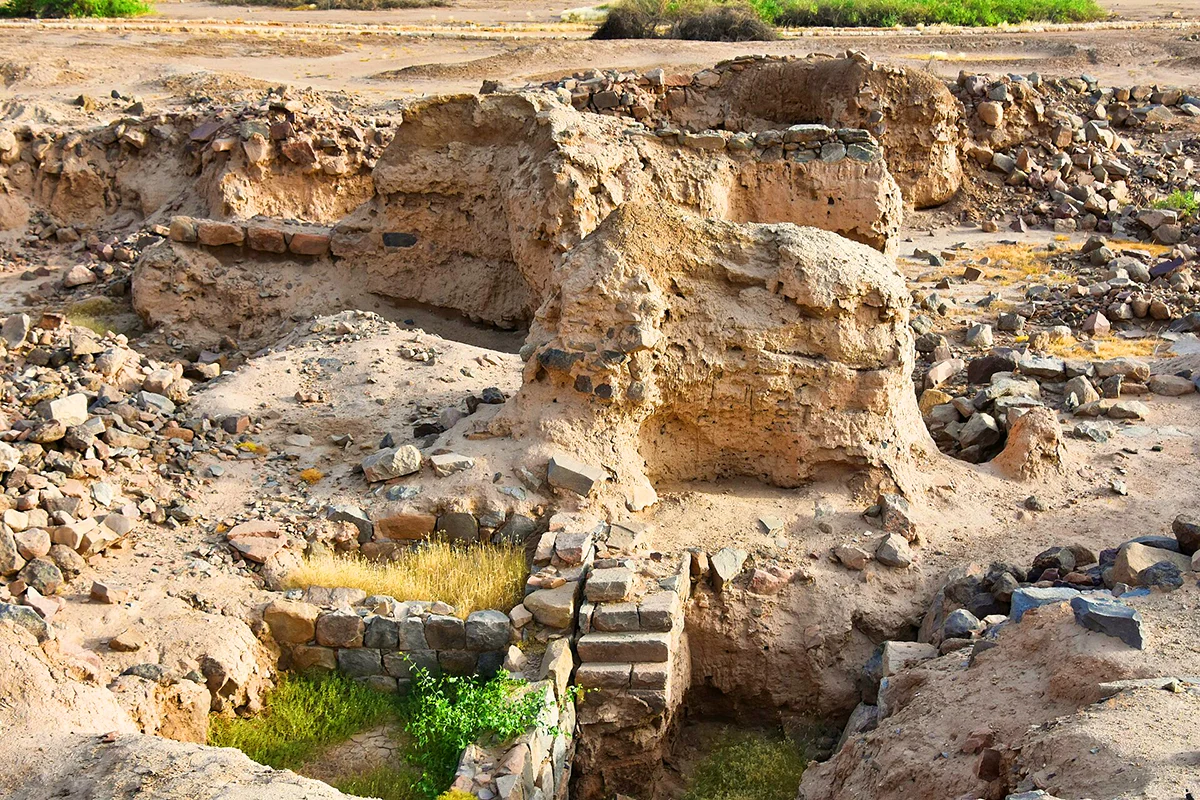
There is an archaeological site in Najran called al-Ukhdud, and it is well worth visiting. What it is, what has been found there, and how strong the connection actually is, are covered here.
Is visiting part of Hajj or Umrah?
No. Not a rite of either.
Getting there, honestly
We do not run a scheduled service to Najran and there is no published Wadana Go fare for it. Najran is about 1,300 km south of Riyadh and has its own airport, so flying and hiring a car is the sensible option. See driving yourself versus a private driver and renting a car in Saudi Arabia. Our Beyond the Haramayn guide covers ziyarat outside Makkah and Madinah.
Related reading
- Najran and Ashab al-Ukhdud — the historical and archaeological case.
- Thamud and Salih — the same discipline, another people.
- Madyan and Shu'ayb — and where the joins are.
- Beyond the Haramayn — the wider ziyarat picture.
Accuracy note
The Qur'anic passage on Ashab al-Ukhdud is at Surah al-Buruj 85:4–9 and is level A: the companions of the ditch cursed, the ditch of fire full of fuel, their sitting beside it as witnesses to what they were doing to the believers, and their resenting them only for believing in Allah, the Almighty, the Praiseworthy. The long narration of Suhayb in Sahih Muslim 3005, in the Book of Zuhd, gives the account of the king, the ageing court magician, the boy sent to learn, the monk he met on the way, the boy's belief and the healing at his hands, the failed attempts to kill him, the boy's own instruction that the king gather the people and say in the name of Allah the Lord of the boy, the people's declaration of belief afterwards, the digging of the trenches and the burning of those who would not turn back, and the woman with her child at the trench; that narration is level A and we have summarised rather than reproduced a translation. Neither the Qur'anic passage nor the narration names a place, a date, a century or a named king, and we have listed those gaps explicitly. The identification with Najran, the Himyarite king Dhu Nuwas and the events of the 520s comes from historical reports and tafsir rather than from the Qur'anic passage or the hadith; that case is set out on our Najran page and should not be treated as level A. Our observation that leaving the account unfixed in time is itself part of its force is our own reading and is offered as such. Visiting is not a rite of Hajj or Umrah. We do not run a scheduled service to Najran and have not quoted a fare. Content verified August 2026. Correction? Tell us.
Frequently asked questions
Planning a Saudi trip?
Pre-book a private car, find a stay, or ask us anything on WhatsApp.
Last updated: 28 August 2026·Sources reviewed by the Wadana Go editorial team.