Najran and Ashab al-Ukhdud: How Good Is the Case?
Short answer
A massacre of the Christians of Najran in the 520s is well documented, by Christian sources and by three South Arabian inscriptions of 523 CE cut by the campaign itself. Linking that event to the Qur'anic Ashab al-Ukhdud comes from historical reports and tafsir, not from the text, and is level C.
Key takeaways
- ✓The Qur'an names no place, date or king. Najran, Dhu Nuwas and the 520s come from historical reports and tafsir.
- ✓A massacre of Christians at Najran in the 520s is independently documented in Christian sources written close to the events.
- ✓Three South Arabian inscriptions of July to September 523 CE, Ry 507, Ja 1028 and Ry 508, record the campaign.
- ✓They give different figures and they are the winning side's own inscriptions, so read the numbers with care.
- ✓The event is about as well established as sixth-century Arabian history gets. The identification with the Qur'anic passage is not.
- ✓Nothing establishes that a visible trench at al-Ukhdud is the ditch of the passage. The site's name came from the story.
- ✓In year 9 a Christian delegation from Najran came to Madinah, declined the mubahala of Al Imran 3:61, and made a treaty.
Quick facts
- Where
- Najran Province, about 1,300 km south of Riyadh
- Ancient name
- Raqmat, or Rijmat
- The city wall
- About 235 by 220 metres
- Earliest inscriptions
- Njrn, from the early first millennium BC
- The fort
- First century BC
- The inscriptions on the massacre
- Ry 507, Ja 1028, Ry 508. July to September 523 CE
- Excavations began
- 1981
- Nearby
- Hima Cultural Area, UNESCO listed July 2021
- Evidence level
- Event well established. Identification level C
The Qur'an tells the story of Ashab al-Ukhdud without naming a place, a date or a king. The historical tradition supplies all three: Najran, the 520s, and a Himyarite king called Dhu Nuwas.
So how good is that case? Better than most people assume, and it still is not level A. Here is the whole thing laid out.
Where the identification comes from
From the historical reports and the tafsir literature, not from the Qur'anic passage or the hadith.
Ibn Ishaq gives an account in which the people of Najran took up the religion of the boy after his killing, and Dhu Nuwas then came against them with an army, gave them the choice of his religion or death, had a ditch dug, and burned some while killing others with the sword.
That is the shape of the traditional identification, and later commentators including Ibn Kathir follow it.
What non-Muslim sources say
This is where it gets genuinely strong, and it is why we said the case is better than people assume.
A massacre of the Christians of Najran in the 520s is independently documented, and not from a distance.
- The Letter on the Himyarite Martyrs by Simeon of Beth Arsham, written in direct response to the killings.
- The Book of the Himyarites.
- The Martyrdom of Arethas, named for the leader of the Christians of Najran, al-Harith.
The episode caused an international reaction in the Christian world at the time. It has been described as the most widely reported event of the early sixth century.
These are hostile-to-Dhu-Nuwas sources, so read them as such. But they are close in time, and they are not derived from Muslim accounts, since they predate Islam by roughly a century.
The inscriptions
Now the part that carries the most weight, because it is neither Muslim nor Christian.
Three South Arabian inscriptions, dated to July to September 523 CE, record the campaign. They are catalogued as Ry 507, Ja 1028 and Ry 508.
They give figures:
| Inscription | Killed | Captured |
|---|---|---|
| Ry 507 | 14,000 | 11,000 |
| Ja 1028 | 12,000 | 11,000 |
| Ry 508 | 13,000 | 9,500 |
Two things to say about those numbers, and both matter.
First, they are the winning side's own inscriptions. Campaign inscriptions exist to praise, and figures in them are not neutral reporting. They disagree with each other, which tells you something about how they were produced.
Second, and this is the point: they exist at all. A campaign against Najran in 523, on that scale, is recorded by the people who carried it out, in stone, within months.
The event is about as well established as sixth-century Arabian history gets.
The site
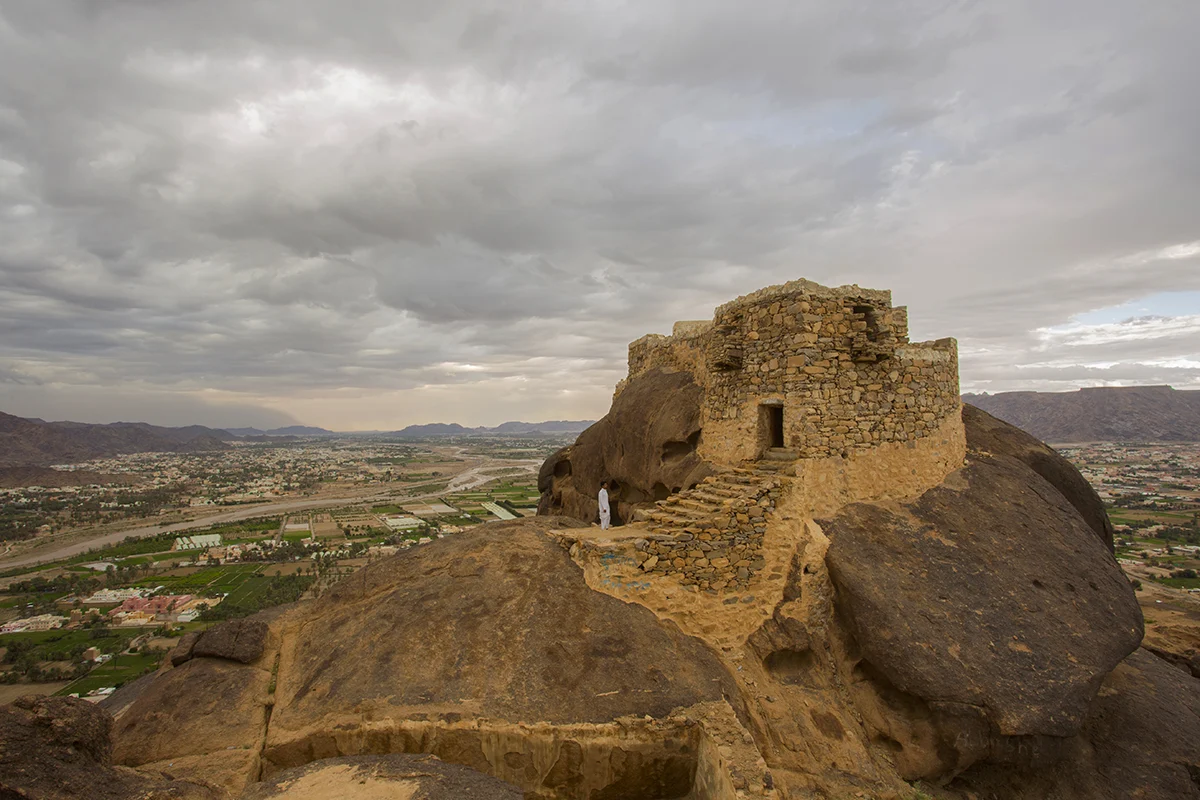
Al-Ukhdud is an archaeological city in Najran Province, roughly 1,300 kilometres south of Riyadh. Its ancient name is given as Raqmat or Rijmat.
What is there:
- A central walled city, the wall measuring about 235 by 220 metres.
- Building foundations of hewn stone blocks, with mud brick above.
- A fort dated to the first century BC.
- Tombs, artefacts, inscriptions and rock drawings.
Inscriptions from the site carry the name Njrn, old Najran, dating to the beginning of the first millennium BC. The town is recorded as going back at least to 500 BC, with occupation continuing through the Umayyad and Abbasid periods.
It was a trading centre on the incense route from around the middle of the first century BC.
Excavations began in 1981. From 2013 the site came under the national heritage programme, and in 2016 French researchers worked there with Saudi authorities. Access is free to the public.
And Hima, nearby
Worth knowing even though it is a separate thing.
The Hima Cultural Area, near Najran, was inscribed as a UNESCO World Heritage Site in July 2021. It holds an enormous body of rock art spanning around 7,000 years, and inscriptions in Musnad, South Arabian, Thamudic, Greek and Arabic.
Five scripts on one set of rocks. If you have come this far, go.
The verdict, in three parts
Keep these separate and you will not go wrong.
| Claim | How strong |
|---|---|
| The Qur'anic account of Ashab al-Ukhdud | Level A. Al-Buruj 85:4–9, and Sahih Muslim 3005 |
| A massacre of Christians at Najran in 523 | Well established. Christian sources and contemporary South Arabian inscriptions |
| That the Qur'anic passage refers to that event | Level C. Historical reports and tafsir, not the text |
| That the visible trenches at al-Ukhdud are those trenches | Not established. We found no evidence for it |
The last row is the one guides get wrong. A site named al-Ukhdud, the ditch, does not prove that a feature you can stand beside is the ditch of the passage. The name came from the story, not the other way round.
The other Najran connection
This one is often forgotten and it is level A in part.
In the ninth year after the Hijrah, a Christian delegation from Najran came to Madinah and debated with the Prophet ﷺ about Isa.
Al Imran 3:61 was revealed, calling them to a mutual invocation, the mubahala. The verse itself is level A.
The delegation declined and asked instead for terms. A treaty was made under which they kept their religion and their churches in return for defined obligations including a payment.
Sit with that for a moment alongside the rest of this page. The Christians of Najran are the community burned in the trenches in the tradition, and a century later a delegation from that same town negotiates a written treaty in Madinah and keeps its faith.
If you go
- Najran is remote. About 1,300 km south of Riyadh. Fly.
- Give it two days and include Hima and the old mud-brick architecture of the region, which is unlike anywhere else in Saudi Arabia.
- Do not take anything from the site.
- Ask what a claim rests on. The table above is your checklist.
- Confirm access before planning a day around it.
Is visiting part of Hajj or Umrah?
No. Not a rite of either, and nothing prescribed attaches to the site.
Getting there, honestly
We do not run a scheduled service to Najran and there is no published Wadana Go fare for it. Najran has its own airport, so flying and hiring a car is the sensible option. See driving yourself versus a private driver and renting a car in Saudi Arabia. Our Beyond the Haramayn guide covers ziyarat outside Makkah and Madinah.
Related reading
- Ashab al-Ukhdud — the Qur'anic account and the hadith.
- Al-Hijr and Hegra — the same care applied to another site.
- Madyan and Shu'ayb — and where the joins are.
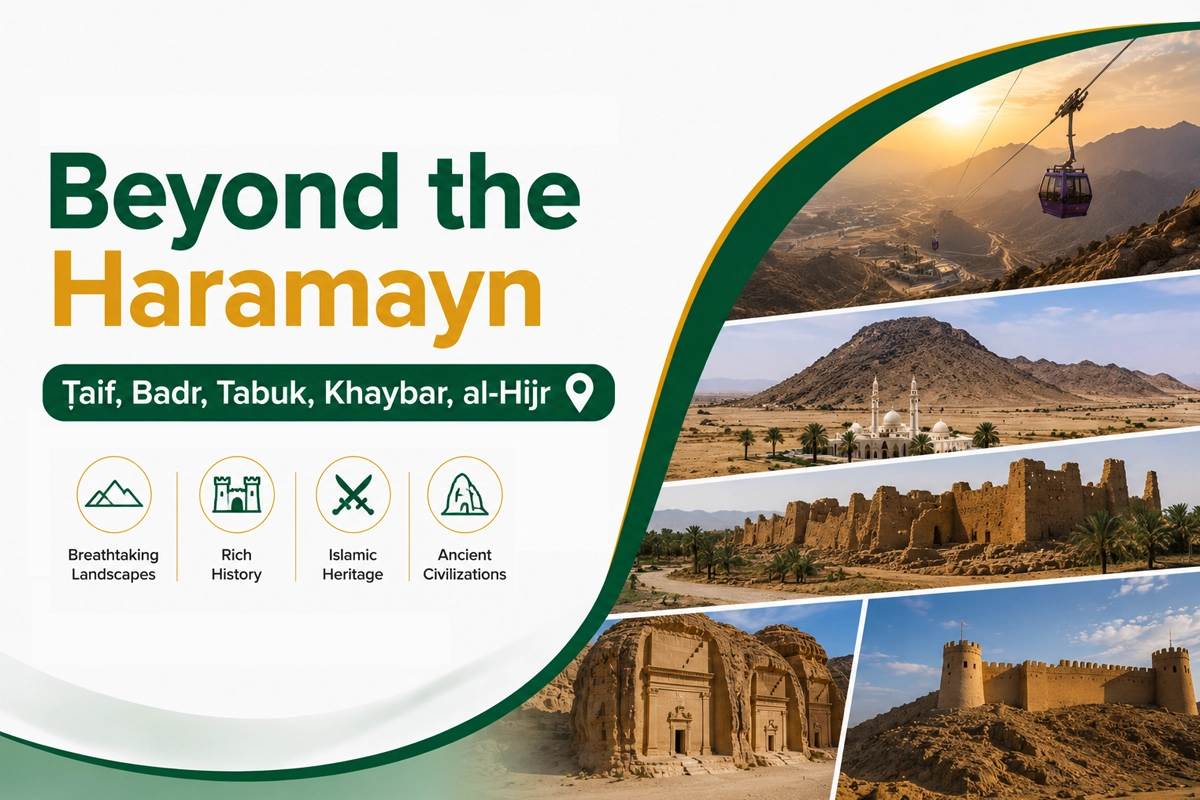
- Beyond the Haramayn — the wider ziyarat picture.
Accuracy note
The Qur'anic passage on Ashab al-Ukhdud at al-Buruj 85:4–9 and the narration of Suhayb in Sahih Muslim 3005 are level A, and neither names a place, a date or a king. The identification with Najran, Dhu Nuwas and the 520s comes from the historical reports and the tafsir literature, including the account attributed to Ibn Ishaq that the people of Najran followed the religion of the boy and that Dhu Nuwas came against them, gave them the choice of his religion or death, had a ditch dug and burned some while killing others with the sword; later commentators including Ibn Kathir follow that identification. That identification is level C: it is a scholarly and historical conclusion, not a statement of the Qur'anic text. The massacre of the Christians of Najran in the 520s is independently documented in the Letter on the Himyarite Martyrs by Simeon of Beth Arsham, the Book of the Himyarites and the Martyrdom of Arethas, named for al-Harith, the leader of the Christians of Najran; these are Christian sources hostile to Dhu Nuwas and close in time to the events, and they predate Islam by roughly a century. Three South Arabian inscriptions dated to July to September 523 CE, catalogued as Ry 507, Ja 1028 and Ry 508, record the campaign and give figures of 14,000 killed and 11,000 captured, 12,000 killed and 11,000 captured, and 13,000 killed and 9,500 captured respectively; these are the campaign's own inscriptions, they disagree with one another, and figures in inscriptions of this kind are not neutral reporting, so we have presented them with that caution rather than as a casualty count. The al-Ukhdud site in Najran Province, about 1,300 km south of Riyadh, with the ancient name given as Raqmat or Rijmat, a central walled city with a wall of about 235 by 220 metres, building foundations of hewn stone with mud brick above, a fort dated to the first century BC, tombs, artefacts, inscriptions and drawings, inscriptions carrying the name Njrn from the beginning of the first millennium BC, a town dating back at least to 500 BC with occupation through the Umayyad and Abbasid periods, a role as a trading centre on the incense route from about the middle of the first century BC, excavations begun in 1981, supervision under the national heritage programme from 2013, French collaboration in 2016, and free public access, all follow Saudi heritage sources and published reference works. We found no evidence that any visible trench at the site is the ditch of the Qur'anic passage, and the site's name derives from the story rather than the reverse. The Hima Cultural Area near Najran was inscribed as a UNESCO World Heritage Site in July 2021 and holds rock art spanning around 7,000 years with inscriptions in Musnad, South Arabian, Thamudic, Greek and Arabic. Al Imran 3:61 and its call to mutual invocation is level A; the account of the Christian delegation from Najran coming to Madinah in the ninth year after the Hijrah, declining the mutual invocation and making a treaty under which they kept their religion in return for defined obligations including a payment, follows the seerah and historical accounts and is level B. We have deliberately not entered into the differing accounts of who accompanied the Prophet ﷺ on that occasion. Visiting is not a rite of Hajj or Umrah. We do not run a scheduled service to Najran and have not quoted a fare. Content verified August 2026. Correction? Tell us.
Frequently asked questions
Planning a Saudi trip?
Pre-book a private car, find a stay, or ask us anything on WhatsApp.
Last updated: 28 August 2026·Sources reviewed by the Wadana Go editorial team.