Madyan and Prophet Shu'ayb: The Qur'an, the Ground, and the Join
Short answer
Madyan is where Shu'ayb was sent and where Musa arrived after leaving Egypt, watering for two women and staying eight years. The Qur'an gives no location. The identification with al-Bad' in north-west Saudi Arabia comes from the Arab-Islamic tradition. The carved tombs there are Nabataean, around the first century AD.
Key takeaways
- ✓Two strands run through the Qur'anic material: Shu'ayb and his people, and Musa's arrival at the water of Madyan.
- ✓Shu'ayb's message was worship of Allah alone, then something specific: give full measure and weight, and do not cheat people.
- ✓Al-Qasas 28 records Musa watering for two women, his du'a in the shade, and an arrangement of eight years with ten if he chose.
- ✓The Qur'an does not say the women's father was Shu'ayb. That is the majority tafsir view, not a statement of the text.
- ✓The Qur'an gives no location. The identification with al-Bad' comes from the Arab-Islamic geographical tradition and is long established.
- ✓The carved tombs at Magha'ir Shu'ayb are Nabataean, around the first century AD. Far too late to be the dwellings of Shu'ayb's people.
- ✓Al-Bad' was also a key stop on the Egyptian Hajj route, for the same reason it appears in the story: it has water.
Quick facts
- Where
- Al-Bad', Tabuk Province, in Wadi Ifal
- Distance
- About 225 km from Tabuk city
- From the coast
- Around 45 km inland from the Gulf of Aqaba
- Qur'anic passages
- Al-A'raf 7:85-93, Hud 11:84-95, al-Qasas 28:22-28
- The arrangement with Musa
- Eight years, ten if he chose (28:27)
- The tombs
- Nabataean, around the first century AD
- Tomb counts
- Published figures range from about 16 to about 80
- Other periods present
- Lihyanite, Nabataean and Islamic
- Part of Umrah or Hajj
- No
Madyan is a place, a people and a prophet's story, and most guides collapse the three into one confident paragraph. They should not.
Here is what the Qur'an says, what the ground shows, and where the join between them is a tradition rather than a fact.
Madyan in the Qur'an
Madyan is named several times. Two separate strands run through the passages, and it helps to keep them apart.
Strand one: Shu'ayb and his people. Shu'ayb was sent to Madyan, from among them. His message was worship of Allah alone, and then something unusually specific: give full measure and full weight, and do not cheat people of what is theirs (al-A'raf 7:85, Hud 11:84–85).
They rejected him and threatened him. The punishment is described as al-rajfah, the violent shaking (7:91), and as al-sayhah, the Shout (11:94). A related passage about the people of al-Aykah describes the punishment of the day of the shadow (26:189).
Strand two: Musa. Surah al-Qasas records that when Musa left Egypt he turned towards Madyan, and arrived at its water (28:22–23).
He found a crowd watering their flocks, and two women holding back. He asked what was wrong. They said they could not water until the shepherds moved off, and that their father was an old man.
He watered for them, then withdrew to the shade and made a du'a that is one of the most quietly devastating lines in the Qur'an: my Lord, I am in need of whatever good You send me (28:24).
One of the women came back, walking shyly, with an invitation. Her father wanted to pay him for the watering. And then the arrangement: eight years of work, ten if he chose, and marriage to one of the daughters (28:27).
Was the old man Shu'ayb?
Everyone assumes so. The Qur'an does not say it.
Surah al-Qasas calls him only their father, and an old man. The identification with Shu'ayb is the majority position in the tafsir literature, and it is old and widely held, but it is a conclusion drawn by scholars, not a statement in the text.
We are pointing that out because the whole tradition around the site rests on it, and you deserve to know where the joint is.
Where is Madyan?
The Qur'an does not give coordinates.
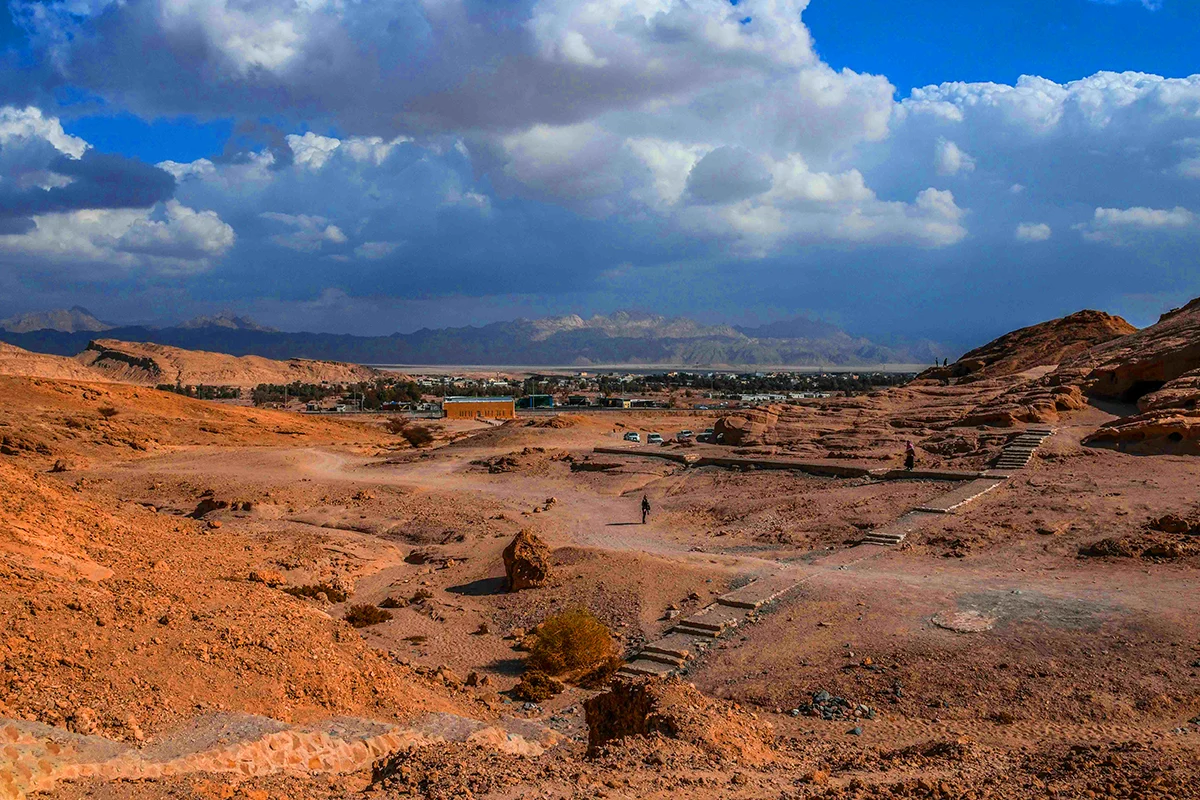
The identification with al-Bad', in the far north-west of Saudi Arabia, comes from the Arab and Islamic geographical and textual tradition, and it is the long-established view. Al-Bad' sits in Wadi Ifal, about 225 km from Tabuk city and around 45 km inland from the Gulf of Aqaba.
It is an oasis. Water in dry country, on a coastal corridor, which is exactly the kind of place a story about arriving thirsty at a well belongs to.
What is actually on the ground
This is where care is needed, and the honest account is more interesting than the confident one.
About two kilometres from al-Bad' are rock-cut tombs known locally as Magha'ir Shu'ayb, the caves of Shu'ayb. Archaeologists date them to the Nabataean period, around the first century AD.
That is thousands of years after the events in question. The carved facades are tombs of a later people, exactly as at Hegra.
The site also holds a stone-built well known as al-Suwaydani, called the Well of Musa in Islamic sources, along with the remains of ponds and channels. Published descriptions suggest it was rebuilt or restored in the Nabataean period and may be older than that.
And there are settlement sites from the early Islamic centuries, al-Malqata and al-Malha, with brick walls, stone ponds and pottery of the seventh to eleventh centuries. Lihyanite, Nabataean and Islamic inscriptions have all been recorded.
Published tomb counts differ a good deal, from around sixteen at the main necropolis to about eighty across the wider site, depending on what is being counted. Do not repeat a single figure as settled.
The honest summary
| Claim | Level |
|---|---|
| Madyan and Shu'ayb, and the message about measure and weight | A. Qur'an |
| Musa's arrival at the water of Madyan and the eight-to-ten year arrangement | A. Qur'an, al-Qasas 28 |
| The old man in al-Qasas being Shu'ayb | Majority tafsir view, not stated in the text |
| Madyan being at al-Bad' | B. Long-established in the Arab-Islamic tradition |
| The carved tombs being Nabataean, first century AD | B. Archaeology |
| Those tombs being the dwellings of Shu'ayb's people | C. Local tradition. The dating does not support it |
| The well being the well of Musa | C. Tradition. Called that in Islamic sources |
The other reason it mattered
Al-Bad' was a key stop on the Egyptian Hajj route, the road pilgrims took from Egypt to Makkah and Madinah.
Most people know about the Syrian route from Damascus. The Egyptian route is the other great overland artery, and al-Bad' sat on it for the same reason it sat in the Qur'anic story: it has water.
If you go
- It is remote. About 225 km from Tabuk city, and a long drive from AlUla. Plan the day properly.
- Do not enter the tombs or climb the rock. The facades are fragile and the ground is not maintained for scrambling.
- Do not seek blessing from the well. There is no basis for it.
- Ask what a claim rests on. The table above is your checklist.
- Confirm access first. Arrangements at Saudi heritage sites change.
Is visiting part of Hajj or Umrah?
No. Not a rite of either.
Getting there, honestly
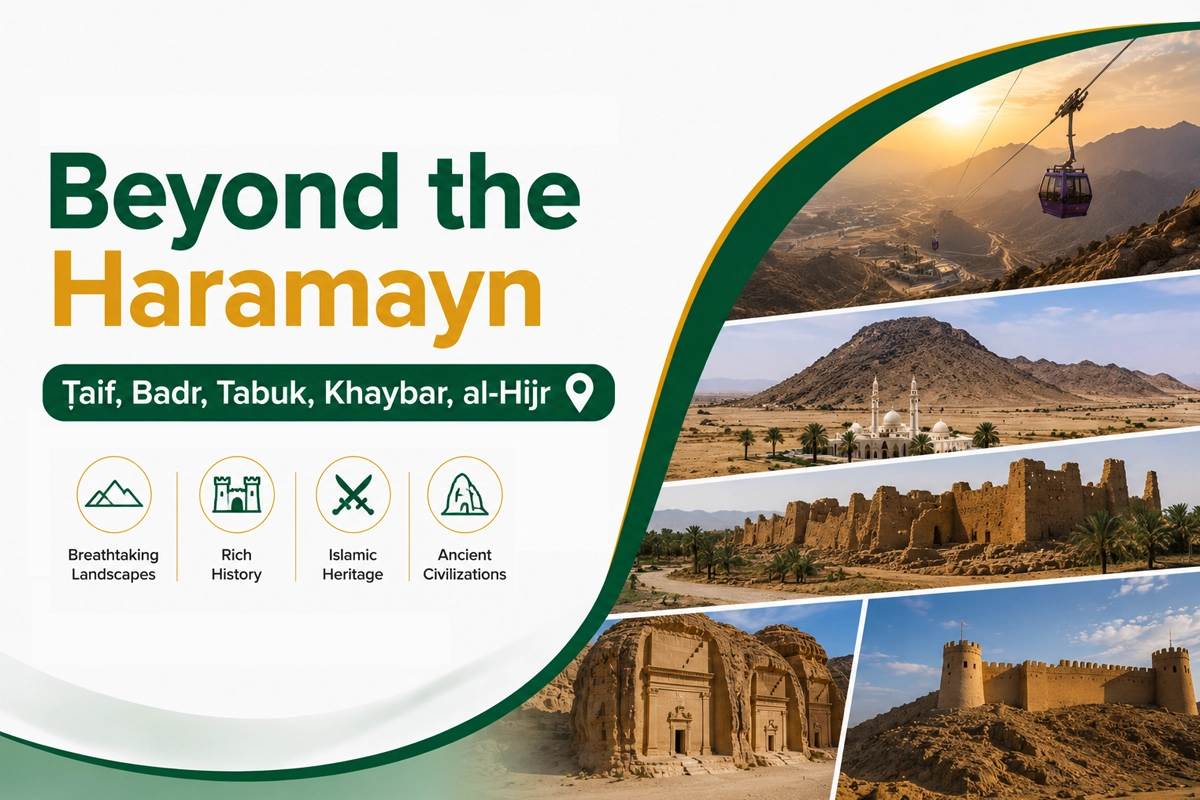
We do not run a scheduled service this far north and there is no published Wadana Go fare for it. Flying to the regional airport and hiring a car, or arranging a private car in advance, are the practical options. See driving yourself versus a private driver and renting a car in Saudi Arabia. Our Beyond the Haramayn guide puts this region alongside Badr, Khaybar, AlUla and Taif.
Related reading
- Magha'ir Shu'ayb — the tombs, and what they actually are.
- Al-Bad' archaeological site — the wider oasis.
- The well associated with Musa — the tradition, examined.
- Thamud and Salih — the same care applied to another Qur'anic people.
Accuracy note
The Qur'anic material is level A and each element is referenced: Shu'ayb sent to Madyan from among them, his call to worship Allah alone and to give full measure and weight without cheating people (al-A'raf 7:85, Hud 11:84–85); the punishment described as al-rajfah (7:91) and al-sayhah (11:94), with the day of the shadow in the passage on the people of al-Aykah (26:189); Musa turning towards Madyan and arriving at its water, the two women holding back, his watering for them, his du'a, the invitation and the arrangement of eight years with ten if he chose, and the marriage (al-Qasas 28:22–28). The Qur'an does not name the two women's father as Shu'ayb; that identification is the majority position in the tafsir literature and is a scholarly conclusion rather than a statement of the text, and we have marked it as such. The identification of Madyan with al-Bad' comes from the Arab and Islamic geographical and textual tradition and is long established; al-Bad' lies in Wadi Ifal, about 225 km from Tabuk city and around 45 km from the Gulf of Aqaba coast, per Saudi heritage sources. The rock-cut tombs known as Magha'ir Shu'ayb about two kilometres from al-Bad' are dated by archaeologists to the Nabataean period, around the first century AD; published tomb counts differ from around sixteen at the main necropolis to about eighty across the wider site depending on what is counted, and we have given the range rather than a single figure. The al-Suwaydani well, referred to as the Well of Moses in Islamic sources, the remains of ponds and channels, the early Islamic settlement sites al-Malqata and al-Malha with brick walls, stone ponds and pottery of the seventh to eleventh centuries, and the recorded Lihyanite, Nabataean and Islamic inscriptions, follow Saudi heritage sources and published archaeological reporting. Al-Bad' as a key stop on the Egyptian Hajj route is stated by Saudi heritage sources. The dating of the tombs does not support the tradition that they are the dwellings of Shu'ayb's people, and we have said so. No blessing attaches to the well. Arrangements at Saudi heritage sites change; confirm access before travelling. Visiting is not a rite of Hajj or Umrah. We do not run a scheduled service to al-Bad' and have not quoted a fare. Content verified August 2026. Correction? Tell us.
Frequently asked questions
Planning a Saudi trip?
Pre-book a private car, find a stay, or ask us anything on WhatsApp.
Last updated: 31 August 2026·Sources reviewed by the Wadana Go editorial team.