The Well of Musa at Madyan: What a Name Can and Cannot Prove
Short answer
The stone-built well at al-Bad' known archaeologically as al-Suwaydani is called the Well of Moses in Islamic sources. It was the oasis's main water source and appears rebuilt in the Nabataean period. The identification with the well in Surah al-Qasas is level C tradition. No blessing attaches to it.
Key takeaways
- ✓Surah al-Qasas 28:22-28 records Musa arriving at the water of Madyan, watering for two women, and making du'a in the shade.
- ✓The well at al-Bad' is known archaeologically as al-Suwaydani and was the oasis's main water source.
- ✓It appears to have been rebuilt or restored in the Nabataean period and may be older. It is now mostly destroyed.
- ✓Islamic sources call it the Well of Moses. That is a statement about what people have named it, not about what it is.
- ✓It is reasonable that the water Musa came to was at or near this spot, because oases have few wells and the good one stays the good one.
- ✓It cannot be established that this structure is that well, and no inscription or early narration supports it. Level C.
- ✓No blessing, virtue or prescribed act attaches to it. Do not take the water, tie cloth, leave money or climb on the stonework.
Quick facts
- Where
- Al-Bad', Tabuk Province
- Archaeological name
- Al-Suwaydani well
- Traditional name
- The Well of Moses
- What it was
- The main water source of the oasis
- Construction
- Stone-built, apparently rebuilt in the Nabataean period
- Condition
- Mostly destroyed
- Around it
- Remains of ponds and water channels
- Evidence level
- A for the Qur'an. C for the identification
- Blessing or virtue
- None
There is a stone-built well at al-Bad' that Islamic sources call the Well of Musa. Its archaeological name is al-Suwaydani.
People travel a long way to stand at it. So it is worth being clear about what it is and what it is not.
Why a well at all
Because of Surah al-Qasas, and one of the best-drawn scenes in the Qur'an.
Musa left Egypt and turned towards Madyan. When he reached its water, he found a crowd watering their flocks, and two women standing back, holding their own animals away.
He asked them what the matter was. They said they could not water until the shepherds moved off, and that their father was an old man (28:23).
So he watered for them. Then he turned aside to the shade and said: my Lord, I am in need of whatever good You send down to me (28:24).
He had nothing. He had just done a stranger a favour anyway. And what came of it was work, a home and a marriage.
That is the scene the well is meant to anchor.
What the well actually is
Published descriptions and Saudi heritage sources say this:
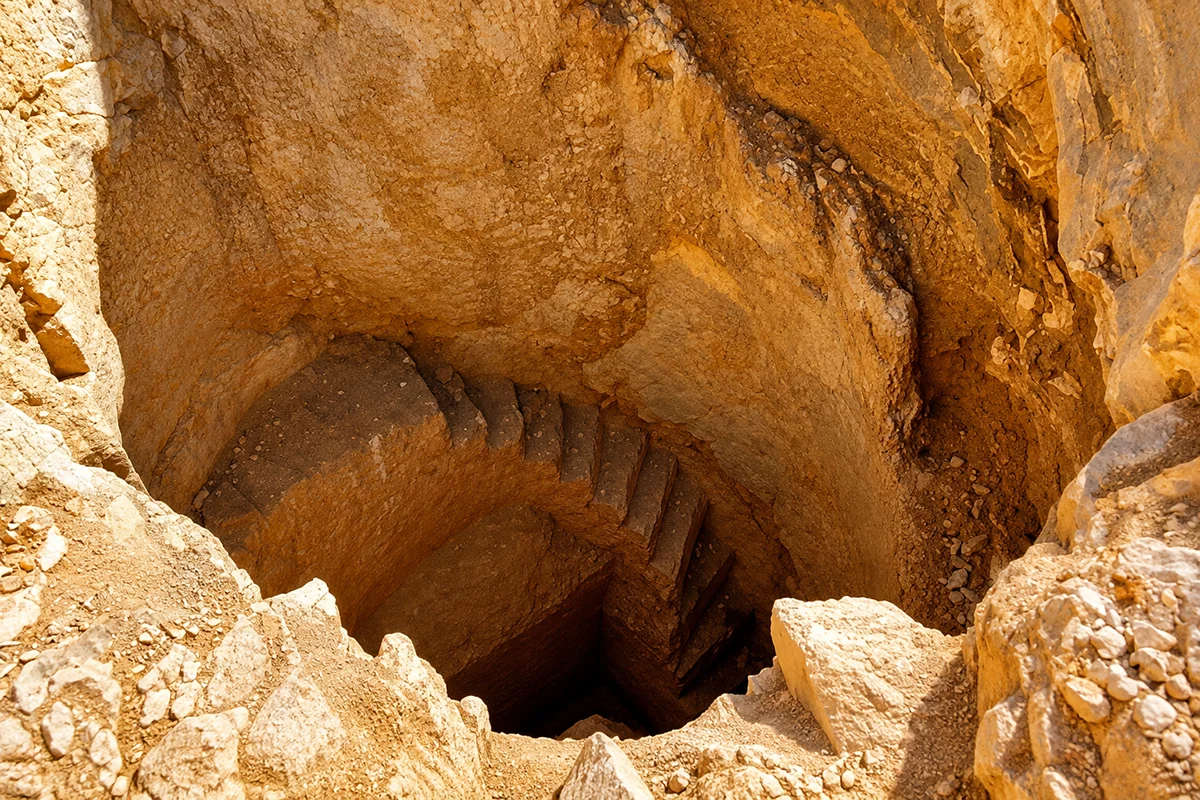
- It is a stone-built well, cut and lined in rock.
- It was the main water source of the al-Bad' oasis.
- It appears to have been rebuilt or restored in the Nabataean period, and may be older than that.
- It is now mostly destroyed.
- There are remains of ponds and water channels around it.
- It is called the Well of Moses in Islamic sources.
Read that list again and notice which line does the work. "Called the Well of Moses in Islamic sources" is a statement about what people have named it. It is not a statement that it is.
The honest position
Level C. A traditional identification, long-held, and not verifiable.
Here is what can and cannot be said.
What is reasonable: if Madyan is here, and this was the oasis's main water source, then the water Musa came to was very likely at or near this spot. Oases do not have many wells, and the good one tends to stay the good one.
What cannot be established: that this structure is that well. The visible stonework appears to be Nabataean or Nabataean-rebuilt, which is centuries later. A well can be re-dug on the same spot many times over, and usually is.
What nobody can show: a chain of evidence linking this shaft to that scene. There is no inscription, no early narration naming it, nothing.
So the fair sentence is: a very old well, in the right kind of place, given a name by tradition. That is worth seeing. It is not worth overclaiming.
What not to do here
This matters more than usual, because wells attached to prophets attract behaviour that has no basis.
- Do not seek blessing from the water or the stones. There is nothing prescribed here. Nothing.
- Do not take water away as though it carried virtue.
- Do not tie cloth, leave money or leave anything else.
- Do not pray to be answered at the well. Make du'a anywhere. Allah hears you in the car park.
- Do not climb into or on the structure. It is mostly destroyed and it is not safe.
The one thing worth doing is remembering the scene. A man with nothing, who helped two strangers water their animals before he asked for anything for himself, and then asked in the plainest words in the book.
You can do that standing anywhere. It just lands harder here.
The evidence, plainly
- Musa at the water of Madyan, the two women, the watering, the du'a and the arrangement: level A, al-Qasas 28:22–28.
- The well as the main water source of the al-Bad' oasis, stone-built, Nabataean or rebuilt in that period, now mostly destroyed: published descriptions and Saudi heritage sources.
- Its identification as the well of Musa: level C. A name given by tradition, not established.
- Any virtue, blessing or prescribed act at the site: none.
Is visiting part of Hajj or Umrah?
No. Not a rite of either.
Getting there, honestly
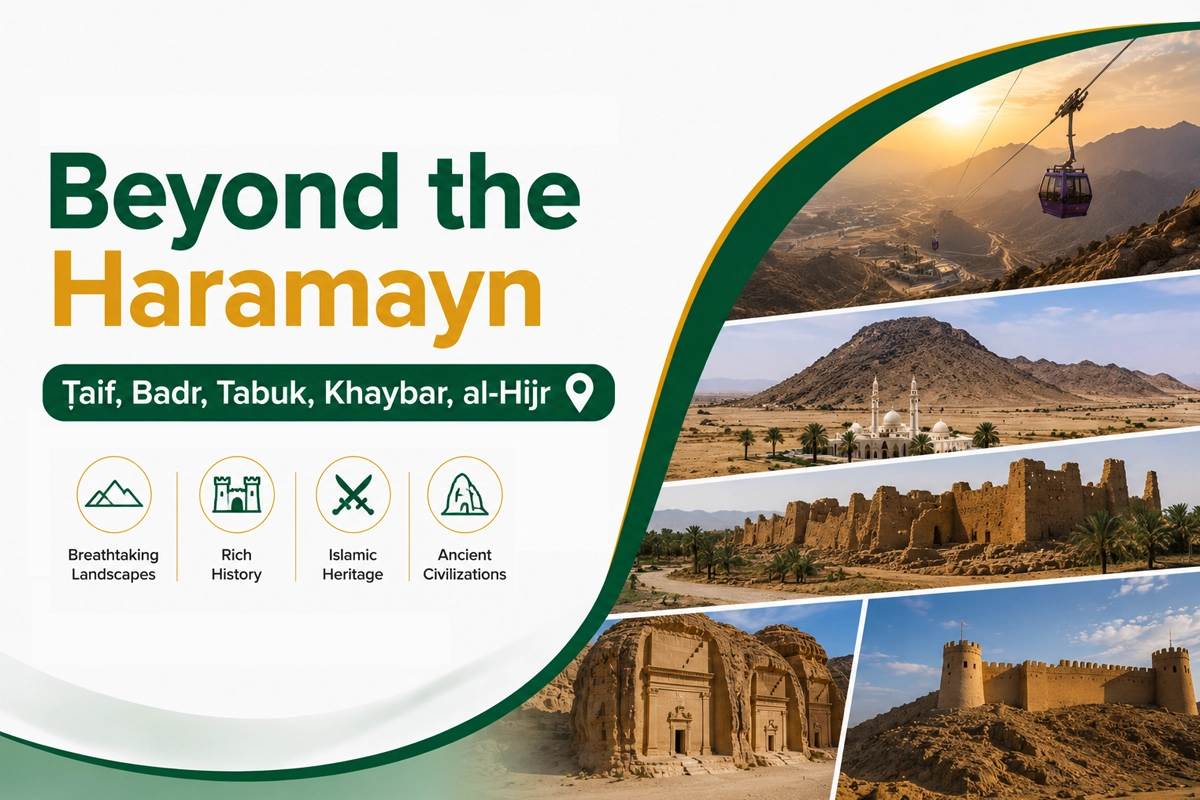
We do not run a scheduled service this far north and there is no published Wadana Go fare for it. Al-Bad' is about 225 km from Tabuk city, so flying to Tabuk and hiring a car, or arranging a private car in advance, are the practical options. See driving yourself versus a private driver and renting a car in Saudi Arabia. Our Beyond the Haramayn guide puts this region alongside Badr, Khaybar, AlUla and Taif.
Related reading
- Madyan and Prophet Shu'ayb — the full Qur'anic account.
- Al-Bad' archaeological site — the oasis around it.
- Magha'ir Shu'ayb — the tombs, and the same dating problem.
- Beyond the Haramayn — the wider ziyarat picture.
Accuracy note
The Qur'anic account is level A: Musa turning towards Madyan after leaving Egypt, finding a crowd watering their flocks and two women holding back, their explanation that they could not water until the shepherds moved off and that their father was an old man, his watering for them, his withdrawal to the shade and his du'a that he was in need of whatever good was sent down to him, and the arrangement and marriage that followed (al-Qasas 28:22–28). That the well known archaeologically as al-Suwaydani is stone-built and cut in rock, was the main water source of the al-Bad' oasis, appears to have been rebuilt or restored in the Nabataean period and may predate it, is now mostly destroyed, has remains of ponds and water channels around it, and is referred to as the Well of Moses in Islamic sources, follows Saudi heritage sources including Saudipedia and published archaeological descriptions. The identification of this structure with the well of the Qur'anic account is level C: a long-held traditional name, and we could not verify any inscription, early narration or other chain of evidence supporting it. We have distinguished between the plausibility that the water Musa came to was at or near this spot, which follows from an oasis having few wells, and the separate and unsupported claim that this visible structure is that well. No virtue, blessing or prescribed act attaches to the well, its water or its stones, and none should be sought; do not take water away, tie cloth, leave objects or money, or climb into or onto the structure, which is mostly destroyed and unsafe. Visiting is not a rite of Hajj or Umrah. We do not run a scheduled service to al-Bad' and have not quoted a fare. Content verified August 2026. Correction? Tell us.
Frequently asked questions
Planning a Saudi trip?
Pre-book a private car, find a stay, or ask us anything on WhatsApp.
Last updated: 29 August 2026·Sources reviewed by the Wadana Go editorial team.