Bir Buda'ah: The Well That Settled the Water Question

Short answer
Bir Buda'ah was a large well in the quarter of the Banu Sa'idah in Madinah. Asked whether ablution could be performed from it, the Prophet ﷺ said water is pure and nothing makes it impure. The report is in Abu Dawud, al-Nasa'i, al-Tirmidhi and Ahmad, and was declared sahih by Imam Ahmad and Ibn al-Jarud.
Key takeaways
- ✓Bir Buda'ah was a large well in Madinah into which refuse was said to wash. Somebody asked directly whether wudu from it was valid.
- ✓The Prophet ﷺ answered: water is pure; nothing makes it impure.
- ✓The report is in Abu Dawud, al-Nasa'i, al-Tirmidhi and Ahmad, not in Bukhari or Muslim. Imam Ahmad and Ibn al-Jarud declared it sahih.
- ✓It does not mean any water is usable regardless. Imam Malik and others read it as applying to large bodies of water where impurities cause no change.
- ✓The working principle across the schools: water stays pure unless its colour, taste or smell changes.
- ✓The hadith exists to prevent anxiety. The default is purity, and the test is whether you can see, taste or smell a difference.
- ✓We could not verify a preserved or accessible site. Bir Rumah and Bir Ghars are the Madinah wells you can actually visit.
Quick facts
- City
- Madinah, quarter of the Banu Sa'idah
- The question
- Whether wudu from the well was valid
- The answer
- Water is pure; nothing makes it impure
- Recorded in
- Abu Dawud, al-Nasa'i, al-Tirmidhi, Ahmad
- Grading
- Declared sahih by Imam Ahmad and Ibn al-Jarud
- The limit
- Water changed in colour, taste or smell is a different case
- Can you visit
- No preserved or marked site that we could verify
- Part of Umrah or Hajj
- No
- Evidence level
- Strong Sunan report, widely accepted; not in the two Sahihs
Bir Buda'ah was a large well in Madinah, and the hadith attached to it settled a question that comes up in every Muslim's life a hundred times: when is water still clean enough to use?
The question somebody asked
The well sat where rubbish washed into it. The narration is blunt about what people said went in: cloths, dead animals, filth.
Somebody asked the Prophet ﷺ directly whether you could perform wudu from a well like that.
The answer
He said: water is pure; nothing makes it impure.
The report is in Sunan Abi Dawud, Sunan al-Nasa'i, Sunan al-Tirmidhi and Musnad Ahmad. It is not in Bukhari or Muslim, and hadith scholars have discussed its chain at length. Imam Ahmad and Ibn al-Jarud declared it sahih, and it is accepted and acted upon across the schools.
So: a strong, widely accepted report, from the Sunan collections rather than the two Sahihs. That is the accurate way to describe it, and it is stronger than most things you will be told at a Ziyarat site.
What it does not mean
This is where people go wrong, so it is worth being careful.
The hadith does not mean that any water is usable no matter what is in it. Scholars did not read it that way.
Imam Malik and others understood it as applying to large bodies of water like this well, where impurities do not change the water. The general principle across the schools is that water stays pure unless its colour, taste or smell changes because of what fell into it.
Buda'ah was a big well with a lot of water in it. That is the point of naming it in the question.
Why this is one of the most useful hadith you will read
Because of what it prevents.
Without it, a person could spend their life anxious about wudu: about a tap that might have splashed, a bucket that might have been used for something else, a bathroom floor. Some people do live like that, and it is a heavy way to live.
The default the Prophet ﷺ set is the opposite. Water is pure. The burden of proof sits on the thing claiming otherwise, and the test is whether you can see, taste or smell the difference.
If you are travelling and worrying about the water in an old bathroom or a roadside mosque, this is the hadith for you.
The well today
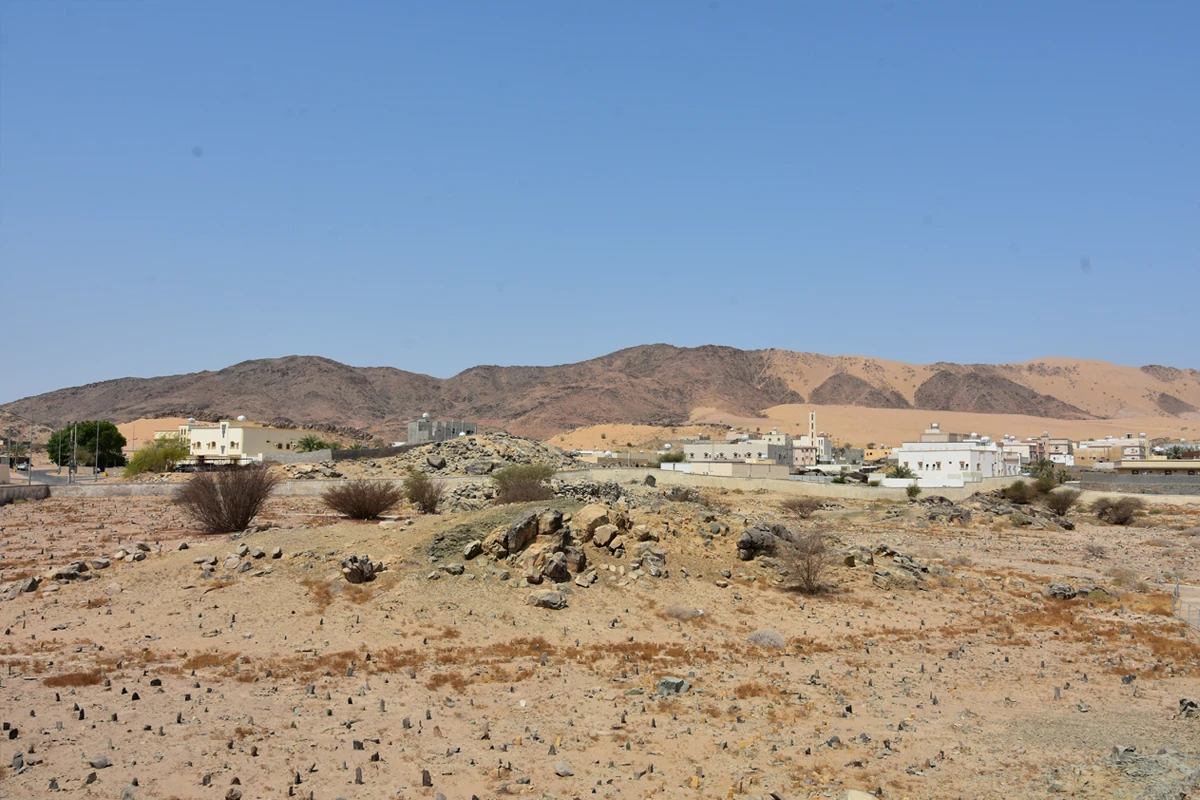
Bir Buda'ah was in the quarter of the Banu Sa'idah in Madinah.
We could not verify a preserved, marked or accessible site, and we are not going to send you looking for one. Madinah has been rebuilt many times, and most of the smaller wells went the way of Bir Aris.
The wells you can actually see are Bir Rumah, which still pumps, and Bir Ghars, which is preserved in a walled enclosure.
Is visiting part of Hajj or Umrah?
No. Not a rite of either, and no virtue is reported in the water of Buda'ah itself.
Related
- Bir Rumah — the well you should actually visit.
- Bir Ghars — preserved and accessible.
- Bir Aris — and why it is no longer there.
- Ihram guide — including the practical side of wudu on the road.
Getting there
Madinah's historic sites are scattered across the city, and reaching them one taxi at a time turns a short list into a whole morning. Our Madinah Ziyarat private car covers the round on one fixed fare for the whole vehicle with the driver waiting at every stop, and the Madinah Ziyarat tour is the guided version. For arrival, the Madinah airport transfer has fixed fares.
Accuracy note
The report that the Prophet ﷺ was asked about performing ablution from the well of Buda'ah, into which refuse was said to be thrown, and answered that water is pure and nothing makes it impure, is recorded in Sunan Abi Dawud, Sunan al-Nasa'i, Sunan al-Tirmidhi and Musnad Ahmad. It is not in Sahih al-Bukhari or Sahih Muslim; hadith scholars have discussed its chain, and Imam Ahmad and Ibn al-Jarud declared it sahih. Imam Malik and others understood it as applying to large bodies of water such as this well, in which impurities do not cause a change; the general principle across the schools is that water remains pure unless its colour, taste or smell is altered by what has entered it. The well stood in the quarter of the Banu Sa'idah in Madinah. We could not verify a preserved, marked or accessible site today and have not directed readers to one. No virtue is reported in the water of Buda'ah itself, and visiting is not a rite of Hajj or Umrah. This page summarises the scholarly position and is not a fatwa; ask a qualified scholar about a specific case. Content verified August 2026. Correction? Tell us.
Frequently asked questions
Planning a Saudi trip?
Pre-book a private car, find a stay, or ask us anything on WhatsApp.
Last updated: 12 September 2026·Sources reviewed by the Wadana Go editorial team.