Hajar al-Aswad: The Black Stone Explained
Short answer
Hajar al-Aswad, the Black Stone, is set in the eastern corner of the Kaaba where each circuit of tawaf begins. An authentic hadith records that it descended from Paradise whiter than milk. Kissing it is a sunnah of tawaf, not an obligation, and pointing toward it from a distance is entirely correct when it is crowded, which it almost always is.
Key takeaways
- ✓Kissing the stone is a sunnah, not a requirement. Your tawaf is complete without it.
- ✓When you cannot reach it, face it, raise your hand and say Allahu akbar. That is the established practice.
- ✓Umar said publicly that it can neither harm nor benefit, recorded in both Bukhari and Muslim.
- ✓The hadith that it descended from Paradise whiter than milk is sound, narrated by al-Tirmidhi and Ahmad.
- ✓It is not one stone but several fragments held in a silver frame.
- ✓Claims that it floats on water, or statements about its geological composition, have no reliable basis.
- ✓People are injured in the crush at that corner every season. Do not take children or elderly parents in.
Quick facts
- Location
- Eastern corner of the Kaaba
- Height
- About 1.5 m above ground
- Form
- Several fragments in a silver frame
- Kissing it
- Sunnah, not obligatory
- If crowded
- Point and say Allahu akbar
- Marker
- Green light on the mosque wall
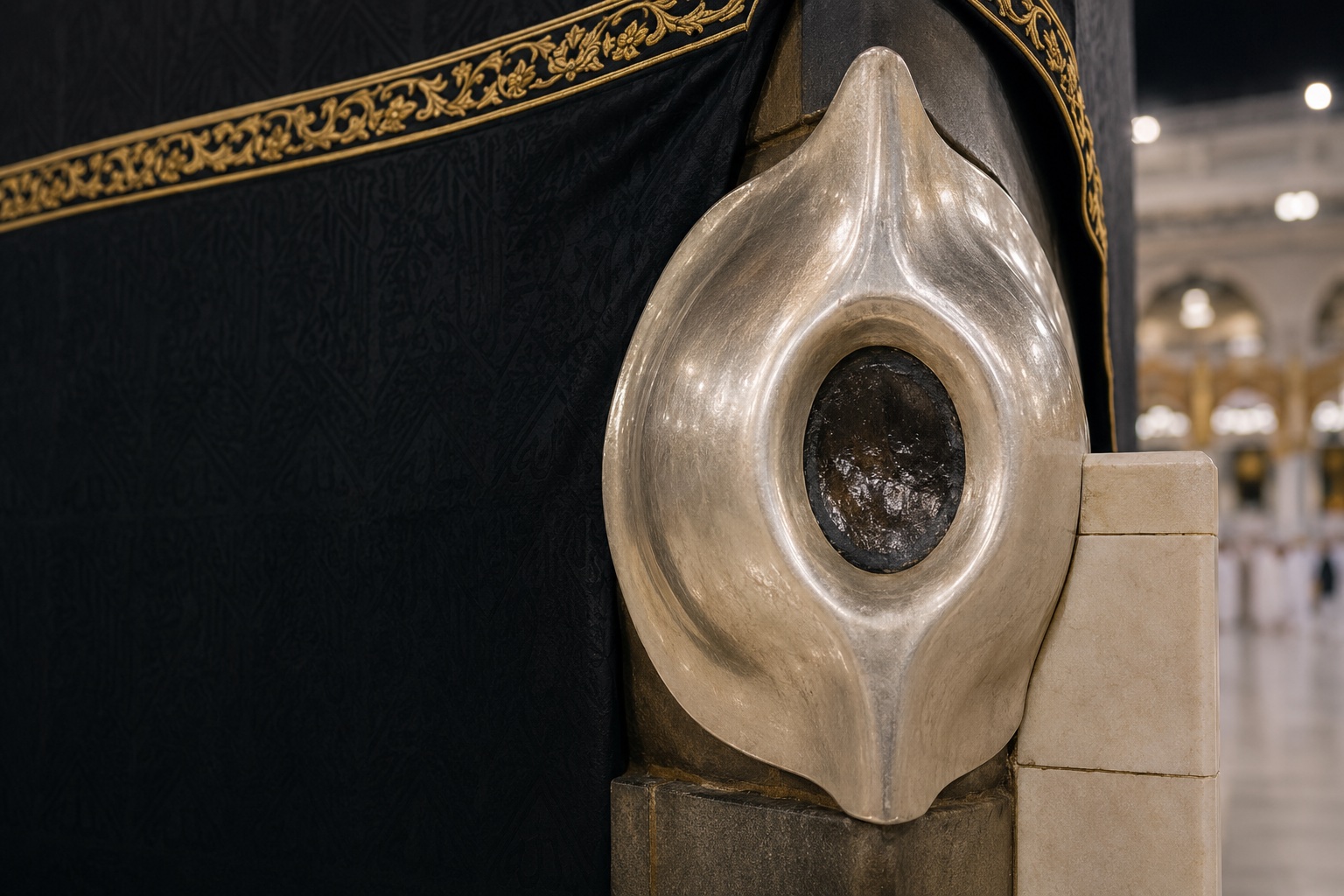
Hajar al-Aswad, the Black Stone, is set into the eastern corner of the Kaaba, about a metre and a half above the ground. Tawaf begins and ends there. It is one of the most photographed and most misunderstood objects in Islam.
This article covers what is authentically established about it, what is not, and what actually happens when you try to reach it in a crowd. For the method of tawaf itself, see our step-by-step Umrah guide.
What it is
It is a stone, dark in colour, held in a silver frame in the corner of the Kaaba. What you see is not one solid piece. It is a number of fragments, commonly said to be around eight visible pieces, the largest roughly the size of a date, set together and held by the frame.
The stone broke apart over centuries of damage. The silver surround was added to hold the pieces in place and has been replaced and repaired many times.
What is authentically established
Two reports carry almost everything a Muslim needs to know about it, and both are strong.
It came from Paradise. Ibn Abbas reported that the Prophet said: "The Black Stone descended from Paradise whiter than milk, and the sins of the children of Adam turned it black." This is narrated by al-Tirmidhi and Ahmad. Al-Tirmidhi classed it as sound, and it was also authenticated by Ibn Khuzaymah and graded sound by Ibn Hajar in Fath al-Bari.
It has no power of its own. Umar ibn al-Khattab kissed the stone and then said, in front of the pilgrims: "I know that you are only a stone and can neither harm nor benefit. Had I not seen the Messenger of Allah kissing you, I would not have kissed you." This is in Sahih al-Bukhari and Sahih Muslim, the two strongest collections.
Read those two together and the whole picture is there. The stone is honoured because the Prophet honoured it. It is not a source of blessing in itself, and it is not asked for anything.
Kissing it is sunnah, not required
This is the practical point that saves people from injury, so it is worth being direct.
Kissing the Black Stone is a sunnah of tawaf. It is not obligatory, and your tawaf is complete without it.
When you cannot reach it, and most of the time you cannot, the established practice is simply to face it, raise your hand toward it and say Allahu akbar, then carry on walking. The Prophet performed tawaf on a mount and touched the stone with a stick rather than approaching on foot, which is recorded in the authentic collections. If reaching it directly were essential, that would not be the case.
The Saudi authorities have repeatedly asked pilgrims not to push toward the stone, because people are hurt in the crush every season. Older pilgrims and children are most at risk.
What actually happens in the crowd
Honest description, because the photographs do not show this.
The corner attracts a dense press of people at almost every hour. Getting to the stone often means several minutes of being pushed, sometimes by men considerably stronger than you. People are elbowed. Glasses get broken. Women are frequently squeezed in ways nobody would accept anywhere else.
If you decide to try, go at the quietest hours, late at night between Isha and Fajr. Do not take small children in with you. Do not attempt it with an elderly parent on your arm. And be willing to give up if the press gets bad, because there is no religious loss in doing so.
Many pilgrims complete every Umrah of their lives pointing from a distance. That is a normal, correct way to perform tawaf.
What is not established
A great deal is repeated about this stone with no basis at all. Some claims are simply invented.
- That the stone floats on water. No Islamic source says this, and no test has demonstrated it. The claim circulates as a "scientific proof" and is not one.
- That it will testify for those who touched it sincerely. Reports along these lines exist but vary considerably in strength, and they are often quoted far more confidently than their gradings support. Treat them as traditional rather than established.
- That it cures illness or brings specific worldly benefits. Umar's statement in Bukhari and Muslim addresses precisely this, and it is the answer.
- Detailed claims about its geological composition, meteorite origin included, are not settled. The stone has never been subjected to modern analysis. Anyone stating its composition as fact is guessing.
The honest position is that its origin is described in a sound hadith as being from Paradise, and beyond that we do not know its physical makeup. That is enough.
Why is it black?
The hadith above gives the answer within Islamic teaching: it descended whiter than milk, and the sins of humanity darkened it.
That is a statement about meaning rather than a claim about chemistry, and it is worth reading it as the Prophet's words rather than converting it into a geological process. Scholars have long discussed what it signifies. Nothing requires a physical explanation.
Where it is, and how to find the corner
The Black Stone sits in the eastern corner of the Kaaba, the corner where each circuit of tawaf begins and ends.
You do not need to see the stone to know where the corner is. A green light on the wall of the mosque marks the starting line, and the crowd flow itself makes it obvious. Line up with the light, raise your hand toward the stone, say Allahu akbar, and begin.
Note that the Yemeni corner, the one before it, is touched during tawaf but never kissed, and no takbir is said there. Confusing the two is common on a first Umrah.
Practical advice
- Do not make reaching the stone the goal of your tawaf. It is a sunnah, not a rite.
- Late at night is the only realistic window for approaching it without a crush.
- Keep valuables secure. Phones and glasses are lost in that corner constantly.
- If you are performing tawaf on an upper level, you point from there. That is entirely correct.
- Travelling with parents or young children? Point from a distance, together, and keep everyone safe. Our family Umrah guide covers this kind of decision.
- Women should not feel any obligation to enter the press at the corner. Many scholars have advised against it precisely because of the mixing and the crush. See our women's Umrah guide.
Where it sits in the bigger picture
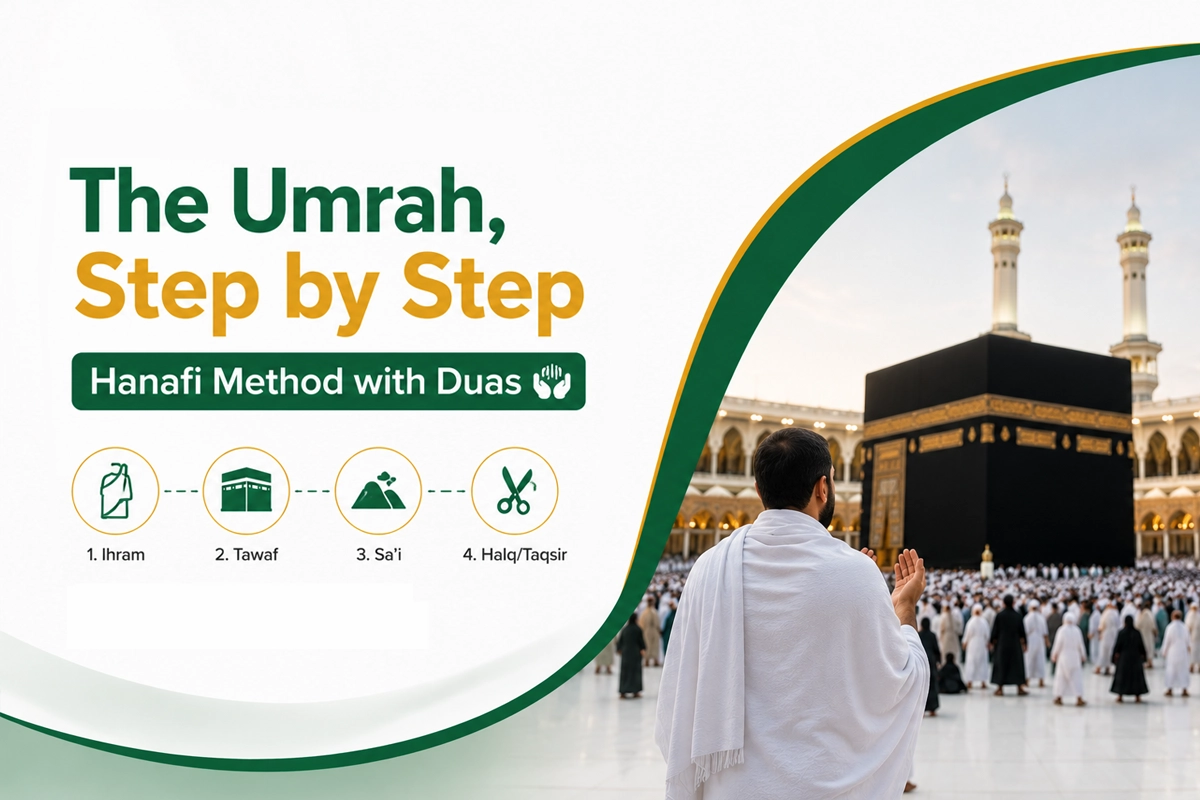
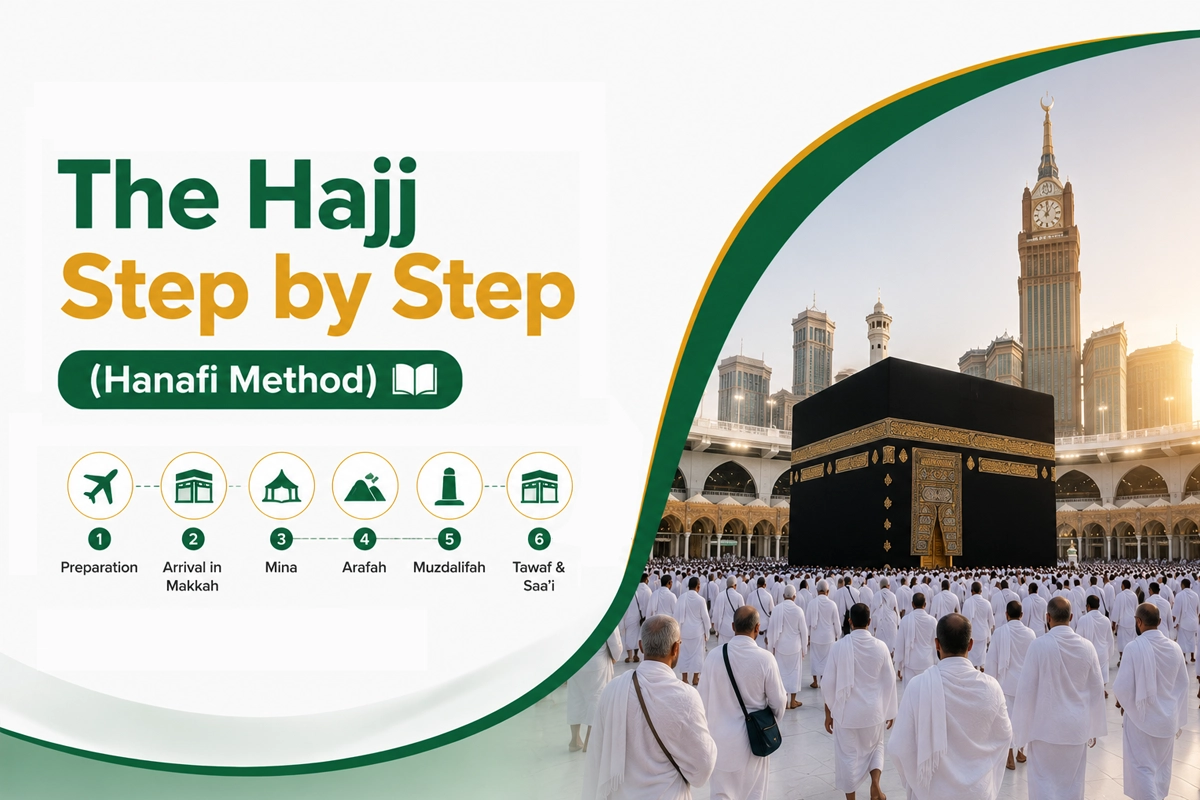
The Black Stone is one corner of one building, and that building is the Kaaba, which stands at the centre of Masjid al-Haram. If you are new to Umrah, reading those two alongside this one gives you the whole picture of what you are walking around.
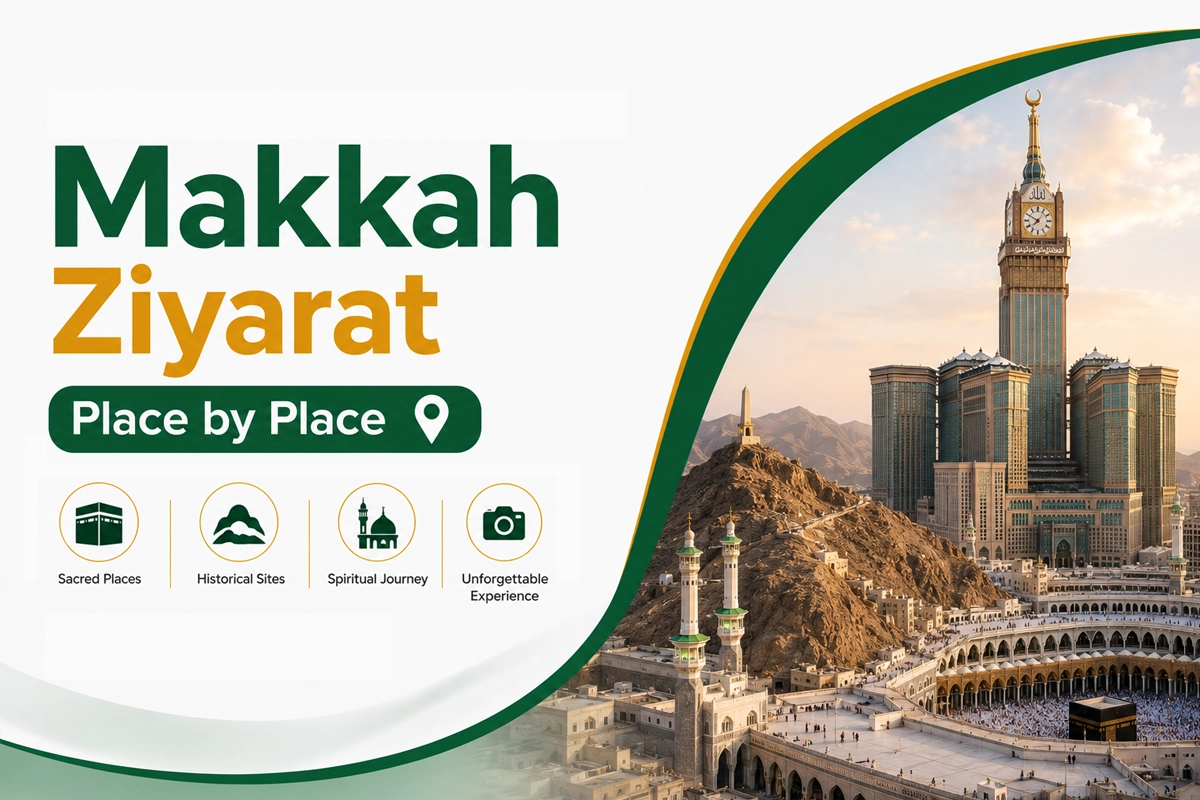
Beyond the mosque, Makkah's wider Ziyarat sites are covered in our Makkah Ziyarat guide, which is careful about which sites have authentic backing and which are only traditionally attributed.
Accuracy note
Every religious claim here was checked against the strongest available sources, and reports with weaker chains are marked as such rather than presented as established. This subject attracts more unreliable material than most, which is why the section on what is not established is as long as it is. Crowd conditions change constantly. Verify current guidance before you travel.
Arriving for Umrah? Landing at Jeddah in ihram with luggage and family is the wrong moment to be negotiating a fare. Our Jeddah Airport to Makkah transfer is a fixed price per vehicle, from SAR 260, agreed before you fly, with the driver meeting you at arrivals.
Frequently asked questions
Planning a Saudi trip?
Pre-book a private car, find a stay, or ask us anything on WhatsApp.
Last updated: 22 August 2026·Sources reviewed by the Wadana Go editorial team.