Jabal al-Rahmah: The Hill Everyone Climbs and Nobody Needs To
Short answer
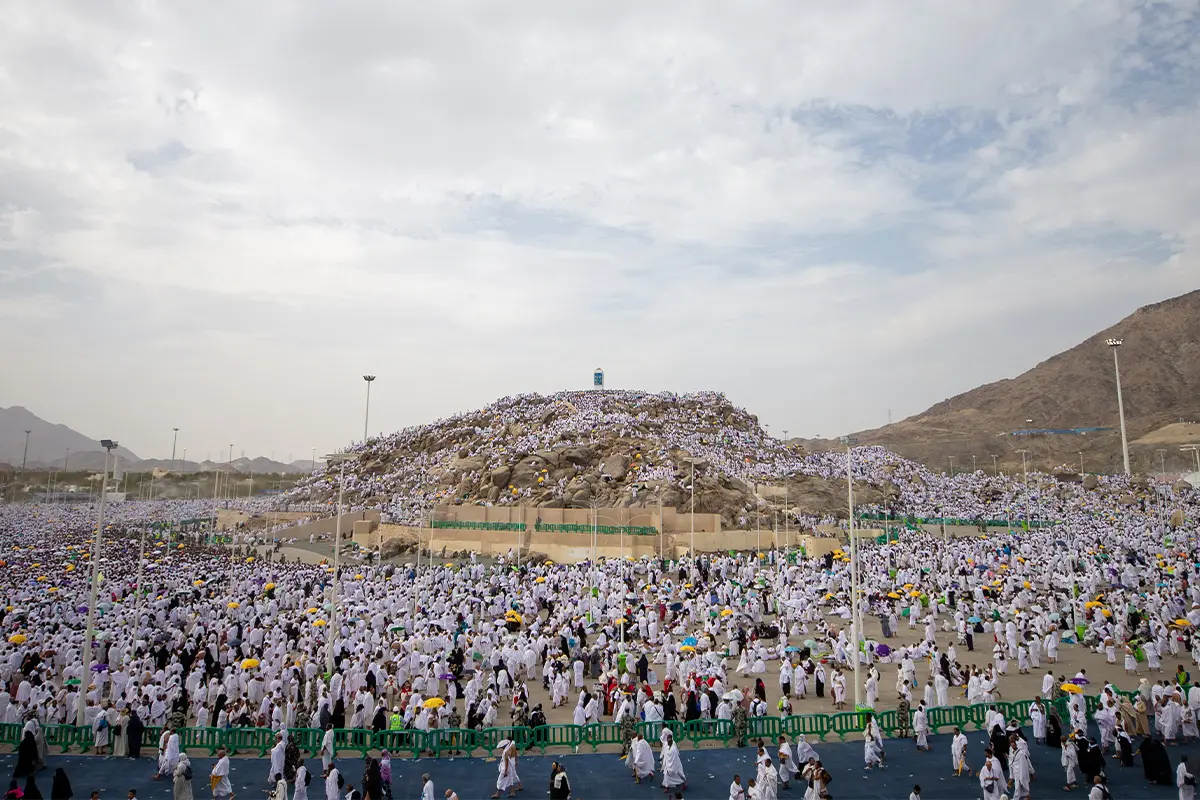
Jabal al-Rahmah, the Mount of Mercy, is the rocky hill rising out of the plain of Arafat, with a seven-metre marker on its summit. Saudipedia gives its height as 300 metres. The Prophet stood near its foot on the Day of Arafah. Climbing it is not a rite of Hajj and no reward for doing so is established.
Key takeaways
- ✓Jabal al-Rahmah is the hill in the middle of the plain of Arafat, with a 7 m marker on top.
- ✓Saudipedia gives its height as 300 metres, and it reads as a low hill above the flat plain.
- ✓The Prophet stood near its foot on the Day of Arafah, after praying at Namirah.
- ✓Climbing it is not a rite of Hajj and no reward for the climb is established.
- ✓The standing is valid anywhere in Arafat, so nobody needs to reach the hill.
- ✓Tying cloth, writing on the pillar or seeking blessing from the stones has no basis.
- ✓Outside Hajj it is an easy few-minute climb with the best view of the plain.
Quick facts
- Where
- In the plain of Arafat, about 22 km from Makkah
- Height
- 300 m, per Saudipedia
- Marker on the summit
- About 7 m tall
- Also called
- Mount of Mercy, Jabal Arafat
- Required for Hajj?
- No
- Reward for climbing?
- None established
- Climb time off-season
- A few minutes
- Part of Umrah?
- No. Arafat belongs to Hajj.
The hill in the middle
Arafat is flat. Out of the middle of it rises one rocky hill with a plain white marker on the top, and that hill is Jabal al-Rahmah, the Mount of Mercy.
Saudipedia gives its height as 300 metres and the marker on its summit as about seven metres tall. Standing on the plain it does not read as a mountain. It reads as a rough stone hill you could walk up in a few minutes, which is exactly what it is.
There are worn steps up one side. From the top you can see the whole plain and the ring of mountains around it, and that view is the honest reason to go up when the place is empty.
What is established about it
The firm part first, because it is short.
On the Day of Arafah during the Farewell Pilgrimage, the Prophet prayed Dhuhr and Asr combined at Masjid Namirah, then moved to the area near the foot of the hill and remained there facing the qibla in supplication until sunset.
That is what connects this hill to the day. He stood near it. A mosque called Masjid al-Sakharat was later built among the rocks at its base to mark the place, and that mosque no longer exists.
Notice the wording. Near the foot. Not on the summit.
Why nobody needs to climb it
This is the part of the page that matters, and it is worth being blunt about.
Climbing Jabal al-Rahmah is not a rite of Hajj. No reward for the climb is established in authentic evidence. The standing at Arafat is fulfilled anywhere within the boundary, because the Prophet said in Sahih Muslim that he had stood there and that all of Arafah is a place of standing.
A pilgrim sitting in a tent two kilometres from the hill has done the same rite as a pilgrim on the summit. There is no gradient of merit running towards the middle of the plain.
And yet on the ninth of Dhul Hijjah, in the hottest part of a Saudi afternoon, large numbers of people walk long distances towards this hill and climb it. Every year some of them are treated for heat exhaustion. Some are elderly and have been told by somebody that the du'a is answered up there.
Nothing establishes that. If you are physically strong and you want to climb it, that is your choice and it is not forbidden. But nobody should be spending their Day of Arafah on a walk that costs them the afternoon they came for.
Practices with no basis
Several things happen at the pillar that are worth naming so you can recognise them.
- Writing names on the marker. No basis, and it defaces a public structure.
- Tying cloth or thread to it or to anything on the hill. No basis, and it belongs to a category of practice scholars warn against firmly.
- Touching or kissing the pillar or the rocks to seek blessing. No basis. The pillar is a marker, put there to be seen from a distance.
- Believing du'a at the summit is answered while du'a in the plain is not. Not established, and the hadith about all of Arafah says the opposite in effect.
The Day of Arafah carries an enormous established virtue, recorded in Sahih Muslim: no day on which Allah frees more people from the Fire. That belongs to the day and to being at Arafat, not to a rock.
The tradition about Adam and Hawwa
You will often hear that Adam and Hawwa met at this hill after being sent down, and that the name Arafat comes from that meeting or recognition.
This is a traditional account. It appears in the historical and story literature and it is not established by the Qur'an or by authentic hadith. Several explanations of the name Arafat circulate in the sources, and none of them is settled.
We mention it because you will hear it, and we mark it as tradition because that is what it is. Nothing about the standing at Arafat depends on it being true.
Visiting outside Hajj
This is when the hill is actually worth your time, and it is a pleasant stop.
- The climb takes a few minutes on worn steps, and is manageable for most people.
- The view is the point. From the top the scale of the plain and the ring of hills becomes obvious in a way it is not from ground level.
- Go early. There is no shade on the hill or on the plain.
- Wear proper shoes. The stone is uneven and polished smooth in places by millions of feet.
- Nothing is prescribed here, so go up to look rather than to perform anything.
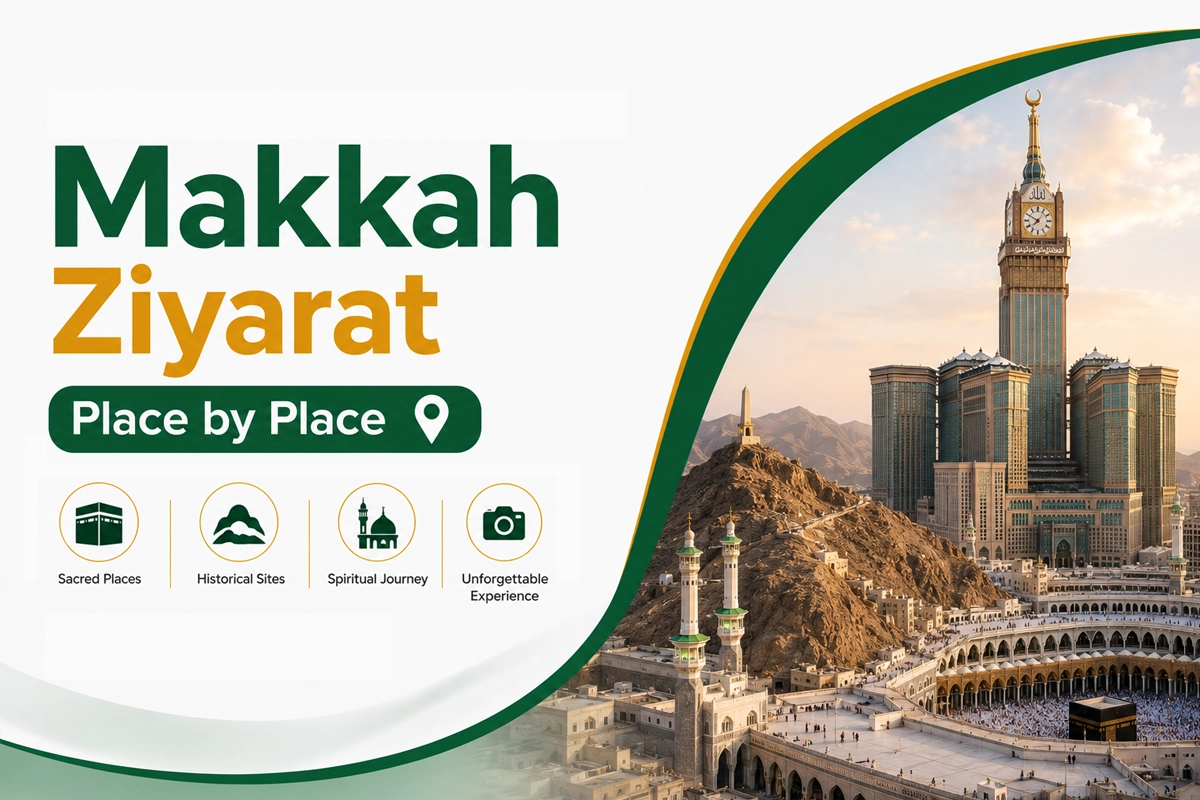
Arafat is the furthest of the three holy sites, about 22 kilometres out, and comes last on the road past Mina and Muzdalifah. All three fit into one leg of a Makkah Ziyarat round, from SAR 200 per vehicle with waiting at each stop. Fares reviewed August 2026.
Nearby
| Place | What it is | Still there? |
|---|---|---|
| Arafat | The plain, the day and the boundaries. | Yes |
| Masjid Namirah | Where Dhuhr and Asr are prayed on the ninth. | Yes |
| Masjid al-Sakharat | Stood among the rocks at the foot of the hill. | No |
| Mina | The tent valley, back towards Makkah. | Yes |
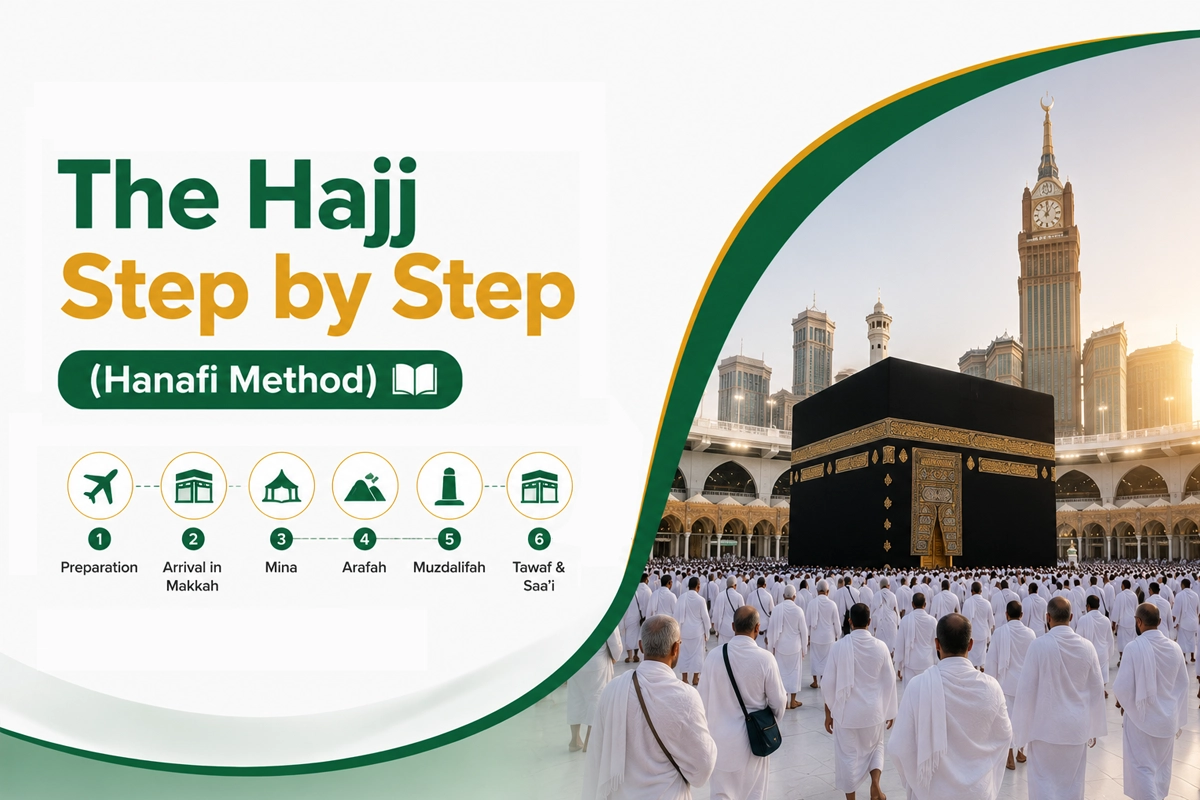
Our Hajj step by step guide sets the Day of Arafah in the order of the pilgrimage.
Accuracy note
Jabal al-Rahmah's height of 300 metres and the seven-metre marker on its summit come from Saudipedia, as does the description of Arafat as a flat plain containing the hill.
That the Prophet prayed Dhuhr and Asr combined at Namirah and then stood near the foot of the hill until sunset is established from the accounts of the Farewell Pilgrimage in the authentic collections. That all of Arafah is a place of standing is recorded in Sahih Muslim, and the virtue of the Day of Arafah, that no day sees Allah free more people from the Fire, is likewise in Sahih Muslim.
No reward for climbing the hill, for touching or writing on the marker, for tying anything to it, or for making du'a at the summit rather than elsewhere in Arafat is established in authentic evidence. We have said so plainly.
The account of Adam and Hawwa meeting at the hill, and the explanations offered for the name Arafat, are traditional material recorded in the historical and story literature and are not established by the Qur'an or authentic hadith. We have marked them as tradition. Fares are our own published rates, reviewed August 2026. Verified August 2026.
Frequently asked questions
Planning a Saudi trip?
Pre-book a private car, find a stay, or ask us anything on WhatsApp.
Last updated: 11 October 2026·Sources reviewed by the Wadana Go editorial team.