Al-Hajun and Jabal al-Sayyidah: Makkah's Northern High Ground
Short answer
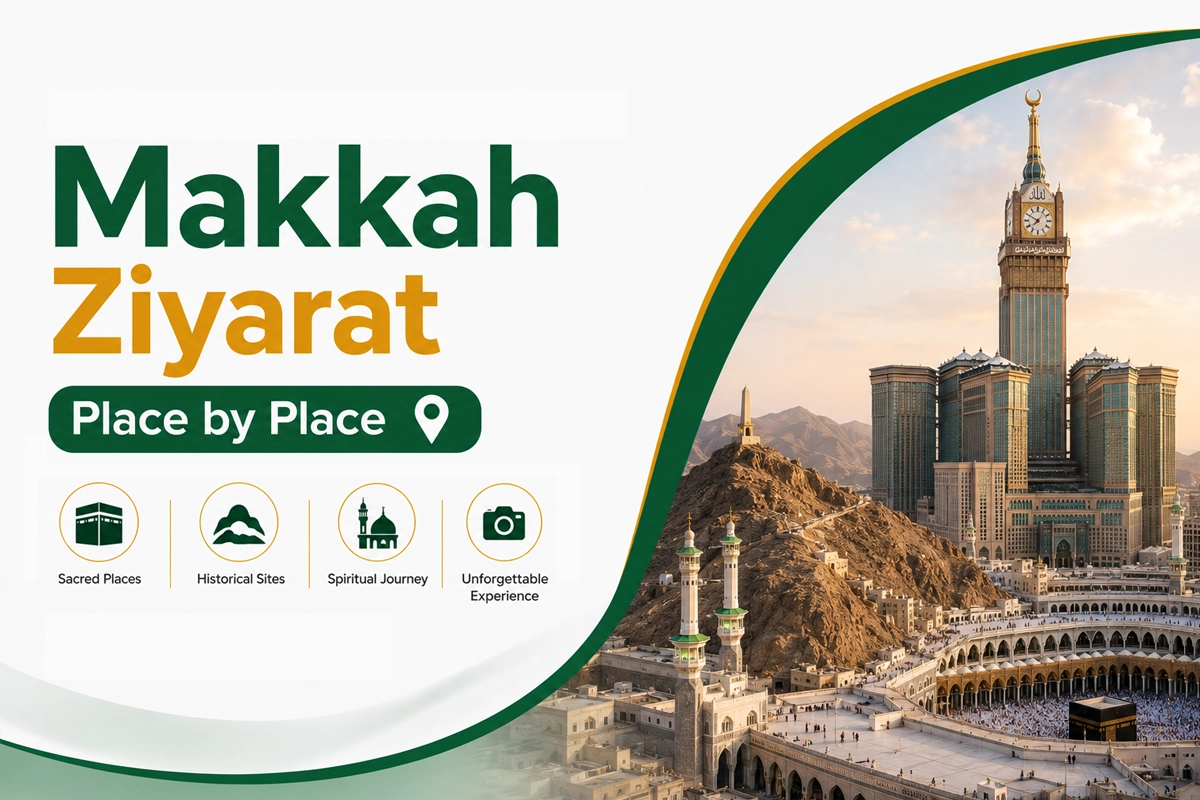
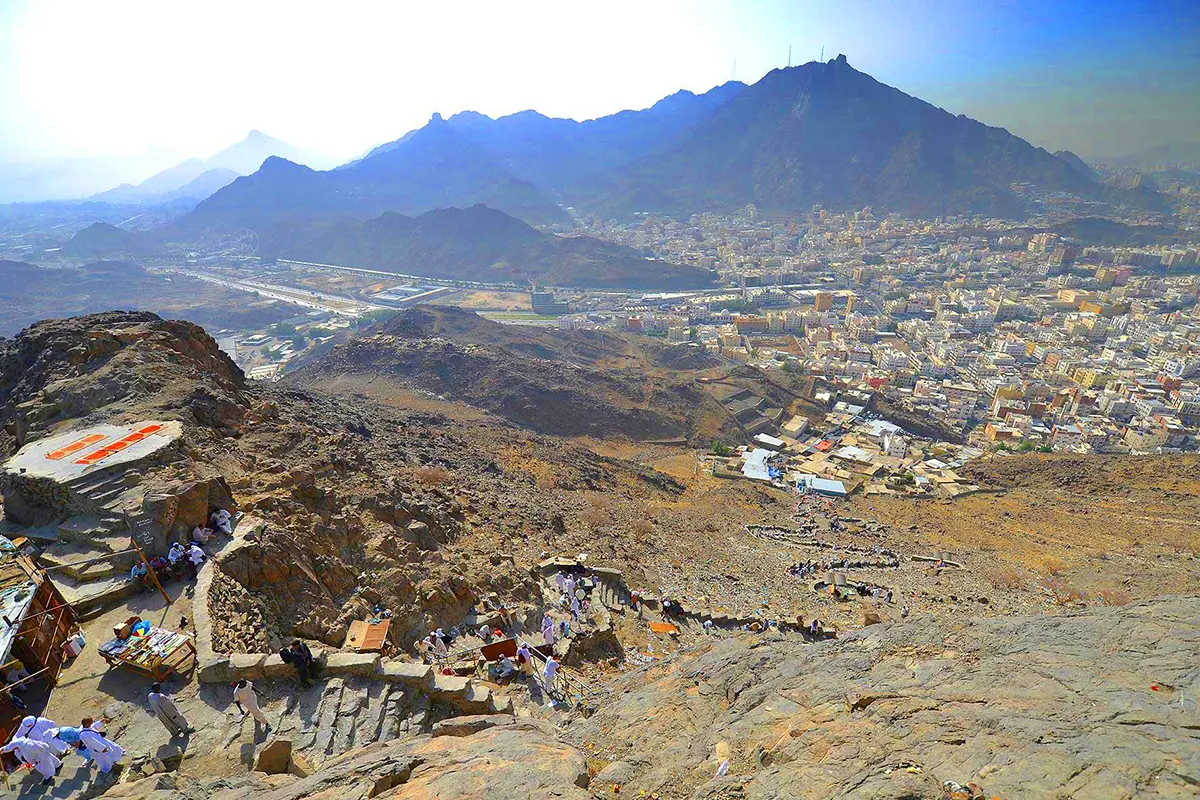
Al-Hajun is the high ground on the northern side of Makkah, above the Grand Mosque and on the old road towards Mina. Jabal al-Sayyidah is the hill in that district, with the al-Mu'alla cemetery at its foot. The area holds several of Makkah's most important historical sites and appears repeatedly in accounts of the Prophet's life.
Key takeaways
- ✓Al-Hajun is the northern high ground of Makkah, above the Haram and on the road towards Mina.
- ✓Jabal al-Sayyidah is the hill in that district, with al-Mu'alla cemetery at its base.
- ✓The cemetery, Masjid al-Jinn and the site of the banner at the conquest are all in this area.
- ✓Al-Hajun is named in the historical accounts of the conquest of Makkah in 8 AH.
- ✓Saudipedia describes al-Ma'la cemetery as lying on Mount Hajun, facing the Kaaba.
- ✓The district is ordinary residential Makkah today, dense and steeply built.
- ✓Nothing on the hill itself is a rite, and no prayer is prescribed there.
Quick facts
- City
- Makkah, Saudi Arabia
- Where
- North of the Grand Mosque, towards Mina
- Distance from the Haram
- From about 1 km
- At the foot of the hill
- Al-Mu'alla cemetery
- Also in the district
- Masjid al-Jinn, the al-Hujun area
- Car access
- Yes. Normal city roads.
- Can you climb the hill?
- No. It is built over.
- Part of Umrah?
- No. Not a rite of Hajj or Umrah.
The ground above the mosque
Makkah sits in a valley. Al-Hajun is the high ground on its northern side, above the Grand Mosque, on the line the old road took out towards Mina.
The hill in that district is Jabal al-Sayyidah. At its foot lies al-Mu'alla cemetery, which is why the two names are so often given together. Saudipedia describes the cemetery as being located on Mount Hajun, facing the Kaaba.
You will also see the district written as al-Hujun. Both spellings refer to the same area.
For a pilgrim, this matters for a simple reason: more of the Prophet's life outside the Haram is connected with this stretch of ground than with any other part of Makkah. That is not a claim about the hill being holy. It is a statement about geography. The northern approach was the road in and out of the city.
What is in the district
| Site | What it is | Still there? |
|---|---|---|
| Jannat al-Mu'alla | Makkah's oldest cemetery, at the foot of the hill. | Yes, and in daily use |
| Masjid al-Jinn | Historic mosque beside the cemetery wall. | Yes |
| Masjid al-Rayah | The banner mosque at al-Hujun. | No, demolished |
| Masjid al-Ijabah | Small historic mosque at al-Ma'abada, further out. | Yes |
| Shi'b Abi Talib | The boycott ravine, on the eastern edge of this ground. | Area only |
Five entries, two of which no longer exist as buildings. That ratio is normal for Makkah and is worth knowing before you plan a day around old lists.
Al-Hajun at the conquest
The name appears in the historical accounts of the conquest of Makkah in the eighth year after the Hijrah.
The Muslim force entered the city in several columns from different directions. The accounts record that the banner was to be planted in the upper part of Makkah, at al-Hajun, and that the Prophet's own position was in this area while the city was secured.
The conquest is established history. The detail about where the banner went and where each column entered comes from the seerah and the topographical literature about Makkah, which is reliable historical material rather than Qur'an or authentic hadith. That distinction is worth keeping, and it is the same one that applies to the banner mosque itself.
Why the cemetery is here
Because this is where Makkah has buried its dead since before Islam, and the reason is practical rather than devotional.
The valley floor floods. Makkah's floods are severe enough that they have destroyed buildings and buried mosques, as happened to Masjid al-Jinn. High ground on the northern side, out of the wadi and out of the built-up centre, is the sensible place for a burial ground.
Everything else about the cemetery, who is buried there and what visiting means, is on its own page. What belongs here is the geography: the graves are on that slope for the same reason people put graveyards on slopes everywhere.
What the district is like now
Dense, steep and ordinary. Apartment blocks stacked up the hillside, narrow streets, shops, and traffic that gets heavy at prayer times because the second ring road runs through it.
You cannot climb Jabal al-Sayyidah. It is built over, like almost every hill close to the Haram.
What you can do is drive the length of the district and stop at the two or three places that are still standing. That takes half an hour and gives you a much better sense of Makkah's shape than reading about it does.
The thing worth noticing as you go is how close everything is. The cemetery is about a kilometre from the Kaaba. Masjid al-Jinn is next to it. The ground where the army came in is minutes away. The whole northern story of Makkah fits into a small area, and modern maps make it look further apart than it is.
Is there anything prescribed on the hill?
No. No prayer is prescribed on Jabal al-Sayyidah or anywhere in al-Hajun, no reward for visiting the district or climbing the hill is established, and none of it is a rite of Hajj or Umrah.
Visiting a cemetery is a sunnah, for the reason given in the hadith, which is to remember the Hereafter. That applies to any Muslim cemetery and is covered on the al-Mu'alla page. It is not a virtue of this hill.
Seeing it properly
- Do it as one loop. Cemetery, mosque, and the al-Hujun ground are all within a few minutes of each other.
- Half an hour to forty-five minutes is enough for the whole district.
- Go after Fajr or after Asr. The middle of the day is hot and the traffic is worse.
- Combine it with the outward leg to Mina, Muzdalifah and Arafat, since the road runs this way.
- Do not expect signage. Nothing in the district is marked or explained on site.
This is the part of the standard Makkah round that people most often skip because it looks like nothing on a map, and most often say afterwards they were glad they did not. A private Ziyarat car covers it as part of the round from SAR 200 per vehicle with waiting at each stop, and our Makkah Ziyarat guide sets the order. Fares reviewed August 2026.
Accuracy note
The conquest of Makkah in the eighth year after the Hijrah is established history. The detail of the entry into the city, including the banner being planted in the upper part of Makkah at al-Hajun, comes from the seerah and from the topographical literature about the city rather than from the Qur'an or authentic hadith, and we have marked it as such.
That al-Ma'la cemetery lies on Mount Hajun facing the Kaaba comes from Saudipedia, as does the account of Masjid al-Jinn being lost under flood silt and rebuilt after its mihrab was found three metres down.
Jabal al-Sayyidah is recorded as the hill of the al-Hajun district with the cemetery at its base. We found no event established in the Qur'an or authentic hadith attached to the hill itself, and no prayer or reward is established there.
The status of the sites listed in this article was checked against current information: Masjid al-Rayah has been demolished for the northern expansion of the Grand Mosque, while the cemetery, Masjid al-Jinn and Masjid al-Ijabah remain. Makkah changes constantly, so check before planning a day around any list. Fares are our own published rates, reviewed August 2026. Verified August 2026.
Frequently asked questions
Planning a Saudi trip?
Pre-book a private car, find a stay, or ask us anything on WhatsApp.
Last updated: 12 October 2026·Sources reviewed by the Wadana Go editorial team.