Jabal Qu'ayqi'an: The Second of the Two Mountains, Largely Cut Away
Short answer
Jabal Qu'ayqi'an, also called Jabal Hindi, stood on the western side of the Grand Mosque in Makkah. With Jabal Abu Qubais it is usually identified as one of the two mountains, al-Akhshabayn, named in the hadith about the angel of the mountains after Taif. Much of the hill has been removed for the Shamiya expansion of the Grand Mosque.
Key takeaways
- ✓Jabal Qu'ayqi'an stood west of the Grand Mosque, opposite Abu Qubais on the eastern side.
- ✓It is also known as Jabal Hindi.
- ✓The two hills together are usually identified as al-Akhshabayn, named in an authentic hadith.
- ✓In that hadith the angel of the mountains offered to crush the people of Makkah between them, and the Prophet refused.
- ✓The name is explained by the clashing of weapons in a battle between Jurhum and Qatura.
- ✓Much of the hill has been removed for the Shamiya expansion, the third Saudi expansion.
- ✓There is no site to visit. What remains is the shape of the western ground.
Quick facts
- City
- Makkah, Saudi Arabia
- Where
- West of the Grand Mosque
- Also called
- Jabal Hindi
- Paired with
- Jabal Abu Qubais, as al-Akhshabayn
- Named in hadith?
- As one of the two mountains, yes
- Present state
- Largely removed for the Shamiya expansion
- Can you visit?
- No. There is no site left to visit.
- Part of Umrah?
- No. Not a rite of Hajj or Umrah.
The hill on the other side
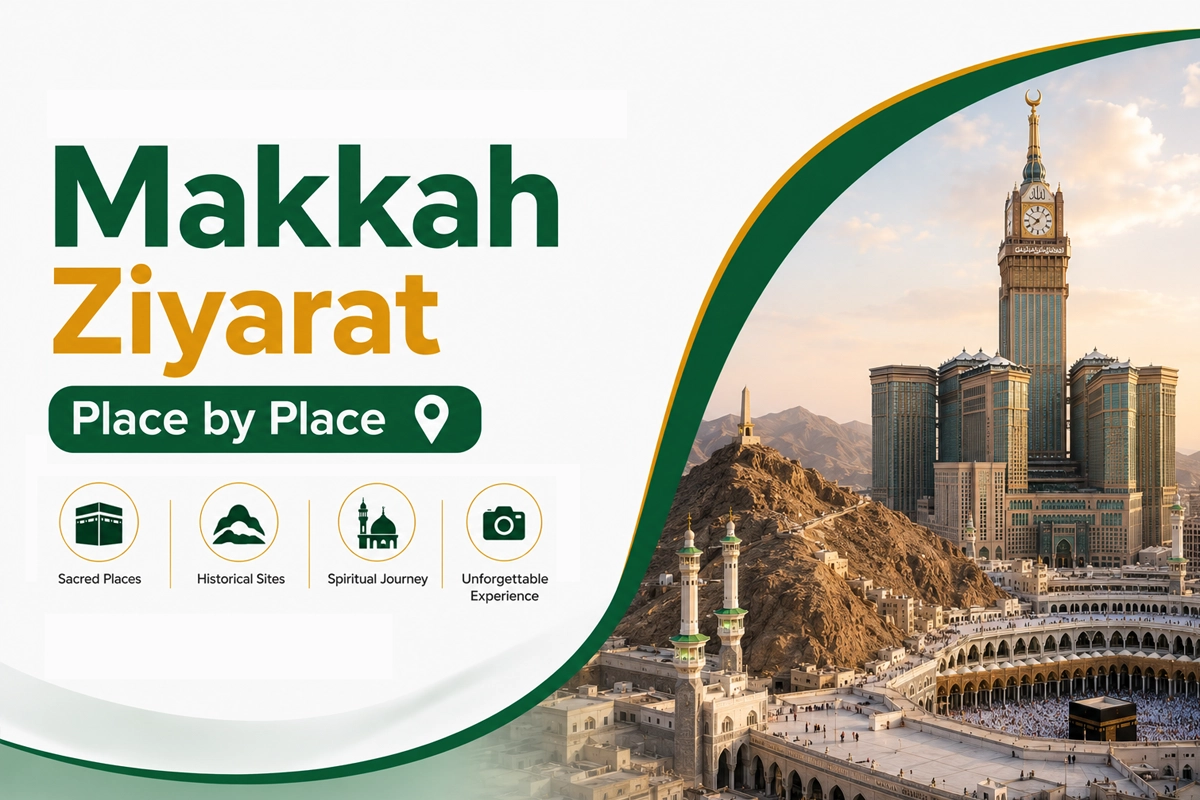
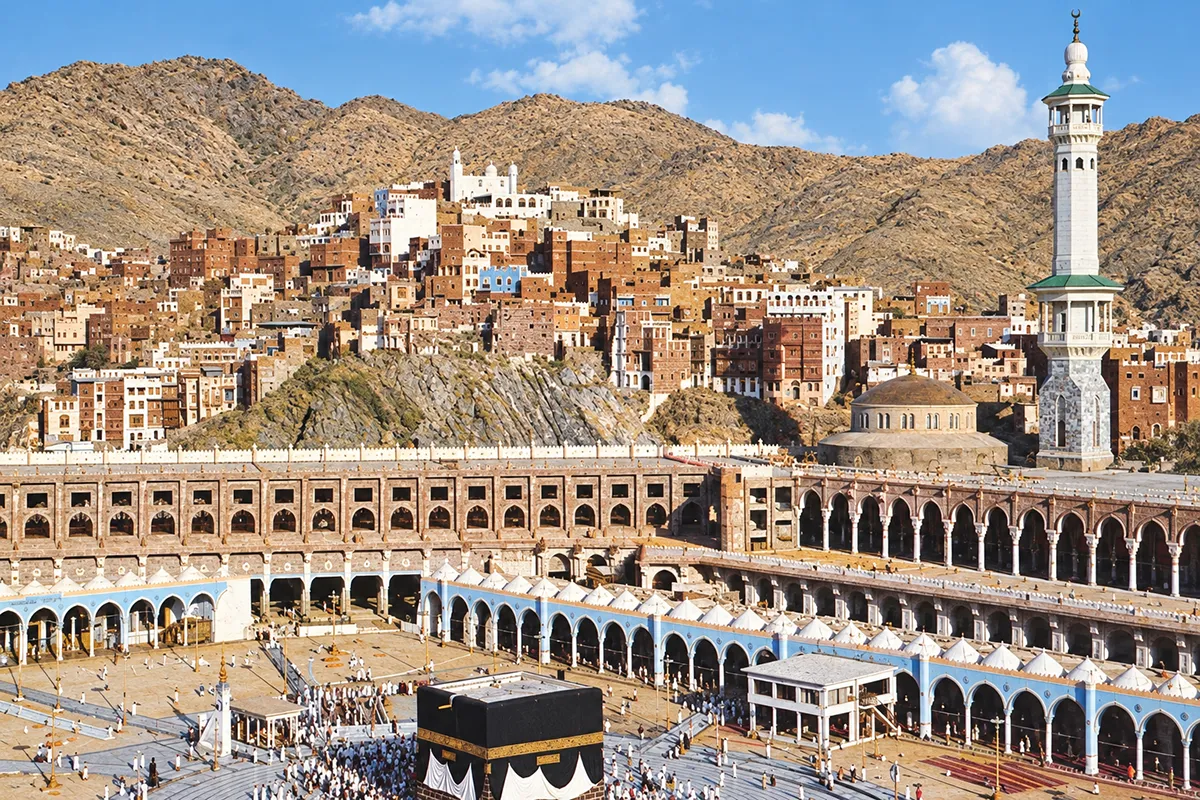
Jabal Abu Qubais stands on the eastern side of the Grand Mosque. Jabal Qu'ayqi'an stood on the western side, facing it across the valley with the Kaaba between them.
It is also called Jabal Hindi, and that is the name you are more likely to hear in Makkah today.
The two hills together were known as al-Akhshabayn, which means the two rugged ones. Older writers use that dual name constantly, because for anyone standing in the valley the pair of them defined the shape of the city.
The past tense in the paragraphs above is deliberate. Much of Qu'ayqi'an has been cut away for the Shamiya expansion, the third Saudi expansion of the Grand Mosque, along with a great deal of the western ridge.
The hadith of the two mountains
This is why the hill is worth a page at all, and it is one of the most affecting passages in the authentic collections.
Aisha asked the Prophet whether he had ever known a day harder than the day of Uhud. He answered that he had, and told her about Taif.
He had gone to Taif looking for support and was driven out, pursued and injured. On the way back, Jibril came to him and told him that Allah had heard what his people said to him, and had sent the angel of the mountains to do whatever he wished.
The angel greeted him and made the offer: if he wished, the angel would bring together al-Akhshabayn, the two mountains, and crush them in between.
The Prophet said no. He said he hoped instead that Allah would bring out from their descendants people who would worship Allah alone.
That is in Sahih al-Bukhari and in Sahih Muslim. It is established evidence, agreed on by both collections.
Which two mountains?
A point of honest detail. The hadith says al-Akhshabayn, the two mountains of Makkah, without naming them individually.
The usual identification in the classical literature is Abu Qubais and Qu'ayqi'an, the pair that face each other across the valley. Some sources instead name the second as al-Ahmar, and there are writers who treat al-Ahmar and Qu'ayqi'an as the same hill under different names.
So: the hadith is certain, and the naming of the specific hills is the ordinary work of geographers rather than something the hadith itself supplies. Nothing about the meaning of the report depends on which identification you accept.
Where the name comes from
The histories of Makkah explain Qu'ayqi'an by sound. The word is connected to the clattering or clanking of weapons, and the story attached to it is a battle fought there between the tribes of Jurhum and Qatura in the period long before Islam.
That is a pre-Islamic tradition preserved in the historical literature about the city. Treat it as an old explanation of a name rather than as documented history. Place-name stories of this kind are common in the sources and they are rarely verifiable.
What is there now
Construction, and the cut faces of rock where the hill used to be.
The western side of the Haram has been transformed more than any other. The Shamiya expansion took in a large part of the ground, and the neighbouring Jabal Omar development took in most of the rest, replacing the old western ridge with hotel towers.
If you stay on the western side of the Haram, your hotel is very likely built on or into what was that ridge.
There is no hill to climb, no viewpoint, no marked site and nothing to photograph beyond the modern city. Any list that offers you Jabal Qu'ayqi'an as a Ziyarat stop is working from an old book.
Was anything prescribed there?
No. No prayer is prescribed on either of the two mountains, no reward for climbing or visiting them is established, and neither is a rite of Hajj or Umrah.
The hadith about al-Akhshabayn is not an instruction to visit them. It is a record of what the Prophet chose when he was offered revenge, and the mountains are the setting rather than the subject.
That is worth sitting with for a moment. The people he refused to have crushed are the ancestors of the people who now fill that valley five times a day. He said he hoped their descendants would worship Allah alone, and you are standing in the answer.
If you want to see the ground
You cannot visit the hill, but you can read the shape of the place, which is the honest version of this visit.
- Stand in the mataf and look east, then west. The high ground on both sides is what the dual name described.
- The eastern side is still recognisably a hill. Abu Qubais is intact enough to see, with a palace on top.
- The western side is towers. That contrast is the clearest picture you will get of what has changed.
- An upper-floor room on either side shows it better than anything at street level.
There is nothing to drive to and nothing to book. Our where to stay in Makkah guide covers the districts on both sides of the mosque, and the distance from the Haram guide explains what the walk actually involves from each.
Related
| Place | What it is |
|---|---|
| Jabal Abu Qubais | The eastern hill, the other of the two. |
| Safa | At the foot of Abu Qubais, where sa'i begins. |
| Masjid al-Rayah | Another Makkah site removed for expansion work. |
| Masjid al-Haram | The mosque the expansions were for. |
Accuracy note
The hadith of the angel of the mountains, including the offer to bring together al-Akhshabayn and the Prophet's refusal, is recorded in Sahih al-Bukhari and Sahih Muslim, narrated from Aisha. This is established evidence.
The hadith names al-Akhshabayn without identifying the two hills individually. The identification of them as Abu Qubais and Qu'ayqi'an is the usual one in the classical geographical literature on Makkah, and some sources name al-Ahmar instead of, or as another name for, Qu'ayqi'an. We have set that out rather than presenting one identification as certain.
The hill's position west of the Grand Mosque, its alternative name Jabal Hindi, the explanation of its name by the clashing of weapons in a battle between Jurhum and Qatura, and its removal for the Shamiya expansion are drawn from published Saudi reporting on Makkah's historic mountains. The battle account is a pre-Islamic tradition preserved in the historical literature rather than documented history.
No prayer or reward is established on either mountain and neither is a rite of Hajj or Umrah. Verified August 2026.
Frequently asked questions
Planning a Saudi trip?
Pre-book a private car, find a stay, or ask us anything on WhatsApp.
Last updated: 13 October 2026·Sources reviewed by the Wadana Go editorial team.