Jabal Abu Qubais: The Hill Above the Kaaba, and Two Claims to Check
Short answer
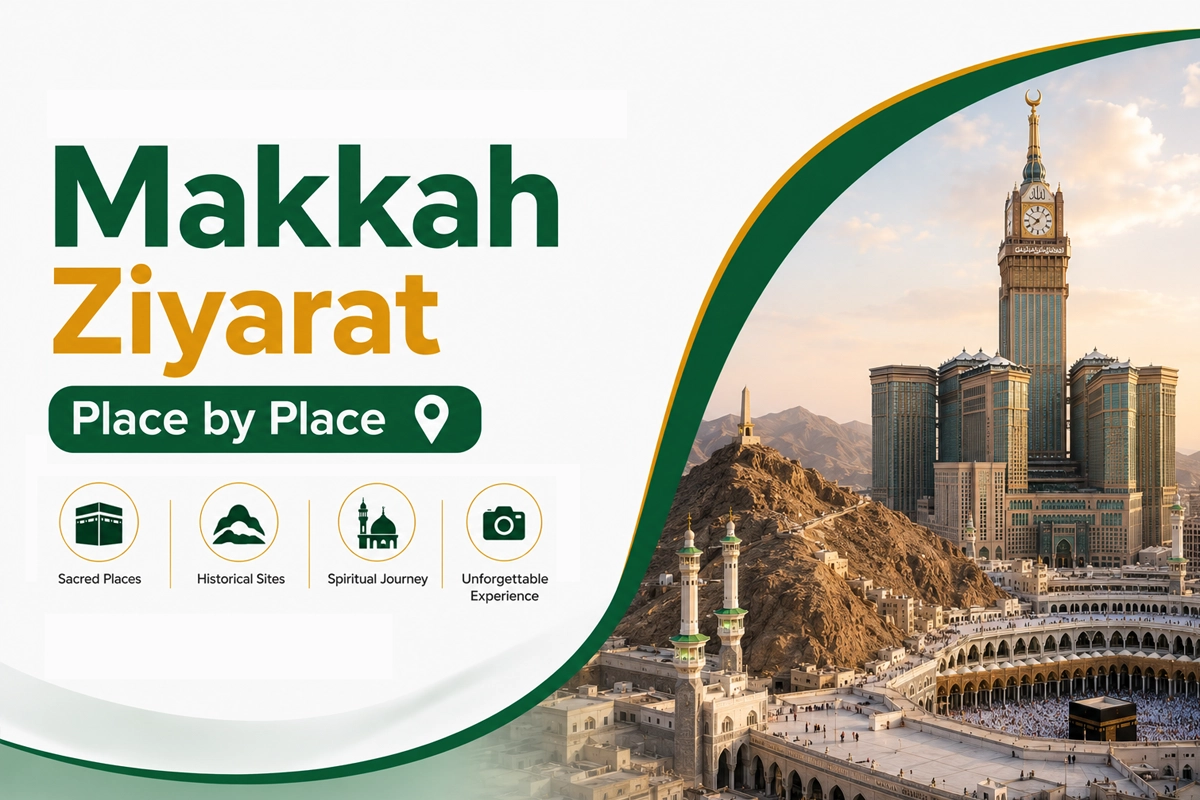
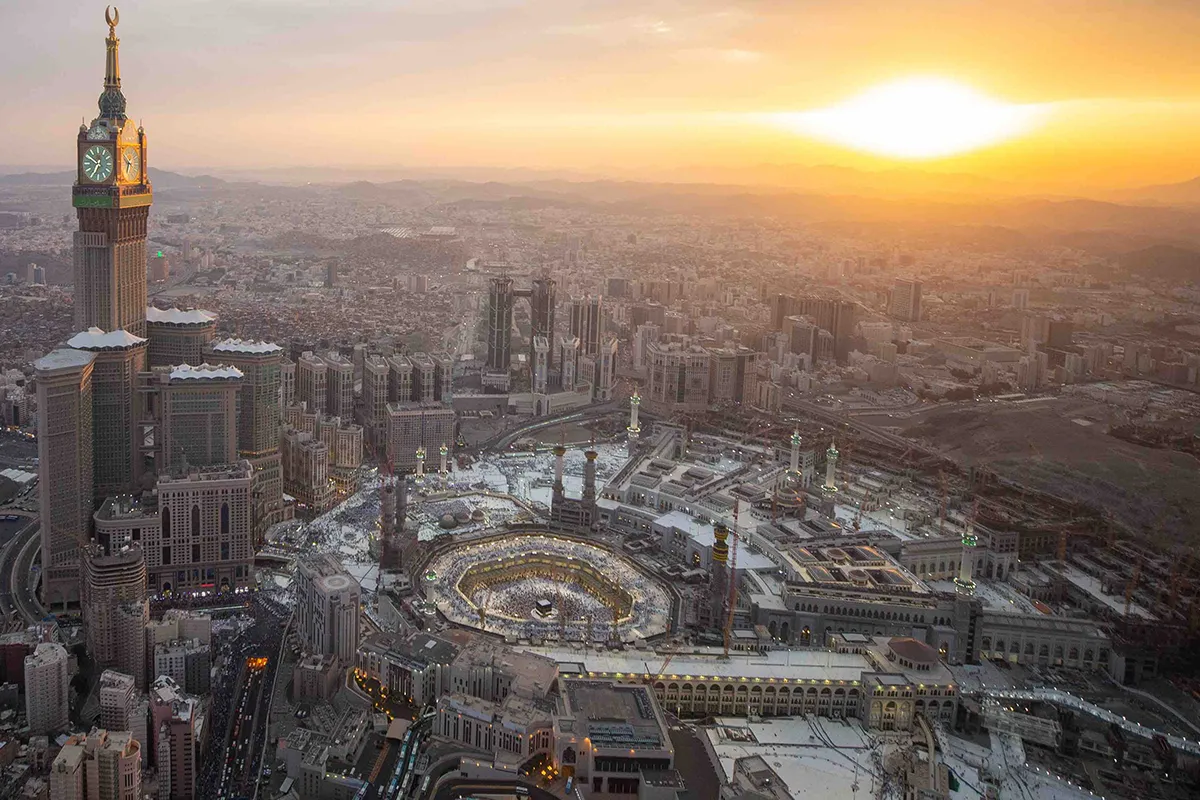
Jabal Abu Qubais is the hill immediately beside the Grand Mosque in Makkah, the closest mountain to the Kaaba, rising roughly 420 metres above sea level. Safa stands at its foot. Two well-known stories attached to it, the splitting of the moon and the sheltering of the Black Stone, are traditional attributions rather than established evidence.
Key takeaways
- ✓Jabal Abu Qubais is the closest hill to the Kaaba, rising about 420 m above sea level.
- ✓The hill of Safa sits at its base, which is why the two are so often mentioned together.
- ✓The splitting of the moon is established in the Qur'an and hadith. Its link to this hill is not.
- ✓The authentic narrations place that event at Mina and mention Hira, not Abu Qubais.
- ✓The story of the Black Stone sheltering here during the flood is traditional, not authentic.
- ✓The summit is occupied by a palace complex and is not open to visitors.
- ✓You can see the hill from the mataf. That is as close as a visit gets.
Quick facts
- City
- Makkah, Saudi Arabia
- Height
- About 420 m above sea level
- Distance from the Kaaba
- The nearest hill to it
- At its foot
- Safa, where sa'i begins
- Also called
- Al-Amin, the trustworthy
- Can you climb it?
- No. The summit is a palace complex.
- Best view of it
- From the mataf or the eastern courtyards
- Part of Umrah?
- No. The hill itself is not a rite.
The hill you have already seen
If you have done tawaf, you have looked at Jabal Abu Qubais without necessarily knowing its name. It is the steep rise immediately on the eastern side of the Grand Mosque, and it is the closest hill to the Kaaba.
Reported figures put it at about 420 metres above sea level. Safa, where sa'i begins, sits at its foot, which is why the two names come up together so often.
The hill is also called al-Amin, the trustworthy or the safekeeper, in older sources.
You cannot climb it. The summit is occupied by a large palace complex, and the whole hill has been reshaped by decades of construction around the Haram. Whatever you have read about walking up it belongs to a Makkah that no longer exists.
What is actually established
Short list, and worth having clear before the long one.
- The hill is real and is where the sources say it is, immediately beside the sacred mosque.
- Safa is at its base, and Safa is named in the Qur'an as one of the symbols of Allah, in Surah al-Baqarah.
- The hill appears constantly in the early topographical descriptions of Makkah as a landmark of the city.
That is the firm ground. Everything after this needs handling more carefully.
The splitting of the moon
This is the claim you will hear most often, usually stated flatly: that the Prophet stood on Jabal Abu Qubais and the moon was split in two.
The event is certain. Surah al-Qamar opens by saying that the Hour has drawn near and the moon has split. The authentic collections carry several narrations of it, from Anas ibn Malik, from Abdullah ibn Mas'ud and from others. Nobody serious disputes that it happened.
The location is a different matter. Look at what the narrations actually say.
Ibn Mas'ud's narration in the authentic collections places the companions at Mina when the moon split, with one part behind the mountain and one part in front of it.
Anas ibn Malik's narration describes the people of Makkah asking for a sign, and the moon being shown split in two halves with Hira visible between them.
Mina. Hira. Neither narration names Abu Qubais.
So the honest position is this. The splitting of the moon is established beyond doubt. The claim that it happened from the top of Jabal Abu Qubais is a traditional attribution that the authentic narrations do not support, and one that sits awkwardly beside narrations that name other places. If a guide tells you the Prophet stood on that summit and pointed, he is repeating something that has been repeated a great deal and checked very little.
The Black Stone and the flood
The second story: that when the flood of the time of Nuh came through Makkah, the Black Stone was kept safe on Jabal Abu Qubais until Ibrahim came to set it in the Kaaba, and that this is why the hill is called al-Amin, the safekeeper.
This is a long-standing tradition in the historical literature about Makkah. It is not established by the Qur'an or by an authentic hadith.
It has the shape of the reports that circulated in the early historical works about the pre-Islamic history of the sanctuary, many of which were transmitted without the kind of chain that hadith scholars require. Some scholars repeat it; others pass over it entirely.
Our position is the one the evidence supports: it is a traditional account, it may be true, and it cannot be asserted as fact. Nothing about the Black Stone's standing in Islam depends on it.
Why we are being fussy about this
Because a pilgrim who is told two stories as facts, and later finds out that neither is in the authentic collections, does not just lose the two stories. They start wondering what else they were told.
There is plenty about Makkah that is certain, enormous and moving, and none of it needs help. The Kaaba, the Black Stone, Safa and Marwah, Zamzam, the first revelation on Jabal al-Noor: all of that stands on the strongest evidence there is.
Abu Qubais is a real hill that overlooks the most important place on earth for a Muslim, in a city where the Qur'an was revealed. That is already interesting. It does not need borrowed miracles.
Can you visit it?
Not the hill itself. The summit is a palace complex and is not open.
What you can do:
- Look at it from the mataf or from the eastern side of the mosque. It is the high ground directly above you.
- Notice it during sa'i. Safa is on its lower slope. When you climb the few steps at Safa, you are standing on the foot of Abu Qubais.
- See it from a hotel room on the eastern side, which gives the clearest sense of how it hangs over the mosque.
There is nothing to book and nowhere to drive. This is a landmark you observe rather than a site you visit, and any itinerary offering you a trip up Jabal Abu Qubais is selling something that is not available.
For the sites around Makkah that you can visit, our Makkah Ziyarat guide sets out the standard round, and a private Ziyarat car covers it from SAR 200 per vehicle. For getting to the Haram in the first place, the Jeddah airport transfer is the usual first booking. Fares reviewed August 2026.
Is anything prescribed on the hill?
No. There is no prayer prescribed on Jabal Abu Qubais, no reward established for climbing it or facing it, and no rite of Hajj or Umrah connected to the hill itself.
Safa, at its base, is a different matter entirely: sa'i between Safa and Marwah is part of both Hajj and Umrah, and Safa is named in the Qur'an. That has nothing to do with the mountain behind it.
Nearby
| Place | What it is |
|---|---|
| Safa | At the foot of the hill, where sa'i begins. |
| The Kaaba | Directly below, inside the mosque. |
| Shi'b Abi Talib | The boycott ravine, on the same eastern side of the city. |
| Dar al-Arqam | Stood at the foot of Safa, now inside the mosque. |
Accuracy note
The splitting of the moon is established in the Qur'an, in Surah al-Qamar, and in the authentic collections through several narrations. The narration of Abdullah ibn Mas'ud places the companions at Mina at the time, and the narration of Anas ibn Malik describes Hira being visible between the two halves. Neither names Jabal Abu Qubais, and we have therefore treated the link between the event and this hill as a traditional attribution rather than as established evidence.
The account of the Black Stone being kept on Jabal Abu Qubais during the flood of the time of Nuh comes from the historical literature about Makkah and is not established by the Qur'an or authentic hadith. We have marked it as traditional.
The hill's height of about 420 metres, its position as the closest hill to the Kaaba, the alternative name al-Amin, and the presence of a palace complex on the summit are drawn from published descriptions of Makkah. Figures for the height vary between sources, so treat it as approximate.
Safa's status is a separate matter and is established: it is named in the Qur'an in Surah al-Baqarah and sa'i between Safa and Marwah is part of Hajj and Umrah. Nothing on the hill above it is prescribed. Fares are our own published rates, reviewed August 2026. Verified August 2026.
Frequently asked questions
Planning a Saudi trip?
Pre-book a private car, find a stay, or ask us anything on WhatsApp.
Last updated: 13 October 2026·Sources reviewed by the Wadana Go editorial team.