Dar al-Arqam: The House Where Islam Met in Secret
Short answer
Dar al-Arqam was the house of the Companion al-Arqam ibn Abi al-Arqam, at the foot of the hill of Safa in Makkah. The early Muslims met there in secret during the first years of Islam, and it is where Umar ibn al-Khattab is recorded as coming to the Prophet. The house no longer stands. Its site was taken into the Grand Mosque during twentieth-century expansion.
Key takeaways
- ✓Dar al-Arqam stood at the foot of Safa, very close to the Kaaba, in the earliest years of Islam.
- ✓It was the first gathering place of the Muslim community and its first place of teaching.
- ✓The house was chosen for practical reasons: a narrow street, sightlines, and a discreet entrance.
- ✓The seerah records Umar ibn al-Khattab coming to the Prophet there and accepting Islam.
- ✓The community left the house and went public once its numbers had grown.
- ✓The building is gone. Its site was absorbed into the Grand Mosque during expansion work.
- ✓A gate of the Haram near Safa carries the name Bab Dar al-Arqam.
Quick facts
- City
- Makkah, Saudi Arabia
- Original location
- At the foot of Safa, near the Kaaba
- Whose house
- Al-Arqam ibn Abi al-Arqam, a Companion
- Period
- The first years of the Makkan call
- Does it still stand?
- No. Absorbed into the Grand Mosque.
- What marks it
- Bab Dar al-Arqam, a gate near Safa
- Can you visit?
- Only the area, inside the Haram
- Part of Umrah?
- No, though the site is inside the Haram
A house at the foot of Safa
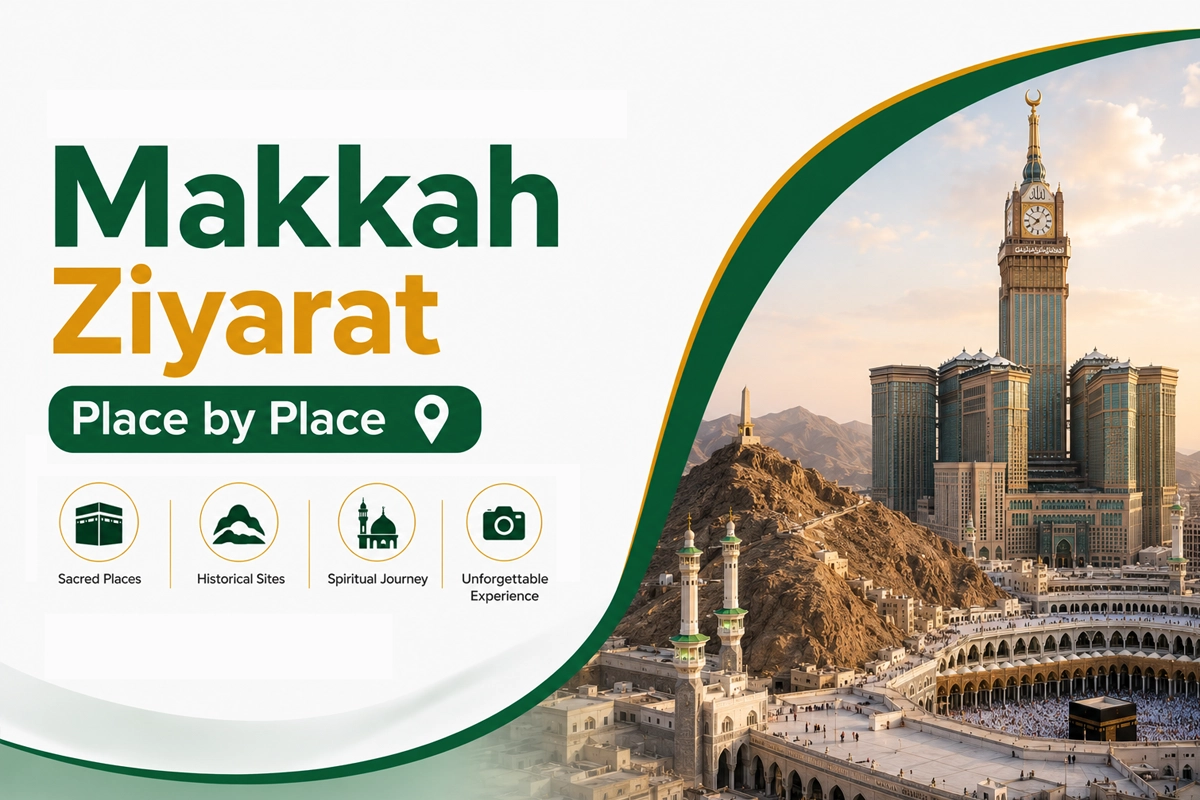
For a period in the earliest years of Islam, the entire Muslim community could fit inside one ordinary house in Makkah. That house belonged to a young man called al-Arqam ibn Abi al-Arqam, and it stood at the foot of Safa, a very short walk from the Kaaba.
It is worth pausing on how close that is. The people meeting in secret were meeting in the middle of the city, within sight of the place their opponents gathered. They were not hiding in a cave in the hills.
You cannot visit the house. It is gone. During the twentieth-century expansions of the Grand Mosque the whole area was taken into the mosque complex, and what stood there is now marble floor and colonnade. A gate of the Haram near Safa carries the name Bab Dar al-Arqam, which is the only marker left.
Why this house
The choice was not sentimental. The seerah literature describes a set of practical advantages, and they read like the thinking of people who expected to be watched.
- The street was narrow, and could be watched from inside the house. Anyone approaching was seen before they arrived.
- There was a discreet entrance, out of view of the neighbours, so people could come and go without a crowd forming at a door.
- Al-Arqam's family connection made the house an unlikely place to search. He was from Banu Makhzum, the clan of some of the fiercest opponents of the Prophet, which is exactly why nobody expected to find the Muslims there.
- It was central. People going in and out of a house near Safa were not doing anything unusual.
Al-Arqam himself accepted Islam very early. Giving his house over to this use was not a small offer at the time.
What the house was used for
Two things, mainly, and the second matters more than people give it credit for.
The first was prayer. In the early period Muslims could not pray openly at the Kaaba without being harassed or worse, so they prayed here.
The second was teaching. New Muslims came to this house to learn what had been revealed so far, to memorise it, and to be taught how to pray. The community that came out of that house a few years later knew what it believed because it had been taught in a room.
That is why the house is often described as the first school in Islam. It is a fair description as long as nobody imagines a building with classrooms. It was somebody's home.
Umar comes to the door
The best-known episode connected with the house is the acceptance of Islam by Umar ibn al-Khattab.
The account in the seerah has him setting out with a weapon, intending harm to the Prophet, being diverted by news about his own sister, going to her house, hearing the Qur'an being recited there and being shaken by it. He then asked where the Prophet was. He was told: at the house of al-Arqam, near Safa.
He went there. The Muslims inside saw him coming and knew what he had set out to do. He accepted Islam at the door.
The sources record that the community soon afterwards left the secrecy of the house and prayed openly at the Kaaba.
How firm is all this?
Worth being straight about, because different parts of this story sit on different footings.
Al-Arqam ibn Abi al-Arqam is an established Companion. That is not in question.
The role of his house as the meeting place of the early community, and Umar's coming to the Prophet there, are recorded in the standard early biographies of the Prophet. That is reliable historical material, and it is the same class of source that gives us most of what we know about the Makkan period.
It is not, however, in the Qur'an or in the two Sahih collections by name. If you have read pages that quote a hadith about Dar al-Arqam, check it. The strength here comes from the seerah, not from an authentic narration naming the house.
That does not weaken the story. It places it correctly. Most of the Makkan period is known to us this way.
What is there now
Marble, and a gate with a name on it.
The house was taken into the Grand Mosque during the expansion work of the twentieth century, along with a great many other buildings in the streets around the Haram. There is no preserved room, no foundation on display and no marked spot inside the mosque.
What you can do, if the history matters to you, is stand near Safa during your sa'i and know that the ground under the marble is where the community began. That is the whole of the visit, and it costs you nothing extra.
Our guide to Safa and Marwah covers the sa'i itself, and the Masjid al-Haram visitor guide covers the gates and how to find your way around the mosque.
Is there anything prescribed here?
No. There is no prayer prescribed at the site of Dar al-Arqam, no reward established for seeking it out, and no rite of Hajj or Umrah connected to it.
The site is inside the Haram, so anyone praying there is getting the reward of praying in the Grand Mosque, which is established and enormous. That reward has nothing to do with the house.
Nobody should be looking for a particular spot on the floor. There is nothing to find, and looking for it is the sort of thing the plain marble is there to discourage.
Nearby
| Place | What it is |
|---|---|
| Safa | The hill the house stood beneath, and the start of sa'i. |
| The Kaaba | A short walk from where the house stood. |
| Jannat al-Mu'alla | Where several of the earliest Muslims were buried. |
| Ghar Hira | Where the revelation began, a few years before the house was used. |
Since the site is inside the Grand Mosque, there is nothing to drive to. What matters for this one is where you stay and how easily you reach the Haram. Our where to stay in Makkah guide covers the hotel districts, and a Jeddah airport transfer is the leg most pilgrims book first.
Accuracy note
Al-Arqam ibn Abi al-Arqam is an established Companion of the Prophet. The use of his house at the foot of Safa as the meeting and teaching place of the early Muslim community, the reasons the house suited that purpose, and Umar ibn al-Khattab's coming to the Prophet there are recorded in the standard early biographies of the Prophet. This is reliable historical material rather than Qur'an or authentic hadith, and we have said so plainly in the article.
The house no longer exists. Its site was absorbed into the Grand Mosque during twentieth-century expansion work, and a gate of the Haram near Safa carries the name Bab Dar al-Arqam.
No prayer, reward or rite is established at this site beyond the reward of praying inside the Grand Mosque itself, which applies to the whole mosque. Verified August 2026.
Frequently asked questions
Planning a Saudi trip?
Pre-book a private car, find a stay, or ask us anything on WhatsApp.
Last updated: 13 October 2026·Sources reviewed by the Wadana Go editorial team.