Safa and Marwah: A Complete Guide to Sa'i
Short answer
Safa and Marwah are two small hills inside Masjid al-Haram in Makkah, about 450 metres apart. Walking between them seven times is called sa'i, and it is part of both Umrah and Hajj. You start at Safa and finish at Marwah, so a there-and-back counts as two laps, not one. Seven laps come to roughly 3.1 km.
Key takeaways
- ✓Sa'i means walking seven times between Safa and Marwah. Start at Safa, finish at Marwah.
- ✓Safa to Marwah is one lap. Coming back is the second. Counting a round trip as one is the most common mistake in the mas'a.
- ✓The Qur'an names both hills in Surah al-Baqarah 2:158. The walk repeats Hajar's search for water, recorded in Sahih al-Bukhari 3364.
- ✓Between the two green lights, men jog lightly. Women walk at their normal pace the whole way.
- ✓Every school of law requires sa'i. They differ on whether it is a pillar or an obligation, not on whether you can skip it.
- ✓There is no fixed du'a for each lap. Say what you want, in your own language.
- ✓The mas'a is air-conditioned, four levels high and about 450 metres one way. Middle lanes are kept for wheelchairs and carts.
Quick facts
- City
- Makkah, Saudi Arabia
- Location
- Inside Masjid al-Haram, next to the tawaf area
- Part of Umrah
- Yes, after tawaf
- Part of Hajj
- Yes
- Distance one way
- About 450 metres
- Seven laps
- Roughly 3.1 km, usually 30 to 50 minutes
- Start and finish
- Start at Safa, finish at Marwah
- Can a car reach it
- No, it is inside the mosque. You walk in.
- Wheelchair access
- Yes, central lanes on every level
- Best time
- After Fajr or late at night, when the hall is emptiest
If you are performing Umrah, you will walk between Safa and Marwah. It comes straight after tawaf, and most people finish it in 30 to 50 minutes. For a healthy adult it is not hard walking.
What trips people up is not the walk. It is arriving at Safa and not being sure where to start, how to count, or why they are doing it at all. This page covers all of that in plain language.
What Safa and Marwah are
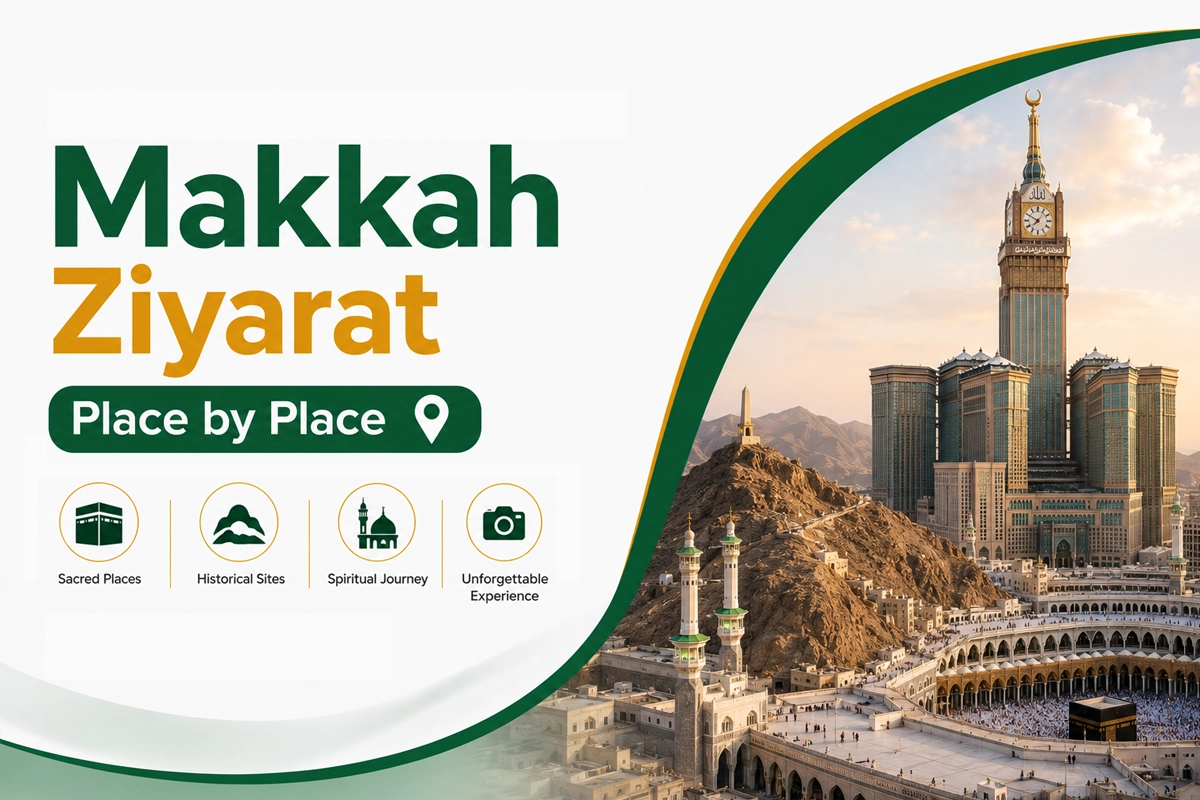
Safa and Marwah are two small rocky hills in Makkah. Safa is the southern one, closest to the Kaaba. Marwah is the northern one. The distance between them is roughly 450 metres.
They used to be open hills standing in the valley outside the mosque. They are now enclosed inside Masjid al-Haram, and the ground between them is a long covered hall. Most of each hill is buried under marble today, but a section of the original rock has been left exposed at both ends, behind glass and railings. You can still see the real stone.
Two words you will hear all week:
- Sa'i is the act of walking seven times between the two hills.
- Mas'a is the hall you walk in.
The mas'a is inside the mosque, so you do not travel anywhere to reach it. You walk out of the tawaf area and it is right there.
The story behind the walk
The reason for sa'i is recorded in a long narration of Ibn Abbas in Sahih al-Bukhari (hadith 3364).
Ibrahim left his wife Hajar and their infant son Ismail in the valley of Makkah. There was no water there and nobody living there. When the water they had ran out and the child grew thirsty, Hajar climbed Safa to look for anyone who might help. She saw no one. She crossed the valley floor to Marwah and looked from there. She went back and forth between the two hills seven times.
On the last time she heard a sound near the place of Zamzam, and water came up from the ground. She started banking the sand around it to stop it running away.
At the end of that narration the Prophet ﷺ said this is why people make sa'i between them.
So when you walk, you are repeating the search of a mother left alone in a dry valley with a baby, who kept going back for one more look. Hold that in your mind on the fourth or fifth lap when your legs start complaining. It changes the walk.
What the Qur'an says
The Qur'an names both hills by name in Surah al-Baqarah, verse 158: "Indeed, as-Safa and al-Marwah are among the symbols of Allah. So whoever makes Hajj to the House or performs Umrah, there is no blame upon him for walking between them."
The wording of that verse has a background, and it is worth knowing. Aishah was asked about it, because on the surface "no blame" sounds like sa'i is merely permitted rather than required. She explained that some of the Companions had felt uneasy about walking between the two hills, because in the time before Islam idols stood there and people used to make that walk for them. The verse removed their discomfort. It did not make sa'i optional. This explanation is recorded in both Sahih al-Bukhari and Sahih Muslim.
Is sa'i part of Umrah and Hajj?
Yes, in both. Nobody disagrees that you have to do it.
Scholars do differ on what happens if someone leaves it out. The Maliki, Shafi'i and Hanbali schools treat sa'i as a pillar of the Umrah, which means the Umrah is not valid without it and there is no way to make up for missing it except by doing it. The Hanafi school treats it as obligatory rather than a pillar, which means leaving it out is a serious omission that requires a compensating sacrifice.
The practical advice is the same under every view. Do not skip it, and do not leave part of it. If you become unwell partway through, rest, then complete the remaining laps. You do not have to finish all seven in one unbroken effort.
What sa'i is not
Sa'i is not a separate visit and not an optional extra. It is one of the steps of the Umrah itself, done in order: ihram, tawaf, sa'i, then cutting the hair. Doing sa'i before tawaf is out of order.
How to perform sa'i, step by step
After your tawaf and your two rak'ahs near Maqam Ibrahim, drink Zamzam, then follow the signs to Safa. The direction is marked clearly in several languages.
- Go to Safa first. Not Marwah. The order is fixed. Signs and floor markings show the way.
- Face the Kaaba when you reach Safa and, if you can see it, raise your hands and make du'a. The Prophet ﷺ recited the verse about Safa and Marwah as he approached the hill.
- Walk down towards Marwah. Walking is the normal pace. This is lap one.
- Between the two green lights, men jog lightly. Women walk normally the whole way. More on this below.
- Reach Marwah. That is lap one complete. Turn, make du'a if you wish, and walk back. Arriving at Safa again is lap two.
- Keep going until you have counted seven. You will end at Marwah, not at Safa. If you end at Safa, you have done six or eight and need to check.
- Say what you want along the way. There is no fixed wording the Prophet ﷺ prescribed for each lap. Du'a in your own language is fine, and so is dhikr, or Qur'an, or silence.
- After the seventh lap, leave the mas'a and cut your hair. Men shave or shorten all round. Women cut a fingertip length from the end of their hair. Then your Umrah is finished and you leave ihram.
One thing to fix in your head before you start: Safa to Marwah is one lap, and Marwah back to Safa is the second. A there-and-back is two, not one. Counting a round trip as one is the single most common mistake in the mas'a, and it turns seven laps into fourteen.
The green lights and who runs
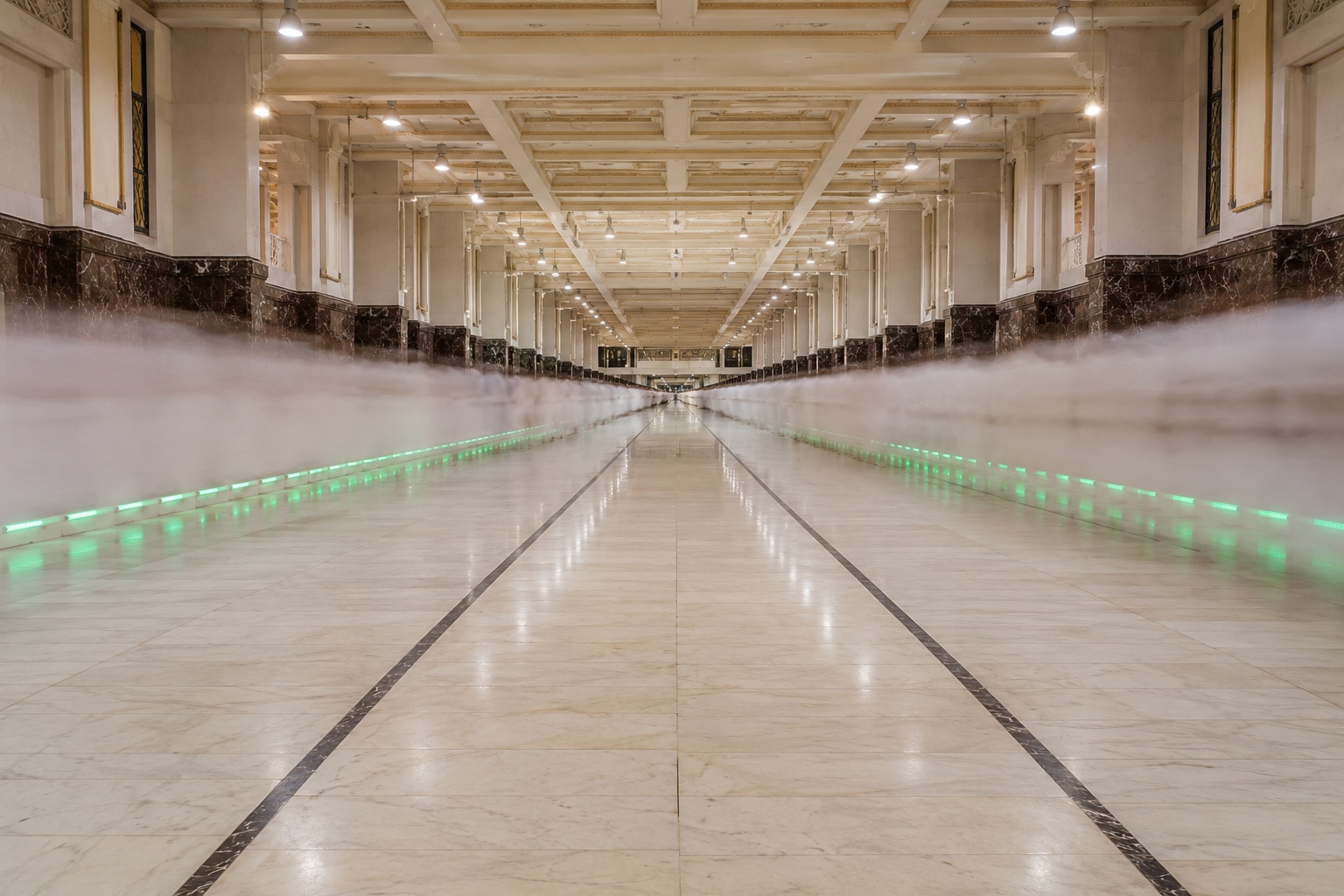
Partway along the hall you will see two sets of green lights on the walls, with green markings on the floor between them. That stretch is roughly 50 to 60 metres.
This is the section of the old valley floor where the ground dipped. Men jog or move briskly through it, which follows what the Prophet ﷺ did. Women walk at their normal pace through it and everywhere else. That is not a lesser version of the ritual, it is what women are meant to do.
Two practical notes. The jog is a light jog, not a sprint, and if you are elderly or unwell or the crowd is heavy, walking through is fine. Men should also keep both shoulders covered during sa'i. Uncovering the right shoulder, called idtiba, belongs to the tawaf, not to sa'i.
What the mas'a is like today
The hall does not look like a hill path any more. It looks like a wide marble concourse, and it was rebuilt to move very large numbers of people safely.
In the King Abdullah expansion, carried out between 2007 and 2009, the mas'a was widened from about 20 metres to about 40 metres and raised to four levels, taking the total area past 87,000 square metres. Saudi figures from that project put the hourly capacity at roughly 118,000 people, up from around 44,000 before.
| Feature | Detail |
|---|---|
| Distance one way | About 450 metres |
| Seven laps total | Roughly 3.1 to 3.2 km |
| Levels | Four, including a roof level |
| Width | About 40 metres after the 2007 to 2009 expansion |
| Air conditioning | Yes, throughout |
| Middle lanes | Reserved for wheelchairs and mobility carts |
The central lanes are kept for wheelchairs and electric carts, in both directions. Walkers use the outer lanes. If you are pushing a family member in a chair, that middle lane is where you belong, and staff will point you to it.
Practical tips for the mas'a
- The upper levels are quieter. The walk is longer because the turns at each end are wider, but in peak season the trade is usually worth it. The roof level is the calmest and the warmest.
- Marble plus new socks equals slipping. Wear something with a bit of grip, or walk carefully at the turns.
- Use a counter. A finger counter, a ring counter, or your phone. Counting out loud gets confusing when the person beside you is on a different number.
- Zamzam coolers run along the hall. You do not need to carry water in.
- Wudu is recommended but not a condition. If a woman gets her period during sa'i, the majority view is that she continues, because sa'i does not require purity in the way tawaf does. Ask a scholar you trust if you are unsure.
- Wheelchairs and carts can be hired inside the mosque. Prices and availability change, so check on the day rather than trusting an old blog post.
Common mistakes
- Counting a round trip as one lap. Seven laps end at Marwah.
- Starting at Marwah. Start at Safa. If you started at the wrong end, that first stretch does not count.
- Men running the whole distance. Only the marked green section, and only lightly.
- Looking for a set du'a for each lap. There is no authentic wording fixed to each circuit. Booklets that assign one to every lap are offering a suggestion, not a Sunnah.
- Rushing the hair cut. Until you cut your hair you are still in ihram, and the ihram restrictions still apply.
Landing at Jeddah before all this? A fixed-price car from the airport means one less thing to negotiate at 2am. See Jeddah Airport to Makkah by private car.
The rest of the Haram, in order
Sa'i sits in the middle of the Umrah. The places around it are worth knowing before you arrive, because you will pass all of them in one morning:
- Masjid al-Haram, a complete visitor guide — gates, levels, prayer areas and how not to get lost.
- The Holy Kaaba and Hajar al-Aswad — where tawaf begins.
- Maqam Ibrahim — where you pray your two rak'ahs after tawaf.
- Safa and Marwah individually, if you want the detail on each hill.
For the sites outside the mosque, the Makkah Ziyarat guide is the place to start, and how many days you need for Umrah helps you fit them into a short trip.
Getting to the Haram, and getting around after
You do not need a car for sa'i. It happens inside the mosque, and if your hotel is in the Ajyad or Ibrahim Al Khalil area you will walk.
Where a car does matter is the airport run and the Ziyarat sites outside the city, which are spread out and hot to reach any other way. Our Makkah Ziyarat round by private car starts at SAR 200 for a sedan and SAR 280 for a Hiace van, with the driver waiting at each stop. Fares are per vehicle, not per person.
Start with Makkah Ziyarat by private car, or read how to book a private car for Umrah if this is your first trip. If you are still choosing a hotel, how far from the Haram to stay will save you a lot of walking later.
How we checked this page
The story of Hajar is from the narration of Ibn Abbas in Sahih al-Bukhari (3364). The verse quoted is Surah al-Baqarah 2:158, and the background to its wording is from the report of Aishah in Sahih al-Bukhari and Sahih Muslim. The differing rulings on sa'i as a pillar or an obligation are the recorded positions of the four schools, and we have not picked a side.
Measurements of the mas'a and the capacity figures come from Saudi sources describing the King Abdullah expansion of 2007 to 2009. Distances are approximate and are usually given as about 450 metres one way.
Fares quoted are our own published rates for private vehicles, per vehicle, and are reviewed periodically. Facilities inside the mosque, including wheelchair hire, change with the season and with crowd management decisions. Verified August 2026.
Frequently asked questions
Planning a Saudi trip?
Pre-book a private car, find a stay, or ask us anything on WhatsApp.
Last updated: 25 August 2026·Sources reviewed by the Wadana Go editorial team.