Marwah: Where Sa'i Ends, and What You Do When You Get There
Short answer
Marwah is the second hill of sa'i, at the northern end of the mas'a gallery inside Masjid al-Haram in Makkah. The Quran names it with Safa as a symbol of Allah (2:158). Sa'i runs Safa to Marwah and back, seven lengths in all, so the seventh finishes on Marwah. There you face the Kaaba and make dua, then leave ihram by shaving or properly trimming the hair.
Key takeaways
- ✓Marwah is where sa'i ends. Seven is odd, so the seventh length finishes on Marwah, not back at Safa.
- ✓Quran 2:158 names Safa and Marwah together as symbols of Allah.
- ✓Sahih al-Bukhari records that Hajar heard the voice on Marwah on her seventh crossing.
- ✓On Marwah you face the Kaaba and say the same takbir and words of tawhid as on Safa.
- ✓A few snipped strands from a man with scissors does not release ihram. Go to a proper barber.
- ✓Women cut a fingertip's length in private, not in the gallery, and never shave.
- ✓The Marwah end opens onto the northern gates, so agree a meeting point before you start.
Quick facts
- City
- Makkah, Saudi Arabia
- Where
- Inside Masjid al-Haram, northern end of the mas'a gallery
- What it is
- A small rocky hill, the end of Mount Qu'ayqi'an
- In the Quran
- Surah al-Baqarah 2:158
- Part of Umrah
- Yes, sa'i ends here and is required in every school
- Distance from Safa
- About 400 to 450 metres, one length
- Which length ends here
- The first, third, fifth and seventh
- After the seventh
- Shave or trim the hair to leave ihram
- Can a car reach it
- No, it is inside the mosque and reached on foot
- Non-Muslim access
- No, Makkah is closed to non-Muslims
What Marwah is
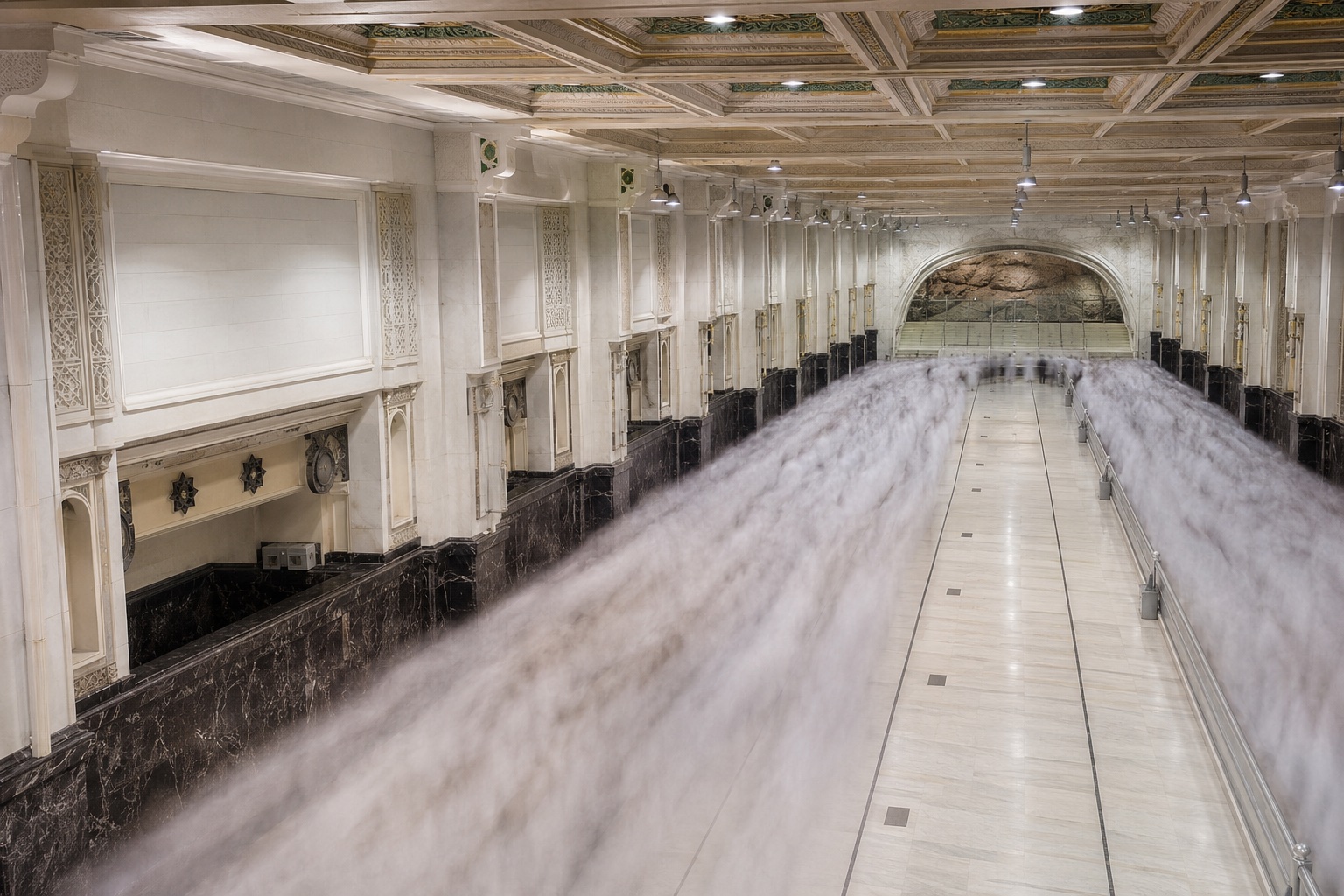
Marwah is the second of the two small hills of sa'i, and the one where the walking ends. It sits at the northern end of the mas'a, the long gallery inside Masjid al-Haram in Makkah, about four hundred to four hundred and fifty metres from Safa.
Historical sources record that Marwah is the end of the rock of Mount Qu'ayqi'an, just as Safa is the end of Mount Abu Qubais. Both were once open hills on the edge of old Makkah. The Saudi expansions of the Grand Mosque roofed over the ground between them, so the two hills and the path joining them are now inside the mosque.
You still reach it by marble steps under a wide arch, and a section of the original rock is kept exposed behind glass and railings.
What the Quran says
Surah al-Baqarah names both hills together: "Indeed, Safa and Marwah are among the symbols of Allah" (Quran 2:158). The verse then says there is no blame on anyone who walks between them for Hajj or Umrah.
Marwah is named second in the verse, and that is not just word order. It is the reason sa'i starts at Safa and finishes at Marwah, in that direction, every time.
Why sa'i finishes at Marwah
Sa'i is seven lengths, and seven is an odd number. Safa to Marwah is the first. Marwah back to Safa is the second. Keep going and the seventh length ends where you are standing now: on Marwah.
This trips up a lot of first-time pilgrims, who count the round trip as one and end up back at Safa believing they have finished. If you finish at Safa, you have walked either six lengths or eight. Count out loud. Safa to Marwah is one.
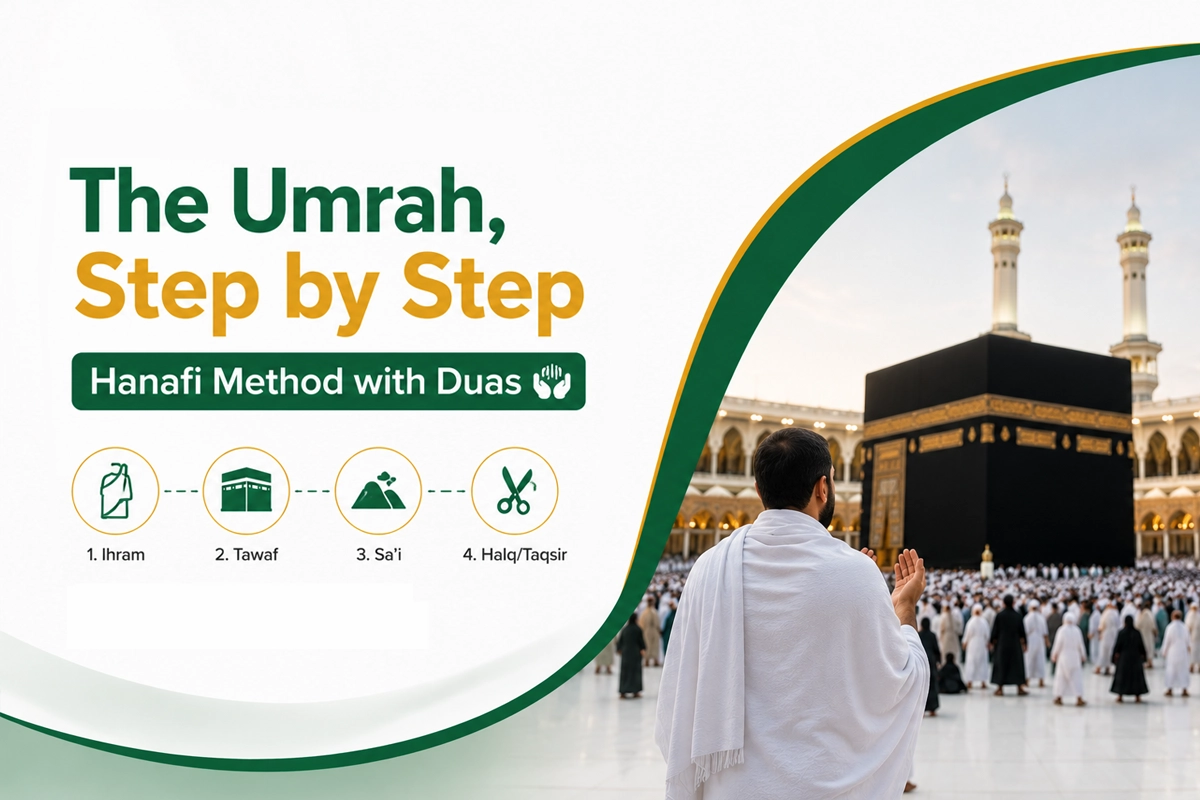
The step-by-step order, with the words for each stage, is laid out in our first-time Umrah guide, and only the authentically transmitted duas are collected in the Umrah duas guide.
What Sahih al-Bukhari records about Marwah
The account of Hajar, mother of Isma'il, may Allah be pleased with them, is narrated by Ibn Abbas in Sahih al-Bukhari. Left in a dry valley with her infant son and no water, she climbed Safa and looked for help, then crossed to Marwah and looked from there, going back and forth seven times.
The hadith says that when she was on Marwah the seventh time, she heard a voice. She called out asking for help, and found the angel at the place of Zamzam, and the water came.
The Prophet, peace and blessings be upon him, then said that this is why people walk between the two hills. So the place where you finish your seven lengths is the place where her seven ended, and where the answer came.
What you do on Marwah
Face the Kaaba, raise your hands, and say the same words you said on Safa: Allahu akbar and the words of tawhid three times, with your own dua in between. Sahih Muslim records that the Prophet did on Marwah what he did on Safa.
There is no fixed dua for each individual length. Between the two hills, ask for whatever you need, in whatever language you speak.
Then, and only after the seventh length, comes the haircut.
The haircut at Marwah, and the mistake people make
Shaving or trimming the hair is what releases you from ihram. Men either shave the head or trim it. Women gather their hair and cut about a fingertip's length from the ends. A woman never shaves.
Here is the part that causes real problems. Men stand around the Marwah end of the gallery with scissors, and for a small fee they will snip a few strands from a pilgrim's head. That is not enough. Cutting a handful of hairs does not release ihram in the Hanafi school, where at least a quarter of the head must be trimmed, and shaving is best for men. A pilgrim who walks away thinking he is finished is still in ihram, with all its restrictions, and may owe a compensation.
Go to a proper licensed barber. There are many in the streets around the Marwah gates and inside the nearby hotel malls. It costs little and it takes minutes.
Women should not uncover their hair in the gallery to cut it. Have a mahram or another woman do it in private. Your hotel room is fine, and the cutting does not have to happen on Marwah itself.
What Marwah looks like today
The mas'a is about forty metres wide now, on four floors, with a total area of more than eighty-seven thousand square metres. The widening carried out in the reign of King Abdullah roughly doubled its width from around twenty metres. The centre lanes are kept for wheelchairs and mobility carts, so the walking crowd moves along the outer lanes.
At the Marwah end the gallery opens towards the northern gates of the mosque. This is where most pilgrims exit after finishing Umrah, which is why the area is crowded and why the barbers and shops cluster there.
Agree a meeting point with your group before you start sa'i. Coming out of the Marwah gates into the surrounding streets, with everyone finishing at once, is one of the easiest places in Makkah to lose each other.
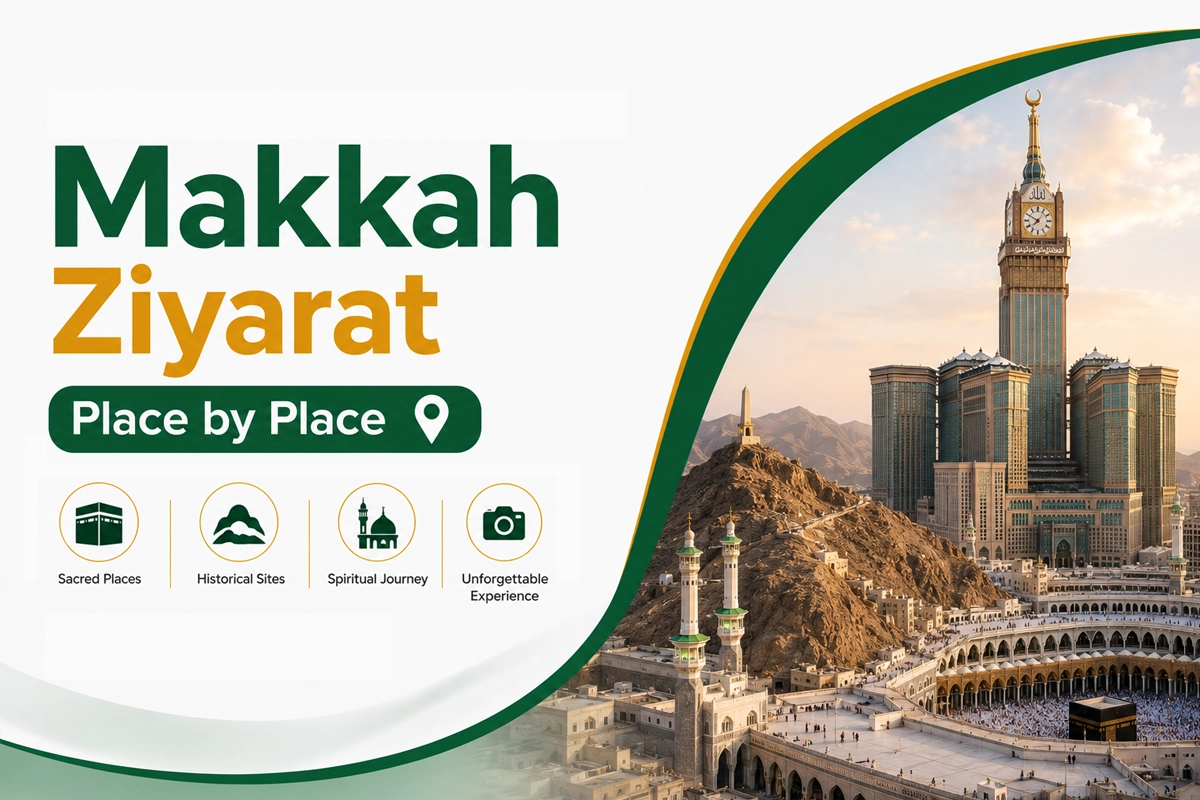
If your trip also takes in the sites outside the Haram, our Makkah Ziyarat guide sets out what is worth the half day and what is not.
Practical notes
- Finish, then rest, then cut. There is no rush to the barber. Sit down, drink Zamzam, and let your legs settle. Seven lengths is about three kilometres.
- Choose your floor first. The ground floor is closest to the rock and the most crowded. The upper floors are quieter but each length is longer. Do not switch halfway.
- Wheelchairs and carts. Free manual wheelchairs are available at several Grand Mosque gates, and paid electric carts run on the upper level from around SAR 57.5 per rite as of 2026. Details are in our Haram accessibility guide.
- Keep your ihram on until the hair is cut. The restrictions stay in force until then, including perfume and clipping nails.
- Second Umrah. If you plan another Umrah in the same trip, you re-enter ihram at Masjid Aisha in Taneem rather than at Marwah. Our second Umrah from Taneem guide explains the trip.
What is near Marwah
Historical sources place the house of Khadijah, may Allah be pleased with her, in the old goldsmiths' lane a short walk from Marwah. It was excavated during works on the Haram and documented, and the site now lies preserved beneath the paving of the expanded mosque near the Marwah gates. There is nothing to enter and nothing to see. It is simply worth knowing that the Prophet's home for twenty-five years stood a minute from where your sa'i ends.
Inside the mosque, the other end of your walk is Safa. Through the Safa gate is the mataf, with the Kaaba, the Black Stone at its eastern corner, and Maqam Ibrahim where the two rak'ahs of tawaf are prayed. The layout of the whole mosque, gate by gate, is in the Masjid al-Haram visitor guide.
Getting to Makkah
No car reaches Marwah. It is inside the Grand Mosque and the last stretch is always walked. Where transport matters is the arrival, and the trip out to the sites beyond the Haram.
From Jeddah airport our fixed fare to Makkah is SAR 260 in a standard sedan, SAR 280 in an SUV and SAR 330 in a Hiace van, plus parking, as reviewed in August 2026. The Jeddah Airport to Makkah page has the full car list. If you want to see Jabal al-Noor, Jabal Thawr, Mina and Arafat while you are in the city, the Makkah Ziyarat round by private car is a fixed-fare half day from SAR 200, with the driver waiting at each stop rather than leaving you to find another ride.
Accuracy note
Quran 2:158 is quoted directly. The account of Hajar, the seventh crossing, the voice heard on Marwah and the Prophet's statement that this is why people walk between the hills is from Sahih al-Bukhari, narrated by Ibn Abbas. The dhikr on Safa and Marwah is from the hadith of Jabir ibn Abdullah in Sahih Muslim.
The link between Marwah and Mount Qu'ayqi'an, and the location of the house of Khadijah near the Marwah gates, are historical documentation rather than Quranic or hadith statements, and are worded accordingly. The ruling on how much hair must be cut is given here from the Hanafi school; other schools state it differently, so follow the position you normally follow or ask a scholar. Measurements of the mas'a and of the distance between the hills follow Saudipedia and Saudi expansion records, and sources differ slightly, so treat them as approximate. Transport fares are our own fixed prices, reviewed August 2026. Facts verified August 2026.
Frequently asked questions
Planning a Saudi trip?
Pre-book a private car, find a stay, or ask us anything on WhatsApp.
Last updated: 23 August 2026·Sources reviewed by the Wadana Go editorial team.