Masjid al-Fath at al-Jumum: Where the Army Camped Before Makkah Fell
Short answer
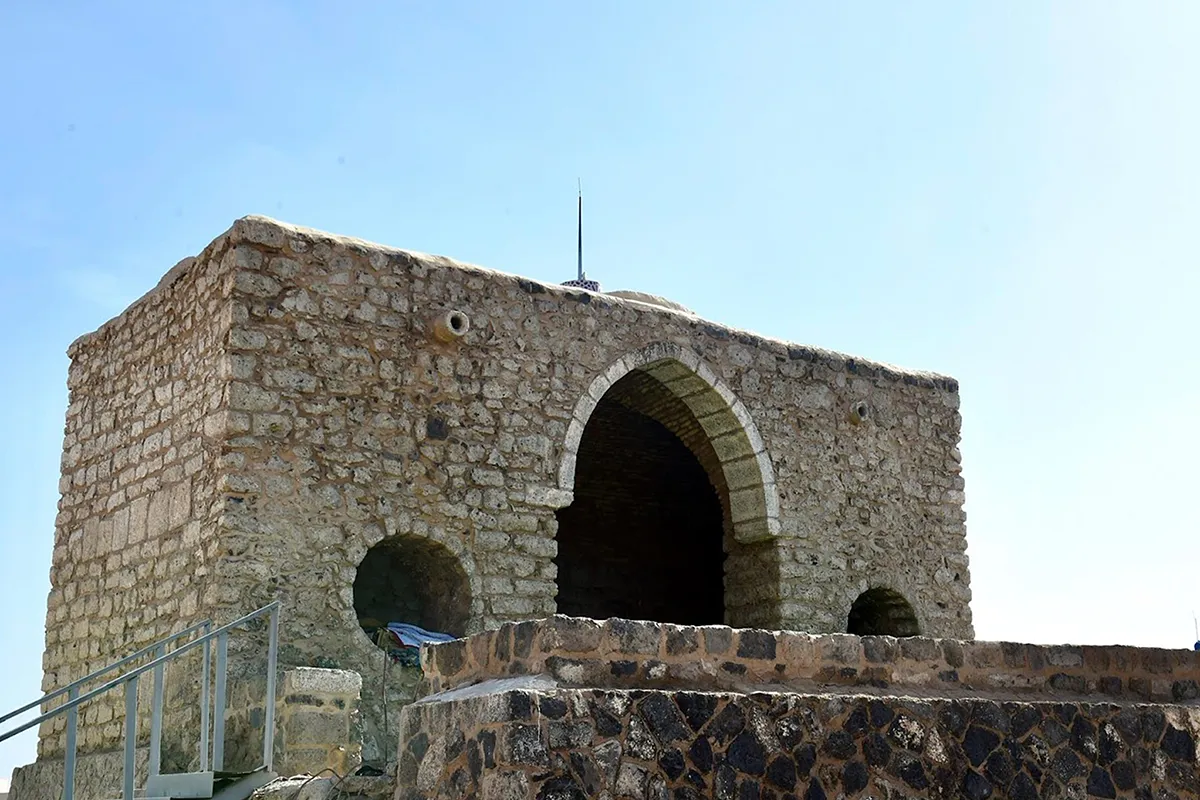
Masjid al-Fath is a historic mosque in the al-Fath neighbourhood of al-Jumum Governorate, in Makkah Province, about 260 metres from the road linking Makkah to Madinah. Historical accounts record that the Prophet Muhammad prayed at this location in the year of the conquest of Makkah. It covers about 456 square metres and is being expanded under a national restoration project.
Key takeaways
- ✓This is the Makkah Province Masjid al-Fath, at al-Jumum, not the mosque of the same name in Madinah.
- ✓It stands about 260 metres from the Makkah to Madinah road.
- ✓Historical accounts place the Prophet praying at this location in the year of the conquest.
- ✓It was first mentioned in writing by Ibrahim ibn Ishaq al-Harbi, who died in 898.
- ✓The building was neglected for centuries and only the stone prayer chamber survived into the modern era.
- ✓It was rebuilt in 1978 and expanded in 1998 with a women's prayer hall and washrooms.
- ✓It covers 455.77 sq m, rising to 553.5 sq m under the Prince Mohammed bin Salman historic mosques project.
Quick facts
- Province
- Makkah al-Mukarramah Province
- Governorate
- Al-Jumum, al-Fath neighbourhood
- Distance from the highway
- About 260 m
- Current area
- 455.77 sq m
- After development
- 553.5 sq m, capacity 333
- Current capacity
- 218 worshippers
- Car access
- Yes, just off the Madinah road
- Part of Umrah?
- No. Not a rite of Hajj or Umrah.
Which Masjid al-Fath is this?
There are two, and they are nowhere near each other.
One is in Madinah, on Jabal Sala', and is the best known of the group called the Seven Mosques. It is connected with the Battle of the Trench.
This page is about the other one: a small historic mosque in al-Jumum Governorate, in Makkah Province, out on the road towards Madinah. If you are searching for the Trench mosque, you want the Madinah one.
Where it is
Saudipedia places it in the al-Fath neighbourhood of al-Jumum, about 260 metres from the road that links Makkah to Madinah. That is close enough to see from the highway if you know what you are looking for, and far enough that nobody finds it by accident.
Al-Jumum sits north-west of Makkah, in the broad valley system that carried the old road down from Madinah. This is the ground an army coming south would have crossed.
The mosque is small. Saudipedia gives its current area as 455.77 square metres with capacity for 218 worshippers.
What it marks
Historical accounts record that the Prophet Muhammad prayed at the location of this mosque in the year of the conquest of Makkah, in the eighth year after the Hijrah. That is where the name comes from: al-fath means the conquest, or the opening.
The conquest itself is established. In Ramadan of that year the Prophet moved south from Madinah with a very large force, camped in the valley outside Makkah, and entered the city the following day without a battle.
The connection between that march and this specific patch of ground is historical, not textual. It comes from the topographical literature on Makkah and its surroundings, not from the Qur'an or from an authentic hadith naming the place. Saudipedia itself words it as historical accounts recounting that he prayed at the current location.
What gives the identification some weight is its age. The mosque was already being written about by Ibrahim ibn Ishaq al-Harbi, who died in 898, in his work on the pilgrimage routes. A site being described in the ninth century is a much older tradition than most, and worth respecting as such. It is still a tradition rather than a proof.
A building that nearly did not survive
The history of the structure is a rougher story than most historic mosque pages tell, and Saudipedia does not soften it.
The mosque was neglected for centuries, and was damaged and destroyed more than once. It was renovated in 1946 with donations, during the hardship that hit al-Jumum in the Second World War years.
Then it was vandalised by local residents who believed it was haunted by jinn.
By the time anyone came back to it, only the stone prayer chamber was left. It was rebuilt from that in 1978 by Shaykh al-Kattan. In 1998 it was renovated again and expanded, with a prayer hall for women, washrooms, and a neighbouring building for washing the dead.
It is now part of the Prince Mohammed bin Salman Project for the Development of Historical Mosques, in the project's second phase. Under that work its area rises from 455.77 to 553.5 square metres, and its capacity from 218 to 333 worshippers.
Is praying there special?
No specific reward for praying in Masjid al-Fath at al-Jumum is established in authentic evidence, and it is not one of the mosques named in the hadith literature.
Visiting it is not part of Hajj or Umrah. Your Umrah is complete without it.
You can pray an ordinary prayer in a small mosque that has been standing, falling down and being put back up on the same spot for more than eleven hundred years. That is a reasonable thing to find worth doing, and nothing further needs to be claimed for it.
Visiting it
This one only makes sense as part of a longer journey, and we would rather say so.
- It is on the Madinah road, so the natural time to see it is on a road transfer between the two cities rather than as a trip out from Makkah.
- Fifteen minutes covers it, including time to pray.
- Time it with a prayer if you want to go inside. Small mosques are often locked between prayers.
- Check for building work. It is inside an active restoration programme, so access may be limited while work is under way.
- Expect no information on site. There is no exhibition and no explanatory signage.
If you are driving between the two cities anyway, a short stop costs almost nothing. Our Makkah to Madinah private car runs that road, and the Makkah to Madinah transport guide compares the road against the train. For Ziyarat inside Makkah itself, the Makkah Ziyarat round is a separate fare from SAR 200 per vehicle. Fares reviewed August 2026.
What connects to it
| Place | What it is |
|---|---|
| Masjid al-Rayah | The banner mosque at al-Hujun, now demolished. |
| Al-Hudaybiyah | The treaty site west of Makkah, two years before the conquest. |
| Masjid Aisha (Taneem) | The miqat on the same Madinah road, much closer in. |
| Masjid al-Ijabah | Small historic mosque at al-Ma'abada. |
Our Makkah Ziyarat guide covers the sites inside the city, and the beyond the Haramayn guide covers the ones that need a longer drive.
Accuracy note
The conquest of Makkah in the eighth year after the Hijrah is established history.
That the Prophet prayed at the location of this mosque during that year comes from historical accounts rather than from the Qur'an or authentic hadith. Saudipedia words it that way and so have we. The tradition is old: the mosque was mentioned by Ibrahim ibn Ishaq al-Harbi, who died in 898.
The mosque's location in the al-Fath neighbourhood of al-Jumum Governorate, its distance of about 260 metres from the Makkah to Madinah road, its current area of 455.77 square metres and capacity of 218 worshippers, the planned increase to 553.5 square metres and 333 worshippers under the second phase of the Prince Mohammed bin Salman Project for the Development of Historical Mosques, the 1946 renovation, the vandalism by residents who believed it was haunted, the survival of only the stone prayer chamber, the rebuilding by Shaykh al-Kattan in 1978 and the 1998 expansion all come from Saudipedia.
No special reward for praying in this mosque is established, and visiting is not part of Hajj or Umrah. Access may be restricted while restoration work is under way. Fares are our own published rates, reviewed August 2026. Verified August 2026.
Frequently asked questions
Planning a Saudi trip?
Pre-book a private car, find a stay, or ask us anything on WhatsApp.
Last updated: 13 October 2026·Sources reviewed by the Wadana Go editorial team.