Masjid Banu Haram: Where Jabir Fed the Whole Camp
Short answer
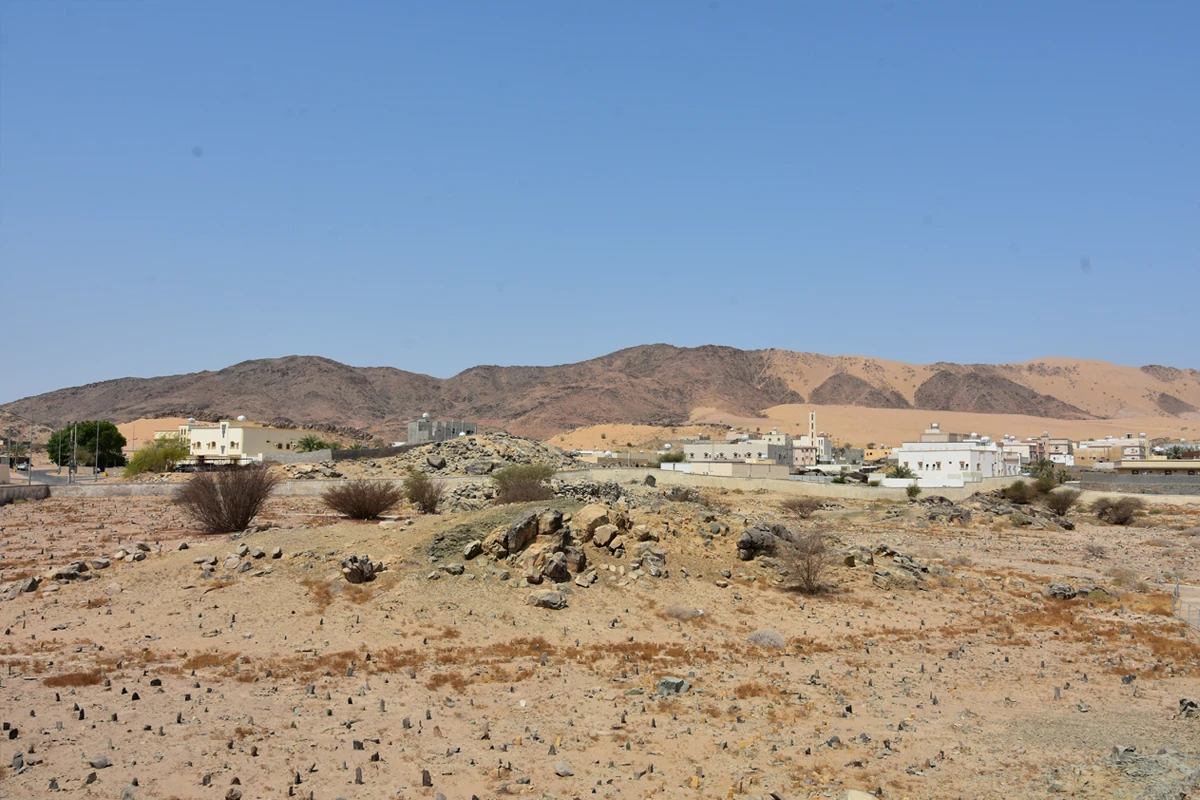
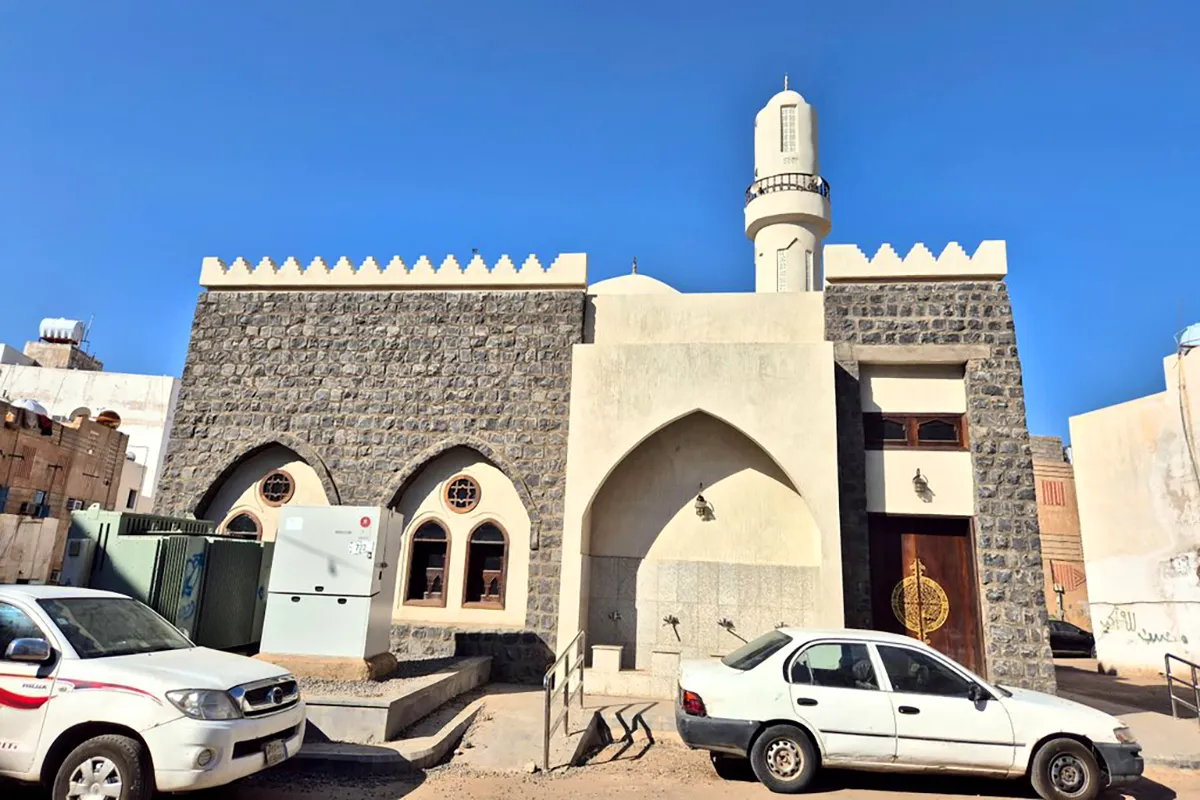
Masjid Banu Haram stands on the western side of Mount Sela' in Madinah, in the quarter where the Muslim camp was based during the Battle of the Trench. It is associated with the house of Jabir ibn Abdullah, whose account in Sahih al-Bukhari describes a small meal feeding the whole camp during the digging. Visiting is not a rite of Hajj or Umrah.
Key takeaways
- ✓The mosque stands in the quarter of Banu Haram, on the western side of Mount Sela', where the Muslim camp was during the Trench.
- ✓Sahih al-Bukhari records Jabir ibn Abdullah's account of killing a young goat and grinding a small measure of barley for the hungry Prophet ﷺ.
- ✓He invited him quietly, expecting one or two guests. The Prophet ﷺ called the whole camp, and the sources record around a thousand men eating with food left over.
- ✓Jabir tells the story with his own alarm included, which is exactly why it reads as a real memory.
- ✓The nearby Bani Haram cave comes through the later collections, not Bukhari or Muslim. Treat it as traditional.
- ✓Jabir's father, Abdullah ibn Amr ibn Haram, was killed at Uhud and is buried at the martyrs' cemetery.
- ✓No reward for praying here is reported, and visiting is not part of Hajj or Umrah.
Quick facts
- City
- Madinah, west side of Mount Sela'
- Quarter
- Banu Haram, where the Muslim camp was during the Trench
- Associated with
- The house of Jabir ibn Abdullah
- The story
- Recorded in Sahih al-Bukhari
- The nearby cave
- Traditional, from the later collections. Level C
- Special prayer or reward
- None authentically reported
- Part of Umrah or Hajj
- No
- Can a car reach it
- Yes, and it pairs with the Trench cluster
- Time to allow
- About 10 minutes
- Evidence level
- A for Jabir's account; B for the site; C for the cave
Masjid Banu Haram stands on the western side of Mount Sela' in Madinah, in the quarter where the clan of Banu Haram lived. During the Battle of the Trench the Muslim camp was in this area.
It is a small mosque, and it is attached to one of the best-loved stories in Sahih al-Bukhari.
Jabir's dinner
The story is told by Jabir ibn Abdullah, may Allah be pleased with him, whose family home was in this quarter.
During the digging of the trench, in cold weather and with the men working on almost nothing, Jabir noticed that the Prophet ﷺ was clearly hungry. He went home, and he and his wife killed a young goat and ground a small measure of barley into flour for bread.
He came back and quietly invited the Prophet ﷺ to come and eat, meaning him and one or two others, because that was all the food there was.
The Prophet ﷺ called out to the whole camp to come to Jabir's meal.
Jabir's account of his own reaction is preserved, and it is very human: he says words to the effect that he was appalled, knowing exactly how little food was waiting. His wife asked whether he had told the Prophet ﷺ how little there was. He had.
They all ate. The sources record that around a thousand men were fed from that pot and that bread, and that food was left over.
This is in Sahih al-Bukhari. It is level A.
Why the story lands
Because of the detail Jabir keeps in. He was embarrassed. He had invited one man and been overheard by an army. He tells the story against himself, and that is exactly why it reads as true.
The house is gone. The quarter is built over. The mosque marks the area, and the account is in the strongest collection there is.
The cave
Near the mosque is what people call the Bani Haram cave, associated with the Prophet ﷺ praying there and staying some nights.
Evidence level: that association comes through the later collections, including Majma' al-Zawa'id, rather than from Bukhari or Muslim. Treat it as traditional. It is not established the way Jabir's account is, and anyone presenting the cave as certain is going past the sources.
Jabir's family
Worth knowing while you are standing there. Jabir's father, Abdullah ibn Amr ibn Haram, was killed at Uhud and is buried at the martyrs' cemetery.
So the man who fed the army during the Trench had lost his father in the battle two years earlier, and still killed his goat for the camp.
The evidence, plainly
- Jabir's meal during the digging: level A, Sahih al-Bukhari.
- The Muslim camp being in this quarter: established in the seerah literature.
- That this mosque marks the exact site of the house: historical tradition, level B.
- The cave: traditional, from the later collections. Level C.
- A reward for praying here: none that we know of.
Is visiting part of Hajj or Umrah?
No. Not a rite of either.
Visiting
- Ten minutes. It is small and there is little to see.
- It is near the Trench cluster, on the west side of Mount Sela', so combine them.
- Do not scramble around looking for the cave. The ground is rough and the identification is not established.
- Tell the story to whoever you are travelling with. That is the actual value of the stop.
Nearby
- The Battle of the Trench — the siege Jabir was digging for.
- The Seven Mosques — on the other side of the same mountain.
- Mount Sela' — the ridge this quarter sits against.
- Madinah Ziyarat guide — the full list with evidence levels.
Getting there
Madinah's smaller historic mosques are scattered across the city, and reaching them one taxi at a time turns a short list into a whole morning. Our Madinah Ziyarat private car covers the round on one fixed fare for the whole vehicle with the driver waiting at every stop, and the Madinah Ziyarat tour is the guided version. For arrival, the Madinah airport transfer has fixed fares.
Accuracy note
Jabir ibn Abdullah's account of the meal during the digging of the trench, including the young goat, the small measure of barley, the invitation and the whole camp being fed, is recorded in Sahih al-Bukhari. The Muslim camp being based in the quarter of Banu Haram during the siege is established in the seerah literature. That this mosque marks the exact site of Jabir's house is historical tradition, level B. The association of the nearby cave with the Prophet ﷺ praying and staying there comes through the later collections, including Majma' al-Zawa'id, rather than Bukhari or Muslim, and we have marked it as traditional rather than established. Jabir's father, Abdullah ibn Amr ibn Haram, being killed at Uhud is established in the hadith and seerah literature. We know of no authentic report of a reward for praying in this mosque. Visiting is not a rite of Hajj or Umrah. Content verified August 2026. Something to fix? Tell us.
Frequently asked questions
Planning a Saudi trip?
Pre-book a private car, find a stay, or ask us anything on WhatsApp.
Last updated: 19 September 2026·Sources reviewed by the Wadana Go editorial team.