Muzdalifah: The Night Under the Sky Between Arafat and Mina
Short answer
Muzdalifah is an open area of about 9.63 square kilometres between Mina and Arafat. Pilgrims arrive after sunset on the ninth of Dhul Hijjah, pray Maghrib and Isha combined, and spend the night in the open before moving to Mina in the morning. It has no permanent tents, and its name is connected with drawing near.
Key takeaways
- ✓Muzdalifah lies between Mina and Arafat and covers about 9.63 sq km.
- ✓Its western boundary is the eastern bank of Wadi Muhassir, which separates it from Mina.
- ✓Pilgrims arrive after sunset on the ninth and spend the night there in the open.
- ✓Maghrib and Isha are combined at Muzdalifah, at the time of Isha.
- ✓There are no permanent tents. Pilgrims sleep on the ground.
- ✓Pebbles are traditionally gathered here, but they may be taken from anywhere.
- ✓Al-Mash'ar al-Haram, named in the Qur'an, is in Muzdalifah.
Quick facts
- Where
- Between Mina and Arafat
- Area
- About 9.63 sq km
- Distance from the Haram
- About 12 km
- Boundaries
- Wadi Muhassir west, Mufid al-Ma'zamin east
- When
- The night of 10 Dhul Hijjah
- Accommodation
- None. Open ground.
- Prayers
- Maghrib and Isha combined at Isha time
- Part of Umrah?
- No. Muzdalifah belongs to Hajj.
Open ground, and nothing else
Muzdalifah is an open area between Mina and Arafat, covering about 9.63 square kilometres according to Saudipedia. It sits roughly twelve kilometres from the Grand Mosque.
Its boundaries are fixed by the ground. To the west, the eastern bank of Wadi Muhassir, which separates it from Mina. To the east, two mountains known as Mufid al-Ma'zamin, with the road to Arafat running between them. To the north, Mount Thabir al-Nas'ah, also called Mount Muzdalifah.
Here is the thing that distinguishes it from Mina and that nobody quite prepares people for. There are no tents. No camps, no beds, no allocated space. The authorities provide washrooms, medical points, lighting and security, and the ground.
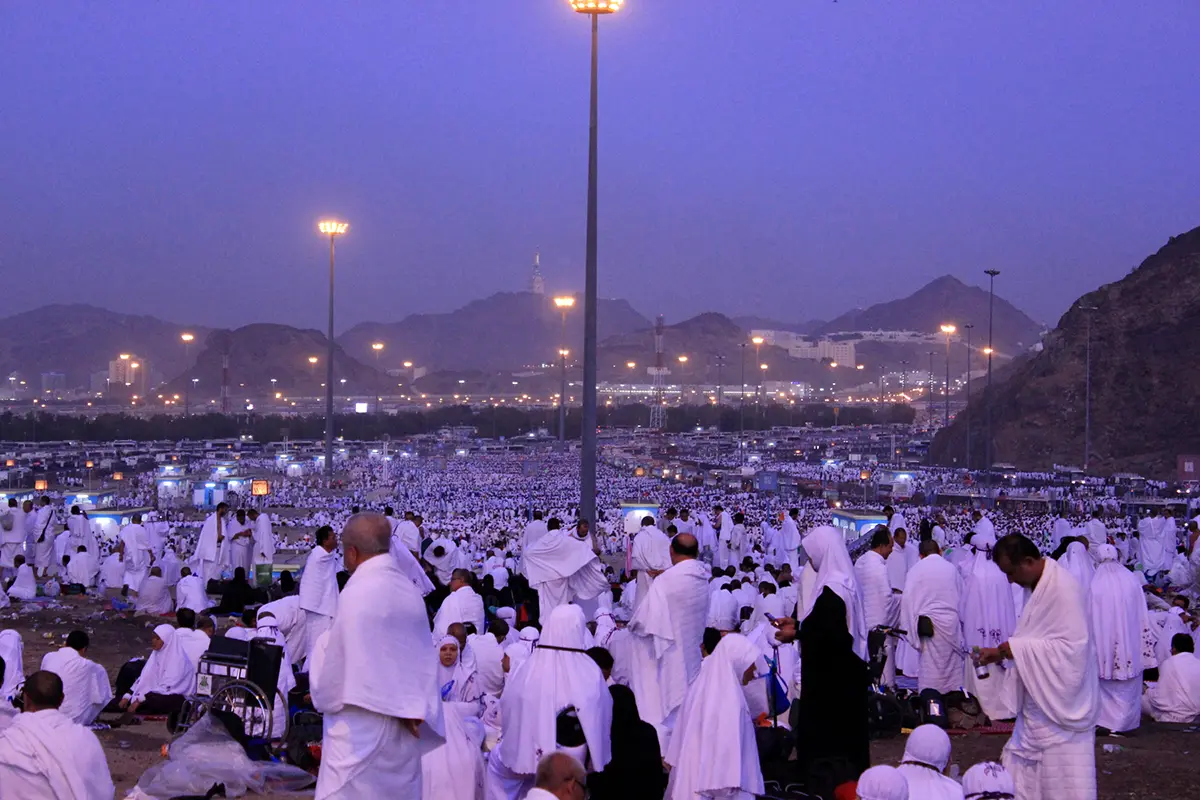
Pilgrims arrive after dark, find a patch of gravel, put down a mat, and sleep on it.
How the night runs
- Leave Arafat at sunset, without praying Maghrib there.
- Arrive at Muzdalifah and pray Maghrib and Isha combined, at the time of Isha, with Isha shortened to two units.
- Sleep. The sunnah is to rest rather than spend the night in prayer, which is unusual and deliberate. The next day is long.
- Pray Fajr early, at the beginning of its time.
- Stand and make du'a facing the qibla until it is light, at al-Mash'ar al-Haram.
- Move to Mina before sunrise, passing through Wadi Muhassir quickly.
The prayer rule catches people. At Arafat you do not pray Maghrib. At Muzdalifah you combine it with Isha, at Isha's time. In Mina on the eighth you combine nothing. Three sites, three different arrangements, all following what the Prophet did.
Al-Mash'ar al-Haram
Muzdalifah is named in the Qur'an, in Surah al-Baqarah, in the instruction that when you depart from Arafat you should remember Allah at al-Mash'ar al-Haram.
Al-Mash'ar al-Haram is within Muzdalifah, and the standing there in the morning is the act the verse refers to. There is a mosque on the site today.
The important point, and it echoes Arafat, is that the whole of Muzdalifah is a valid place to stop. The Prophet said that he had stopped there and that all of Muzdalifah is a place of stopping. Nobody needs to reach the mosque itself.
The pebbles, and a correction
Almost every guide tells pilgrims to gather their pebbles for the Jamarat at Muzdalifah, usually forty-nine or seventy of them, in the dark, on their knees.
Gathering them there is the common practice and there is nothing wrong with it. But it is worth knowing the actual position: the pebbles do not have to come from Muzdalifah. No authentic evidence restricts them to that ground. They may be taken from Mina or from anywhere else that is permissible.
Why this matters: elderly and weak pilgrims spend a cold night on their hands and knees looking for small stones by phone light because they have been told the stones must come from that specific place. They do not.
Two practical points that do hold. Take small pebbles, roughly chickpea size. And count them and bag them before you sleep, because counting in a crowd the next morning is difficult.
The honest bit about the night
For many pilgrims this is the hardest night of Hajj, and it is better to expect that than to be surprised by it.
You have just spent an afternoon standing in the heat at Arafat. You arrive in the dark, tired, into a slow-moving crowd of millions. There is no tent with your name on it. The ground is stone. It gets cold in the small hours even after a hot day. The washroom queues are long.
Things that help:
- Bring a mat and something to cover you. A thin foam mat and a sheet make an enormous difference on gravel.
- Sleep. Do not spend the night in voluntary prayer. Resting is the sunnah here, and the tenth is the longest day of the pilgrimage.
- Stay with your group. Muzdalifah at night is a landmark-free expanse of people. Agree a meeting point and note it.
- Use the washrooms early, before the pre-Fajr rush.
- Weak and elderly pilgrims, women and those accompanying them are permitted to leave for Mina after the middle of the night, which is a recognised concession from the Prophet's own practice with his family.
Most people who have done Hajj describe this night afterwards with more affection than any other part of it. Millions of people lying on the open ground with nothing between them and the sky, and no distinction at all between one and another, is the image that stays.
The name
Several explanations appear in the sources and Saudipedia sets them out. The root carries the sense of drawing near. Al-Fakihi records that the place is named because people draw near to it and do not stay a full day on it. Qatadah connected it with two prayers being combined there. Ibn Hajar mentions the tradition that Adam met Hawwa there. Another name for it is Jam', meaning gathering.
These are the usual range of traditional explanations for an old place name. None of them is settled, and nothing about the rite depends on which is right.
Muzdalifah outside Hajj
It is open ground with a road through it, and it is the least visually interesting of the three sites, which is exactly why it is worth stopping.
Standing on that gravel when it is empty, and picturing two and a half million people lying on it, does something that Mina's tents and Arafat's plain do not.
- Fifteen minutes is enough.
- It is the middle stop between Mina and Arafat, so you pass it both ways.
- There is no rite to perform outside Hajj and no prescribed prayer for a visitor.
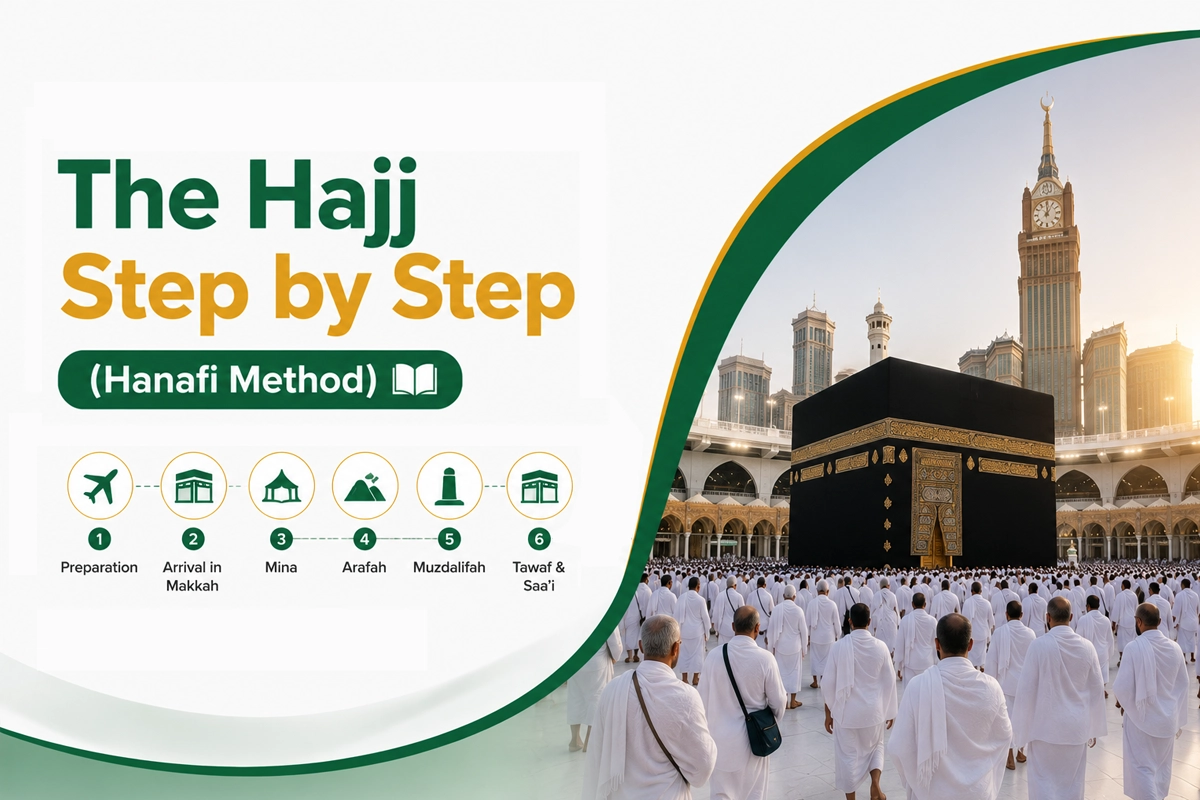
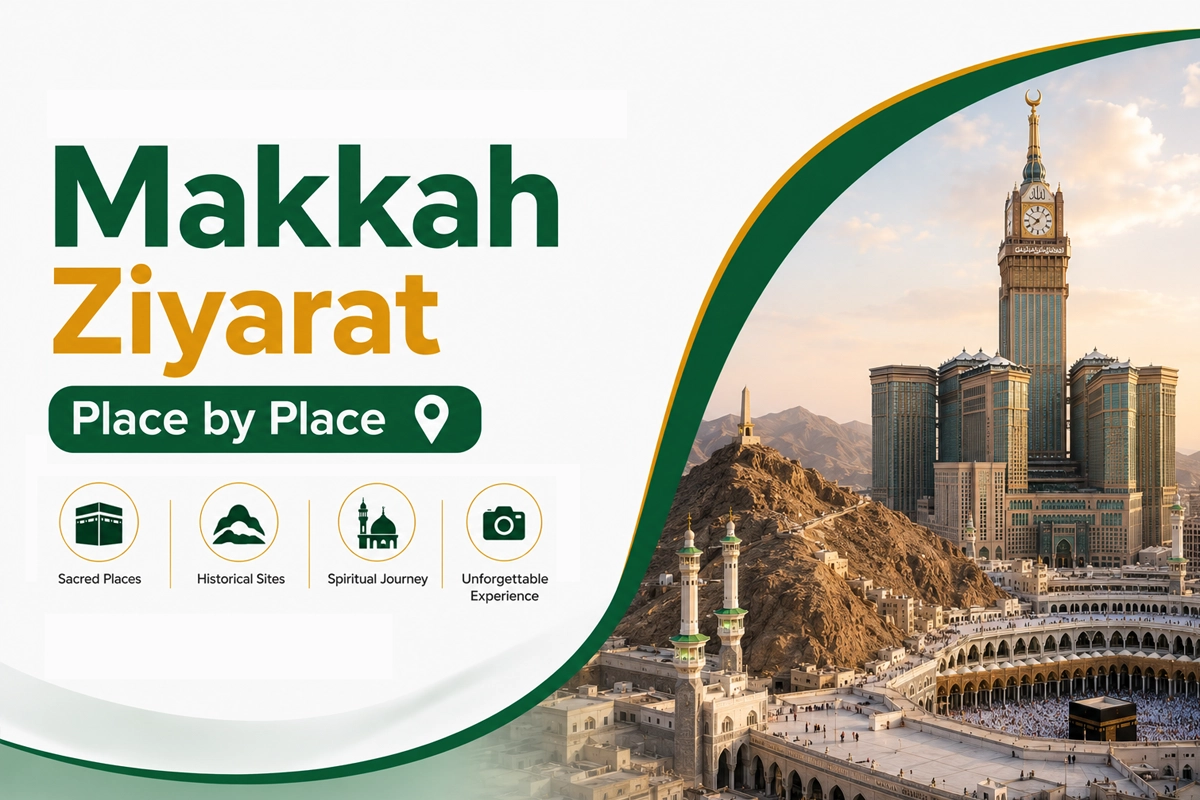
All three holy sites lie one after another on the same road, so they fit into one leg of a Makkah Ziyarat round, from SAR 200 per vehicle with waiting at each stop. Our Hajj step by step guide sets out the whole sequence. Fares reviewed August 2026.
Accuracy note
Muzdalifah's area of about 9.63 square kilometres, its boundaries at the eastern bank of Wadi Muhassir to the west, the two mountains known as Mufid al-Ma'zamin to the east and Mount Thabir al-Nas'ah to the north, the absence of permanent tents, and the explanations offered for its name by al-Fakihi, Qatadah and Ibn Hajar all come from Saudipedia. Other sources give somewhat different area figures, so treat it as approximate.
Al-Mash'ar al-Haram is named in the Qur'an in Surah al-Baqarah in the instruction to remember Allah there after departing from Arafat.
Leaving Arafat at sunset without praying Maghrib, combining Maghrib and Isha at Muzdalifah, resting rather than praying through the night, praying Fajr early and standing in du'a until it is light, and moving to Mina before sunrise all follow the Prophet's practice at the Farewell Pilgrimage as recorded in the authentic collections. So does the statement that all of Muzdalifah is a place of stopping, and the concession permitting the weak, the elderly, women and those with them to leave after the middle of the night.
That the pebbles need not be gathered specifically at Muzdalifah is the position of the scholars, since no authentic evidence restricts them to that ground. We have said so because the belief that they must come from there causes real hardship on that night. Fares are our own published rates, reviewed August 2026. Verified August 2026.
Frequently asked questions
Planning a Saudi trip?
Pre-book a private car, find a stay, or ask us anything on WhatsApp.
Last updated: 11 October 2026·Sources reviewed by the Wadana Go editorial team.