Wadi al-Safra: The Valley the Road Runs Down, and the Question He Asked On It
Short answer
Badr lies at the mouth of Wadi al-Safra, and the road from Madinah runs down much of the valley. Its water table supported oases and wells, which is why the route ran through it. The sources record the Muslim army passing through al-Wastah and into al-Safra, and the consultation with the Ansar on the march. Travelling it is not a rite of Hajj or Umrah.
Key takeaways
- ✓Badr sits at the mouth of Wadi al-Safra, and the road from Madinah runs down much of the valley.
- ✓The valley worked as a natural highway because its water table supported a string of small oases and wells along its length.
- ✓In this country a route is not a line on a map. It is a chain of places you can drink at.
- ✓The sources record the Muslim force passing through al-Wastah and into Wadi al-Safra on the march.
- ✓Once it was clear the caravan had escaped and an army would be met instead, the Prophet ﷺ asked the men for their view.
- ✓The Ansar had pledged to defend him in Madinah. This was two hundred kilometres outside it, and their agreement did not obviously cover it.
- ✓Sa'd ibn Mu'adh answered for them: go where you wish, we are with you, and not one of us would stay behind.
Quick facts
- Location
- Between Madinah and Badr, Madinah Province
- Why the route runs here
- The water table supported oases and wells
- Badr's position
- At the mouth of the valley
- The march
- Through al-Wastah and into al-Safra
- What happened on it
- The consultation with the Ansar
- Who answered
- Sa'd ibn Mu'adh, on behalf of the Ansar
- A marked spot
- None that we could verify
- Part of Umrah or Hajj
- No. It is a road, not a site
- Evidence level
- A to B. Widely transmitted in the seerah literature
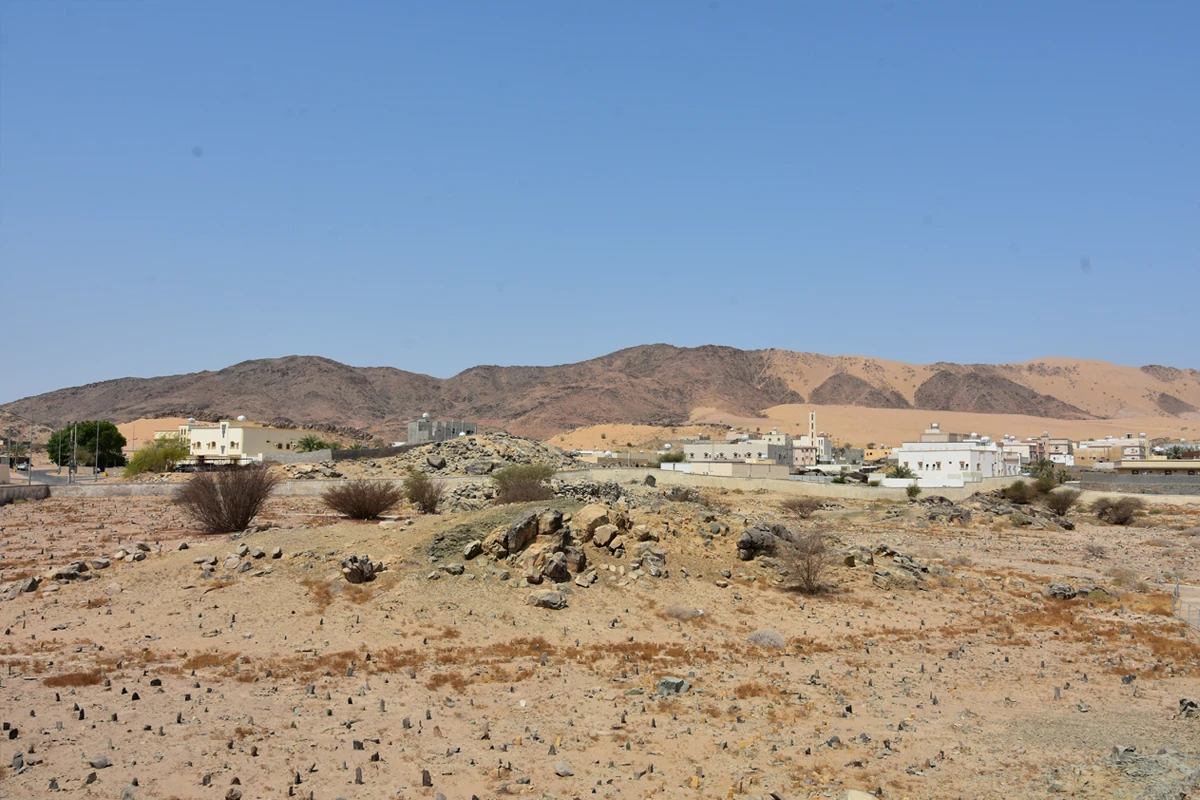
Badr sits at the mouth of Wadi al-Safra, and the road from Madinah runs down much of its length.
You will drive through it on the way, and it is worth understanding, because the valley is the reason the route exists at all.
A natural highway
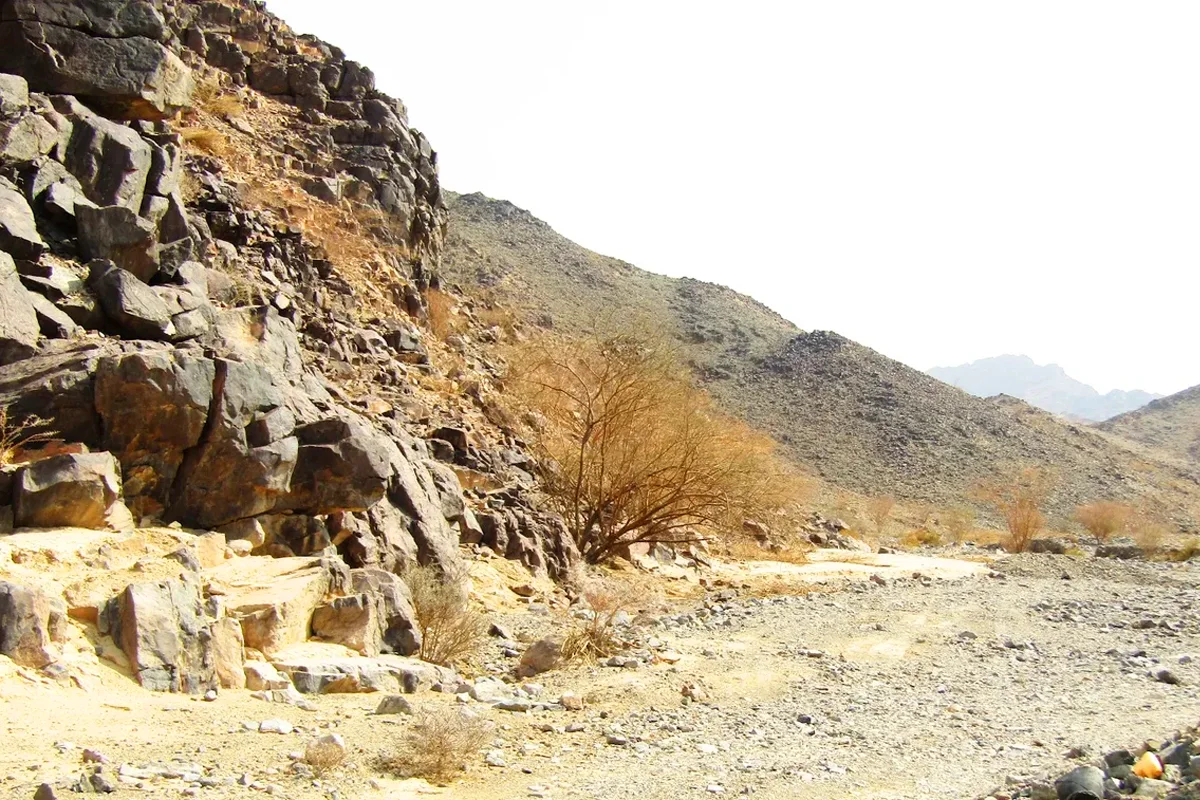
Wadi al-Safra worked as a road because of its water.
The valley's underground water table supported a string of small oases and wells along its length, which meant an army or a caravan could move through it without carrying everything it needed.
In this country, a route is not a line on a map. It is a chain of places you can drink at. Wadi al-Safra had that chain, so the traffic went that way, and Badr, at the mouth of it, became a place worth fighting over.
The valley is still agricultural country, and Badr Governorate is characterised by palm cultivation.
The march down it
The Muslim force came out of Madinah in Ramadan and moved down towards the coast. The sources record them passing through al-Wastah and then into the valley of al-Safra.
And it was on the march, once it was clear the caravan had escaped and there would be a battle with an army instead, that the Prophet ﷺ put the question to the men with him.
The consultation
This is the moment on the road, and it is one of the finest things in the seerah.
He asked them for their view. The Muhajirun spoke. He asked again. Then it became clear he was waiting for the Ansar.
The Ansar had pledged to defend him in Madinah. This was two hundred kilometres outside it, against an army, and their agreement did not obviously cover it.
Sa'd ibn Mu'adh, may Allah be pleased with him, understood what was being asked and answered for them. The sources record him saying, in substance: perhaps you mean us. We believe you, we bear witness that what you brought is the truth, and we have given you our word. Go where you wish, and we are with you. If you crossed this sea and plunged into it, we would plunge in with you, and not one of us would stay behind. And we are patient in war, honest in meeting the enemy. Perhaps Allah will show you something from us that will bring you joy.
The accounts record that the Prophet ﷺ was cheered by this and told them to move.
Why he asked at all
He could have ordered it. He did not.
He put a hard question to men whose commitment technically did not extend that far, and waited for a real answer, in the open, on the road, before a battle they might lose.
That is the same pattern as al-Hubab and the wells, and the same pattern as the shura before Uhud. Badr was not won by a man who gave orders. It was won by a community that was asked.
The evidence, plainly
- The march, the consultation and Sa'd ibn Mu'adh's answer: recorded in the seerah and historical literature, and very widely transmitted. Level A to B depending on the report.
- The route through al-Wastah and Wadi al-Safra: recorded in the historical literature and Saudi accounts of the Badr route.
- The valley's water and its role as a route: geography and published description.
- A marked spot for the consultation: none that we could verify, and we are not going to invent one.
Is visiting part of Hajj or Umrah?
No. Not a rite of either. The valley is a road you travel, not a site you arrive at.
Doing it properly
- Look out of the window. The drive is the visit for this one.
- Notice the palms. Every green patch in the valley is a place there is water, and that is why the route runs here.
- Read Sa'd ibn Mu'adh's answer on the way down. It lands differently when you are on the road it was said on.
- Allow for a slower drive if you want to stop and look. Tell your driver in advance.
Related
- The Madinah to Badr route — the road in full.
- The Badr guide — the day at the other end.
- Masjid al-Suqya — where the army was reviewed before setting out.
- Sa'd ibn Mu'adh — the man who answered.
Getting to Badr
Badr is a day trip from Madinah, not a stop you fit into a city round. There is no train and no practical public transport, so it is a car.
Our Badr day trip from Madinah runs the round as a fixed-fare tour: SAR 380 for a standard sedan, 430 for an SUV, 530 for a van and 680 for a minibus, priced per vehicle rather than per person. If your route allows it, taking Badr on the way between the two cities is better value than doubling back: Makkah to Madinah via Badr is SAR 530 sedan and 580 SUV. See the Makkah to Madinah private car page and say you want the Badr routing when you book.
Fares reviewed August 2026 and shown per vehicle. Our Beyond the Haramayn guide covers Badr alongside Taif, Tabuk, Khaybar and al-Hijr.
Accuracy note
Badr lies at the mouth of Wadi al-Safra, and the historical route from Madinah follows much of the valley; the valley's underground water table supported a string of small oases and wells, which is why the route ran through it, and Badr Governorate remains characterised by palm cultivation. These follow Saudi official and published descriptions of the Badr historical route. The march from Madinah in Ramadan, the passage through al-Wastah and into Wadi al-Safra, and the consultation once it was clear that the caravan had escaped and an army would be met instead, are recorded in the seerah and historical literature. Sa'd ibn Mu'adh's answer on behalf of the Ansar is very widely transmitted in that literature and is given here in substance, not as a quotation. We could not verify any marked spot for the consultation and have not invented one. The valley is a route rather than a site, and travelling it is not a rite of Hajj or Umrah. Transport fares are from our own published route data, reviewed August 2026, per vehicle. Content verified August 2026. Correction? Tell us.
Frequently asked questions
Planning a Saudi trip?
Pre-book a private car, find a stay, or ask us anything on WhatsApp.
Last updated: 5 September 2026·Sources reviewed by the Wadana Go editorial team.