Badr: The Complete Guide to the Site and the Day
Short answer
Badr is a town about 150 km south-west of Madinah where, on 17 Ramadan in year two after the Hijrah, around 313 Muslims defeated a Quraysh force of roughly a thousand. The site includes the battlefield, Masjid al-Areesh, the martyrs' cemetery and the two sides of the valley named in Surah al-Anfal. Visiting is not a rite of Hajj or Umrah.
Key takeaways
- ✓Badr is about 150 km south-west of Madinah, a full day trip or a stop on the Makkah to Madinah road.
- ✓On 17 Ramadan in year two, 313 or 317 Muslims faced around a thousand well-armed Quraysh, and won.
- ✓Surah al-Anfal is largely about the battle and describes the ground: the Muslims on the nearer side of the valley, the enemy on the farther side.
- ✓Surah Al Imran reminds them that the victory came while they were weak. Not strong and blessed. Weak.
- ✓Al-Hubab ibn al-Mundhir asked whether the chosen position was revelation or strategy, was told the truth, and gave a better plan.
- ✓The Prophet ﷺ adopted his advice on the spot and the army moved to take the wells. That culture is what won at Badr.
- ✓The site includes the battlefield, Masjid al-Areesh, the martyrs' cemetery, and al-Adwa al-Dunya and al-Adwa al-Quswa.
Quick facts
- City / region
- Badr, Madinah Province, towards the Red Sea
- Distance
- About 150 km south-west of Madinah
- Date of the battle
- 17 Ramadan, year 2 after the Hijrah
- Forces
- 313 or 317 Muslims against around 1,000 Quraysh
- Losses
- 14 Muslims; around 70 Quraysh dead and a similar number captured
- Sites at Badr
- Battlefield, Masjid al-Areesh, martyrs' cemetery, the two valley sides
- Part of Umrah or Hajj
- No
- Fare from Madinah
- SAR 380 sedan · 430 SUV · 530 van · 680 minibus, per vehicle
- Time needed
- A full day, with 2 to 3 hours on site
- Evidence level
- A. Qur'an and hadith; individual spots on the field are not
Badr is a town about 150 kilometres south-west of Madinah, towards the Red Sea coast. On 17 Ramadan in the second year after the Hijrah, roughly three hundred Muslims met a Makkan force three times their size on the ground outside it, and won.
It is the most consequential day in early Islamic history, and the site is a real day trip that most pilgrims never make.
What happened, briefly
The Muslims set out from Madinah expecting to intercept a Quraysh trade caravan returning from Syria. The caravan escaped. A Makkan army came out instead.
The sources give the Muslim force as 313 or 317 men, poorly equipped, with very few mounts. The Quraysh fielded around a thousand, well armed, with cavalry.
The Muslims took the wells. The armies met. By the end of the day the Makkan leadership was broken, including Abu Jahl, and around seventy of their men were dead with a similar number taken prisoner. Fourteen Muslims were killed.
What the Qur'an says about it
Badr is not a battle the Qur'an mentions in passing. Surah al-Anfal is largely about it, and Surah Al Imran refers back to it.
Three things stand out.
It is called the day of the criterion, the day the two forces met. The word used, furqan, means the thing that separates truth from falsehood.
The geography is in the text. Al-Anfal describes the Muslims on the nearer side of the valley, the enemy on the farther side, and the caravan lower down. That is a battlefield description in the Qur'an, and you can stand in it.
The weakness is named. Al Imran reminds them that Allah gave them victory at Badr while they were weak. Not strong and blessed. Weak.
The decision that won it
This is the part worth carrying home.
The Prophet ﷺ chose a place to camp. Al-Hubab ibn al-Mundhir, may Allah be pleased with him, who knew the country, came and asked him a careful question: is this a position Allah has commanded, or is it strategy?
He was told it was strategy.
Al-Hubab then said that this was not the place. They should move to the nearest well to the enemy, take it, build a basin, and put the other wells out of use, so the Quraysh would have to fight for water.
The Prophet ﷺ said he had given the right advice, and the army moved.
Read what happened there. A man asked whether an instruction was revelation or judgement, was told the truth, gave a better plan, and had it adopted on the spot by the person he was correcting. That is the culture that won at Badr, and it is a great deal more useful to most of us than the sword-count.
What is at the site
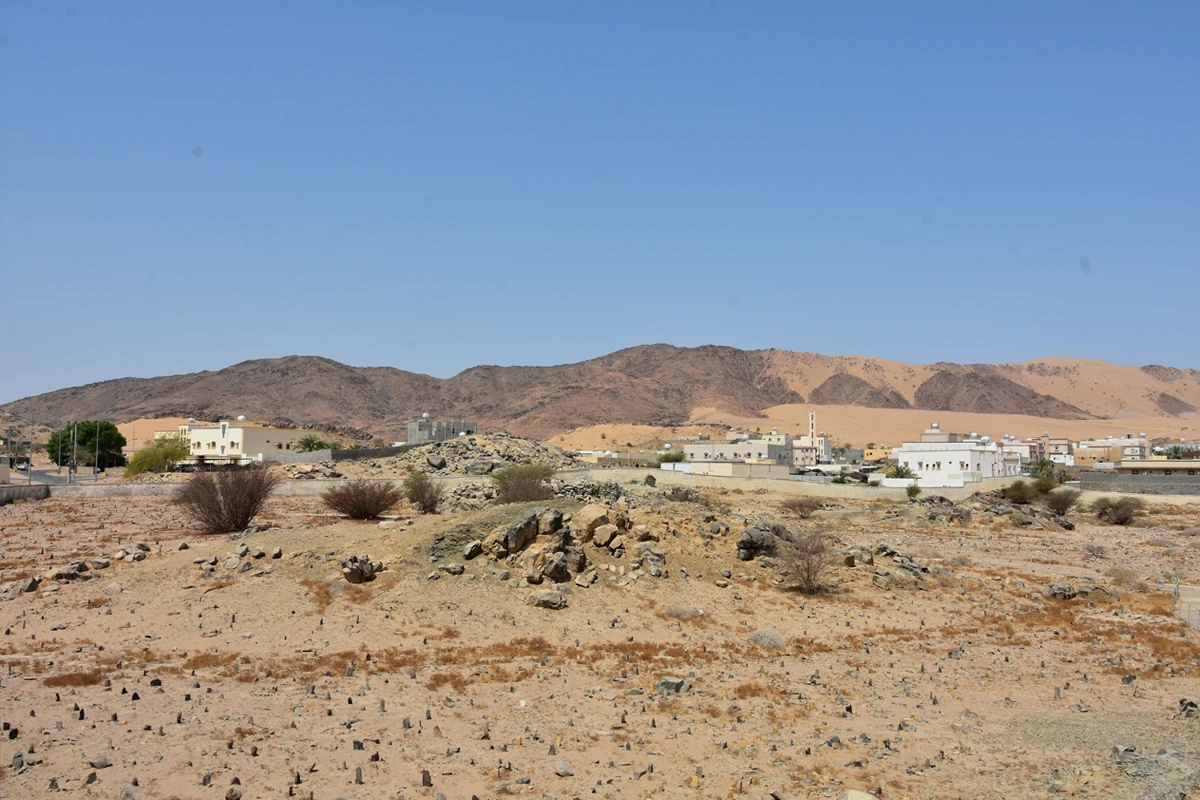
Saudipedia lists the components of the Badr battle site as the battlefield itself, al-Arish Mosque, the martyrs' cemetery, and al-Adwa al-Dunya and al-Adwa al-Quswa, the near and far sides of the valley named in the Qur'an, along with other historical remains.
- The battlefield — open ground between the two ridges, and the whole point of coming.
- Masjid al-Areesh — on the site of the shelter where he made du'a through the battle.
- The martyrs' cemetery — about 550 metres west of the battle site.
- Al-Adwa al-Dunya and al-Adwa al-Quswa — the two sides of the valley, named in al-Anfal.
- Jabal Malaikah — the hill traditionally called the mountain of the angels.
Planning the day
- Allow a full day from Madinah. Roughly two hours each way plus time on the ground.
- Leave after Fajr. You want the site in the morning, not at midday.
- Two to three hours at Badr is enough to see everything properly.
- Take water and food. Facilities are limited compared with what you are used to in the two cities.
- Read Surah al-Anfal before you go. This is the one site where doing the reading first changes the visit completely.
- Best combined with the journey between Makkah and Madinah rather than as an out-and-back.
Is visiting Badr part of Hajj or Umrah?
No. It is not a rite of either, there is no prescribed prayer at the site, and no authentic report gives a reward for visiting the battlefield.
Giving salam at a Muslim cemetery and making du'a for the dead is a sunnah, and the martyrs' cemetery is a place to do it. That is the extent of it.
One honest caution
Badr, like Uhud, attracts pointed-out spots: this is where so-and-so stood, this rock is where this happened.
The battle is thoroughly documented and the general ground is well identified. Precise individual points mostly are not. Enjoy the site without needing them to be true, and be wary of anyone who insists.
Related
- The Madinah to Badr route — the road the army took.
- Wadi al-Safra — the valley on the way.
- Masjid al-Suqya — where the army was reviewed before setting out.
- The Battle of Uhud — what happened the following year.
Getting to Badr
Badr is a day trip from Madinah, not a stop you fit into a city round. There is no train and no practical public transport, so it is a car.
Our Badr day trip from Madinah runs the round as a fixed-fare tour: SAR 380 for a standard sedan, 430 for an SUV, 530 for a van and 680 for a minibus, priced per vehicle rather than per person. A family of four in a sedan is paying about SAR 95 each.
The better option, if your route allows it, is to take Badr on the way between the two cities rather than doubling back. Makkah to Madinah via Badr, or the reverse, is SAR 530 sedan, 580 SUV, 680 van and 1,130 minibus. See the Makkah to Madinah private car page and tell us when booking that you want the Badr routing, because the driver needs to plan for it.
Fares reviewed August 2026 and shown per vehicle. For the wider picture, our Beyond the Haramayn guide covers Badr alongside Taif, Tabuk, Khaybar and al-Hijr.
Accuracy note
The Battle of Badr on 17 Ramadan in the second year after the Hijrah, the Muslim force of 313 or 317 men against a Quraysh army of around a thousand, the failure to intercept the caravan, the death of Abu Jahl and around seventy of the Quraysh with a similar number captured, and the fourteen Muslim dead, are established in the hadith and seerah literature. Surah al-Anfal deals with the battle at length and Surah Al Imran refers back to it; the description of the Muslims on the nearer side of the valley, the enemy on the farther side and the caravan lower down is in al-Anfal, and the reminder of victory while they were weak is in Al Imran. Verses are given here in meaning, not as translation. The account of al-Hubab ibn al-Mundhir asking whether the position was revelation or strategy, proposing the move to the nearest well, and the Prophet ﷺ adopting his advice, is recorded in the seerah literature. The distance of about 150 km south-west of Madinah, and the components of the site as the battlefield, al-Arish Mosque, the martyrs' cemetery, al-Adwa al-Dunya and al-Adwa al-Quswa, follow Saudipedia; published distances vary between roughly 120 and 152 km. The martyrs' cemetery is described as about 550 m west of the battle site. Precise identifications of individual spots on the field are traditional at best and we have not repeated them. Visiting Badr is not a rite of Hajj or Umrah and no reward for visiting the battlefield is authentically reported. Transport fares are from our own published route data, reviewed August 2026, and are per vehicle. Content verified August 2026. Correction? Tell us.
Frequently asked questions
Planning a Saudi trip?
Pre-book a private car, find a stay, or ask us anything on WhatsApp.
Last updated: 7 September 2026·Sources reviewed by the Wadana Go editorial team.