The Badr Martyrs' Cemetery: Fourteen Men
Short answer
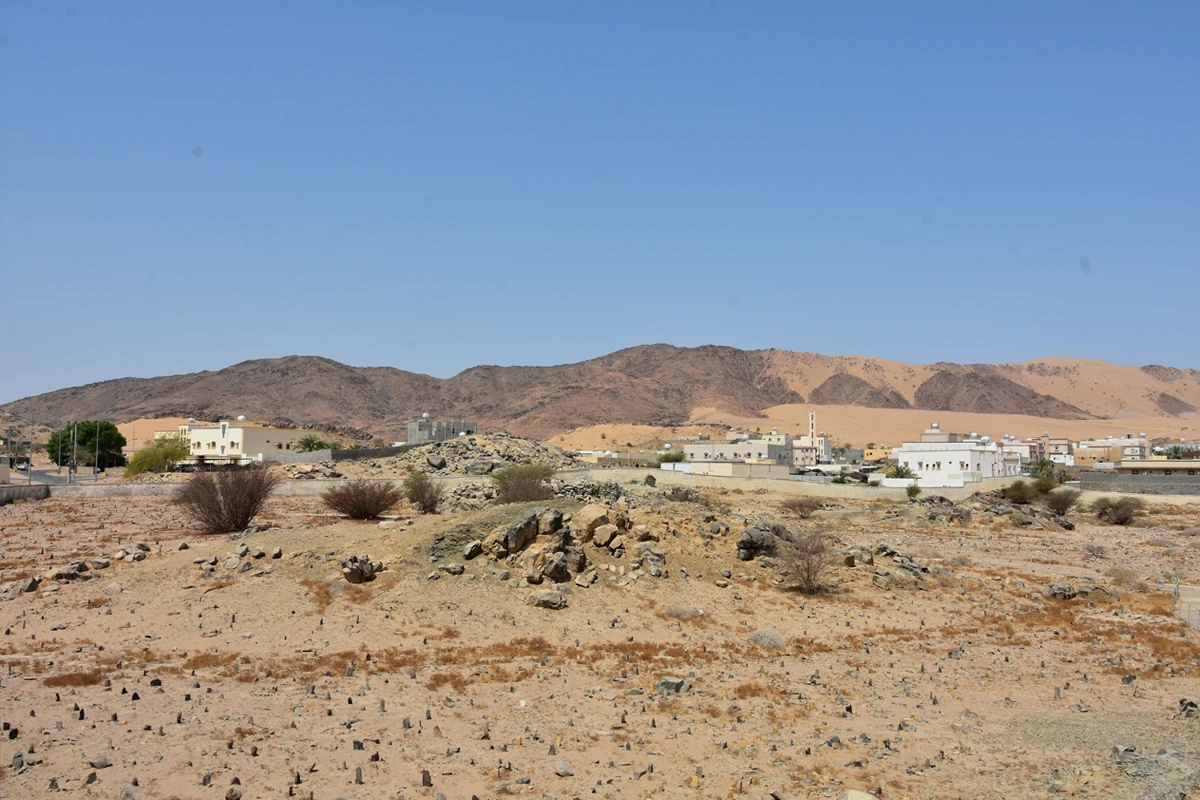
The Badr martyrs' cemetery lies about 550 metres west of the battle site. The fourteen Muslims killed in the battle are buried there, commonly counted as six of the Muhajirun and eight of the Ansar. The graves are plain and unmarked. Visiting is not a rite of Hajj or Umrah.
Key takeaways
- ✓Fourteen Muslims were killed at Badr, out of a force of a little over three hundred.
- ✓The Quraysh lost around seventy dead and a similar number captured, including much of the leadership of Makkah.
- ✓The martyrs are named individually in the sources, commonly counted as six Muhajirun and eight Ansar.
- ✓More of the dead were hosts than guests. The Ansar had taken in refugees eighteen months earlier.
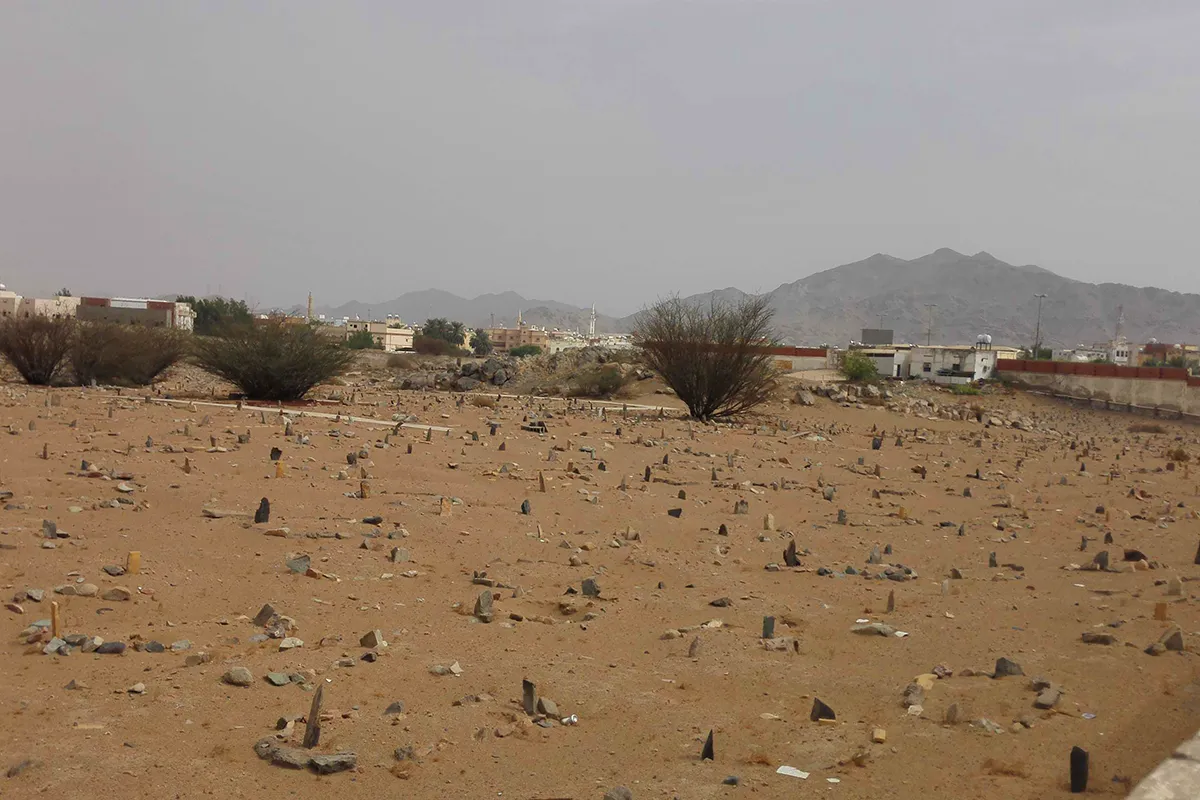
- ✓The cemetery is about 550 metres west of the battle site: a walled enclosure of plain graves with no headstones or names.
- ✓The plainness follows the same reports prohibiting raising or building over graves that you see at Uhud and Baqi.
- ✓If you find Badr less affecting than Uhud, that is normal. It is flat ground, two hours out, on a day things went right.
Quick facts
- Location
- About 550 m west of the Badr battle site
- Buried there
- The fourteen Muslims killed in the battle
- Commonly counted as
- Six Muhajirun and eight Ansar
- The graves
- Plain and unmarked, no headstones or domes
- Quraysh losses
- Around seventy dead, a similar number captured
- Access
- Not verified. Expect to view from outside the fence
- Part of Umrah or Hajj
- No
- What to do
- Give salam and make du'a to Allah for them
- Evidence level
- A. The numbers and names are well recorded
About 550 metres west of the battle site at Badr is a walled enclosure of plain graves. The fourteen Muslims killed in the battle are buried there.
Fourteen. Out of a little over three hundred.
Why the number stays with you
Against a force three times their size, better armed and with cavalry, the Muslims lost fourteen men.
The Quraysh lost around seventy dead and a similar number taken prisoner, including a large share of the men who ran Makkah.
Numbers in early battles are often rounded and disputed. These two are not. They are recorded consistently, and the gap between them is the reason the day is remembered as it is.
Who they were
The sources name them individually. They are commonly counted as six of the Muhajirun, the emigrants from Makkah, and eight of the Ansar, the people of Madinah.
That split is worth noticing. The Ansar had taken in a group of refugees eighteen months earlier. At Badr, more of the dead were hosts than guests.
What you will see
A walled enclosure, level ground, plain graves. No headstones, no names, no domes.
The same plainness you find at Uhud and Jannat al-Baqi, and for the same reasons: the reports prohibiting raising or building over graves.
Access arrangements at Badr change and we could not verify current opening. Expect to view from outside the fence, as at Uhud.
What to do there
- Give the salam to the people of the graves, as taught for visiting any Muslim cemetery.
- Make du'a to Allah for them.
- Stand for a minute. These are the first Muslims to die in a battle, and the community they left was still smaller than a village.
Do not ask anything of the dead. Do not touch or rub the walls or fence. Do not take earth away. Do not raise your voice.
What the Qur'an says about them
Surah Al Imran: do not think of those killed in the way of Allah as dead; they are alive with their Lord, and provided for.
That verse is usually read at Uhud, where seventy died. It applies here just as much, to fourteen men buried five hundred metres from where they fell.
Is visiting part of Hajj or Umrah?
No. Not a rite of either. Visiting graves is a sunnah with a stated purpose, and this is a place to do it.
One honest note
Some visitors find Badr less affecting than Uhud, and are troubled by that.
There is a reason and it is not spiritual. Uhud is beside a city you have already spent days in, with a mountain over it and a story of loss. Badr is two hours out, on flat ground, on a day when things went right.
You are allowed to find one more moving than the other. Neither reaction is a verdict on you.
Related
- The Badr guide — the full day and how to plan it.
- The battlefield — five hundred metres east.
- Masjid al-Areesh — on the same site.
- The Martyrs of Uhud — the following year, and seventy of them.
Getting to Badr
Badr is a day trip from Madinah, not a stop you fit into a city round. There is no train and no practical public transport, so it is a car.
Our Badr day trip from Madinah runs the round as a fixed-fare tour: SAR 380 for a standard sedan, 430 for an SUV, 530 for a van and 680 for a minibus, priced per vehicle rather than per person. If your route allows it, taking Badr on the way between the two cities is better value than doubling back: Makkah to Madinah via Badr is SAR 530 sedan and 580 SUV. See the Makkah to Madinah private car page and say you want the Badr routing when you book.
Fares reviewed August 2026 and shown per vehicle. Our Beyond the Haramayn guide covers Badr alongside Taif, Tabuk, Khaybar and al-Hijr.
Accuracy note
The fourteen Muslims killed at Badr, and the roughly seventy Quraysh killed with a similar number captured, are established in the hadith and seerah literature; the martyrs are named individually in the sources and are commonly counted as six of the Muhajirun and eight of the Ansar. The location of the cemetery about 550 metres west of the battle site follows published descriptions. The verse describing those killed in the way of Allah as alive with their Lord is in Surah Al Imran and is given here in meaning, not as translation. The plainness of the graves reflects the reports prohibiting raising or building over graves, as at Uhud and Jannat al-Baqi. Access arrangements at Badr change and we could not verify current opening; expect to view from outside the fence. Visiting graves and giving salam is a sunnah with a stated purpose, but visiting Badr is not a rite of Hajj or Umrah and no specific reward for visiting the cemetery is authentically reported. Transport fares are from our own published route data, reviewed August 2026, and are per vehicle. Content verified August 2026. Correction? Tell us.
Frequently asked questions
Planning a Saudi trip?
Pre-book a private car, find a stay, or ask us anything on WhatsApp.
Last updated: 5 September 2026·Sources reviewed by the Wadana Go editorial team.