The Badr Battlefield: The One Battle the Qur'an Gives You a Map For
Short answer
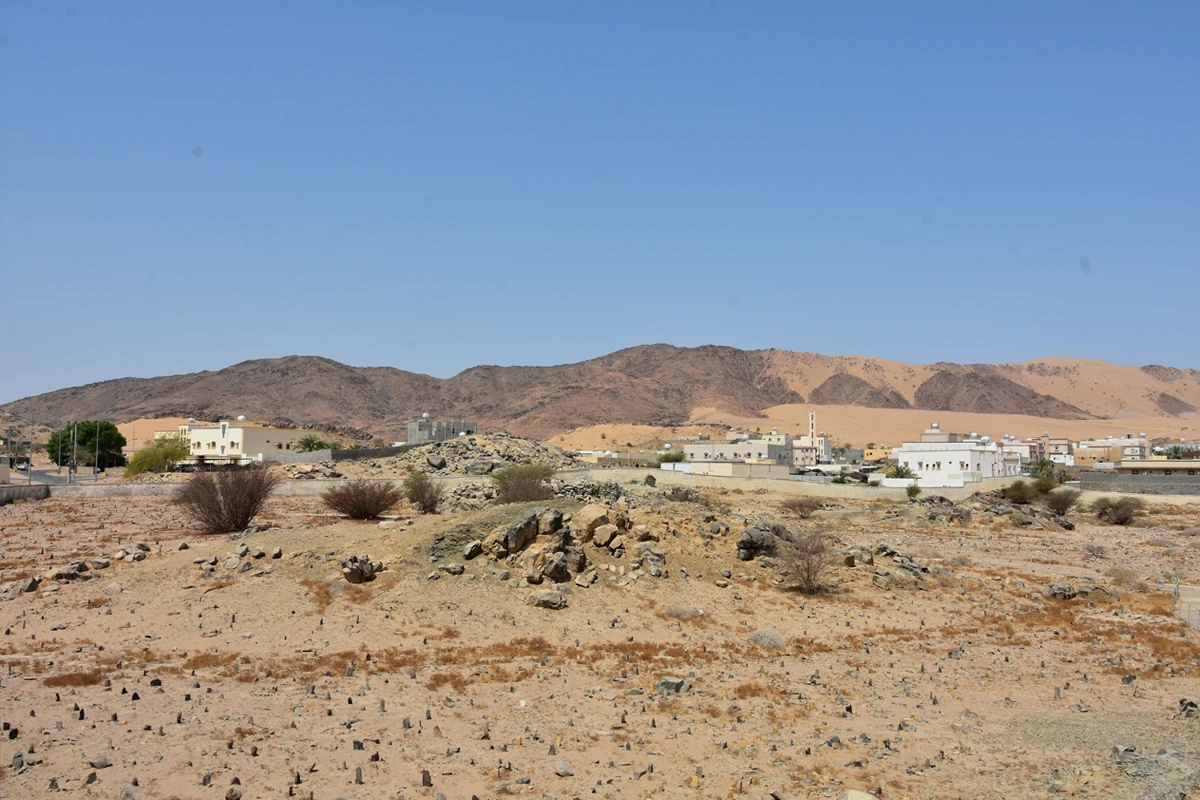
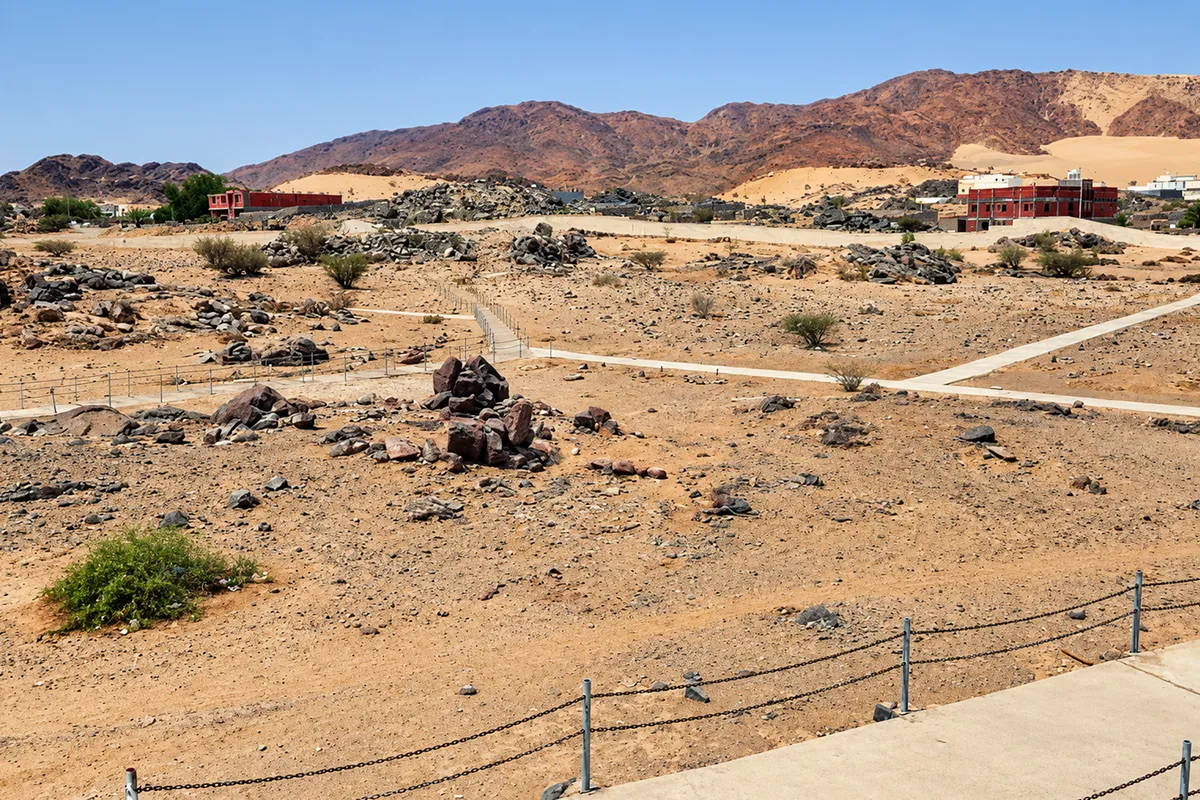
The Badr battlefield is open ground between two low ridges south-west of Madinah. Surah al-Anfal describes the positions: the Muslims on the nearer side of the valley, the Quraysh on the farther side, and the caravan on lower ground. Those two sides are still named al-Adwa al-Dunya and al-Adwa al-Quswa. Visiting is not a rite of Hajj or Umrah.
Key takeaways
- ✓Surah al-Anfal describes the layout of the battle: Muslims on the nearer side of the valley, Quraysh on the farther side, caravan on lower ground.
- ✓Those two sides still carry their names, al-Adwa al-Dunya and al-Adwa al-Quswa, so the ground can be read directly.
- ✓Very few battlefields anywhere can be laid out from a fourteen-century-old text the way this one can.
- ✓Water decided the day. On al-Hubab's advice the Muslims took the nearest well, built a basin and put the others beyond use.
- ✓A thousand men and their animals in a desert in Ramadan, with no water they could reach without fighting for it.
- ✓The Makkan command was destroyed. Abu Jahl was killed, around seventy Quraysh died and a similar number were captured. Fourteen Muslims were killed.
- ✓Precise pointed-out spots on the field are traditional at best. The Qur'an gives you the layout; you do not need them.
Quick facts
- Location
- Badr, about 150 km south-west of Madinah
- The terrain
- Open valley floor between two low ridges
- Named in the Qur'an
- The near and far sides of the valley, in al-Anfal
- What decided it
- Control of the wells
- Muslim losses
- Fourteen
- Quraysh losses
- Around seventy dead, a similar number captured
- Part of Umrah or Hajj
- No
- Time on the field
- About an hour if you know what you are looking at
- Evidence level
- A for the battle and the Qur'anic layout; C for individual spots
The battlefield at Badr is open ground between two low ridges, with a wide valley floor in the middle. It is unremarkable to look at, and it is the most readable battlefield in the seerah.
That is because the Qur'an describes the layout.
The map in Surah al-Anfal
Al-Anfal sets out the positions: the Muslims on the nearer side of the valley, the Quraysh on the farther side, and the caravan on lower ground.
Those two sides have names that are still used: al-Adwa al-Dunya, the near side, and al-Adwa al-Quswa, the far side.
So when you stand at Badr you are not guessing at a general area. You can identify the two sides, put the armies on them, and see the ground between.
There are very few places in the world where you can do that with a fourteen-century-old battle.
The wells
Water decided this.
Following al-Hubab ibn al-Mundhir's advice, the Muslims moved to the well nearest the enemy, took it, built a basin, and put the remaining wells beyond use.
The consequence is simple arithmetic in a desert in Ramadan. The Quraysh had a thousand men and their animals, and no water they could reach without fighting for it. The battle had to happen on Muslim terms, on ground the Muslims had chosen.
See our page on the well of Badr for that in more detail.
Reading the ground
Do this in order and the day works:
- Stand on the near side and look across. That is the Muslim position, roughly three hundred men.
- Look at the far side. Three times the number, better armed, with horses.
- Look at the distance between. It is not far. This was fought at the range of a thrown spear and a sword arm.
- Look at the sand. The sources record rain before the battle, firming the ground on the Muslim side and turning it heavy under the Quraysh.
- Then go to Masjid al-Areesh, where the shelter stood, and to the cemetery.
What happened on it
The day opened, as was the custom, with single combat. Then the lines closed.
By the end, the Makkan command structure had been destroyed. Abu Jahl was dead. Around seventy of the Quraysh were killed and a similar number taken prisoner, and among the dead were a large share of the men who had run Makkah.
Fourteen Muslims were killed. They are buried a short distance from the field.
What to be careful about
Badr attracts pointed-out spots in the same way Uhud does.
The battle is thoroughly documented. The general ground is well identified, and the two sides of the valley are named in the Qur'an. Precise individual points, this rock, that exact place, are traditional at best, and often recent.
You do not need them. The Qur'an gives you the layout. That is a better authority than anyone at the roadside.
Is visiting part of Hajj or Umrah?
No. Not a rite of either, no prescribed prayer, and no reported reward for visiting the field.
Practical
- Go in the morning. Open ground, no shade, and the light is better for reading the terrain.
- An hour on the field is enough if you know what you are looking at.
- Take water. Then think about the fact that the water is the reason the day went the way it did.
- Read al-Anfal first. Without it this is a gravel plain. With it, it is a map.
Related
- The Badr guide — the full day and how to plan it.
- Masjid al-Areesh — the shelter on the field.
- Badr martyrs' cemetery — the fourteen.
- The well of Badr — the decision that decided it.
Getting to Badr
Badr is a day trip from Madinah, not a stop you fit into a city round. There is no train and no practical public transport, so it is a car.
Our Badr day trip from Madinah runs the round as a fixed-fare tour: SAR 380 for a standard sedan, 430 for an SUV, 530 for a van and 680 for a minibus, priced per vehicle rather than per person. A family of four in a sedan is paying about SAR 95 each.
The better option, if your route allows it, is to take Badr on the way between the two cities rather than doubling back. Makkah to Madinah via Badr, or the reverse, is SAR 530 sedan, 580 SUV, 680 van and 1,130 minibus. See the Makkah to Madinah private car page and tell us when booking that you want the Badr routing, because the driver needs to plan for it.
Fares reviewed August 2026 and shown per vehicle. For the wider picture, our Beyond the Haramayn guide covers Badr alongside Taif, Tabuk, Khaybar and al-Hijr.
Accuracy note
The description of the Muslims on the nearer side of the valley, the Quraysh on the farther side and the caravan on lower ground is in Surah al-Anfal and is given here in meaning, not as translation; the two sides are known as al-Adwa al-Dunya and al-Adwa al-Quswa. The account of al-Hubab ibn al-Mundhir's advice to move to the nearest well, take it, build a basin and put the other wells beyond use, and the Prophet ﷺ adopting it, is recorded in the seerah literature. The rain before the battle and its effect on the ground, the opening single combats, the death of Abu Jahl, the roughly seventy Quraysh killed with a similar number captured, and the fourteen Muslim dead, are established in the hadith and seerah literature. Precise identifications of individual rocks or exact positions on the field are traditional at best and often recent, and we have not repeated them; the general ground is well identified and the two sides of the valley are named in the Qur'an. Visiting is not a rite of Hajj or Umrah and no reward for visiting the field is authentically reported. Transport fares are from our own published route data, reviewed August 2026, and are per vehicle. Content verified August 2026. Correction? Tell us.
Frequently asked questions
Planning a Saudi trip?
Pre-book a private car, find a stay, or ask us anything on WhatsApp.
Last updated: 7 September 2026·Sources reviewed by the Wadana Go editorial team.