The Well of Badr: The Advice That Won It, and the Words After
Short answer
Two things happened at the wells of Badr. Before the battle, al-Hubab ibn al-Mundhir advised moving to the well nearest the enemy, taking it and putting the others beyond use, and the Prophet ﷺ adopted the plan. Afterwards, Bukhari and Muslim record him addressing the Quraysh dead at the well they were placed in. Visiting is not a rite of Hajj or Umrah.
Key takeaways
- ✓Al-Hubab ibn al-Mundhir asked whether the chosen camp was commanded by Allah or a matter of strategy. Told it was strategy, he said it was the wrong place.
- ✓His plan: take the well nearest the enemy, build a basin, and put the remaining wells beyond use.
- ✓The Prophet ﷺ said he had given the right advice and the army moved that night.
- ✓A thousand men and their animals in a desert in Ramadan, with the only reachable water held by their enemy. Everything follows from that.
- ✓Bukhari and Muslim record the Prophet ﷺ standing three days later at the well the Quraysh dead were placed in, calling them by name.
- ✓He asked whether they had found what their Lord promised to be true, and told Umar they heard him no less than Umar did but could not reply.
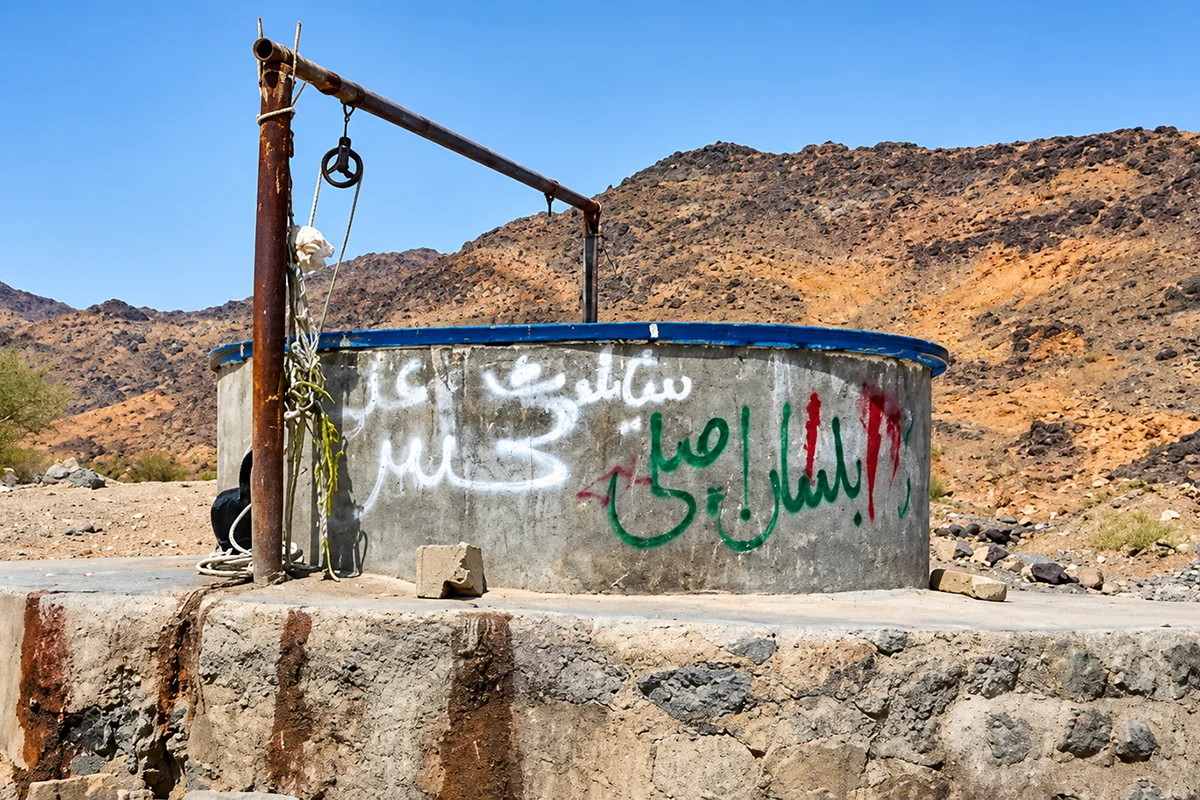
- ✓We could not verify a preserved or marked well at Badr today. If a guide points at one, ask for his source.
Quick facts
- Location
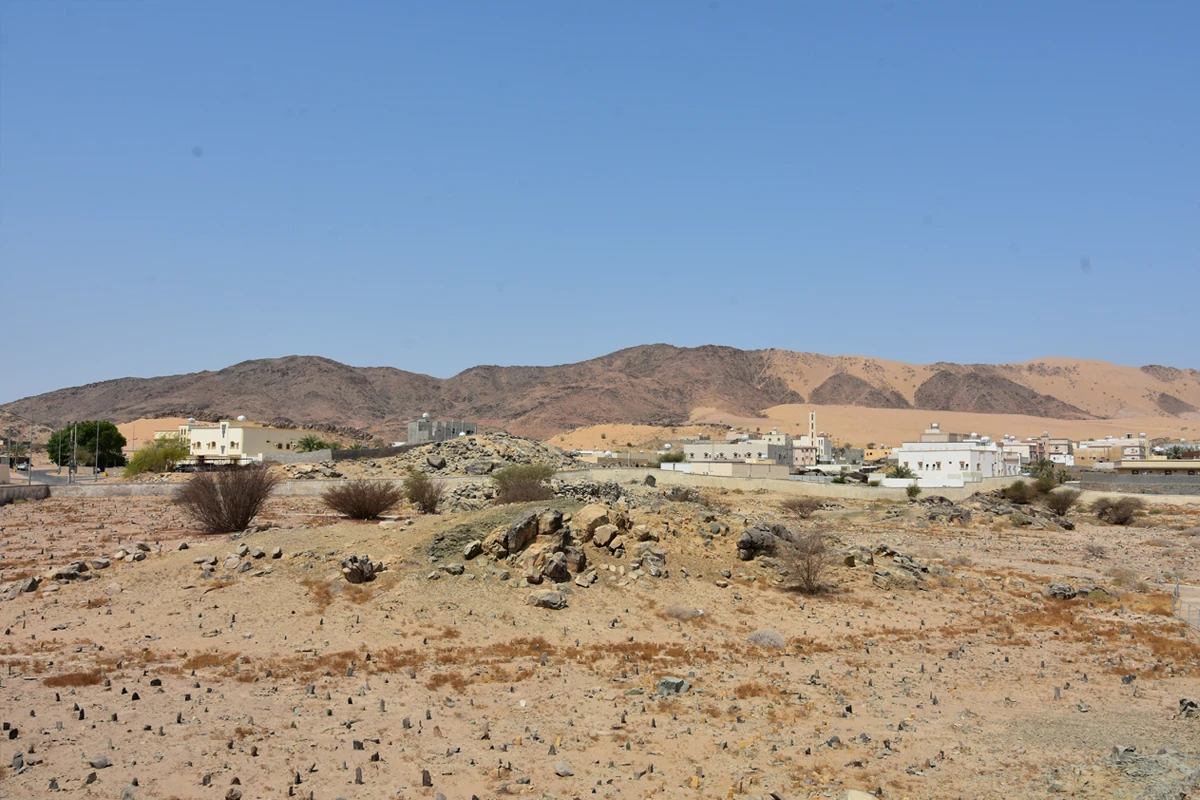
- Badr, about 150 km south-west of Madinah
- Before the battle
- The wells taken on al-Hubab ibn al-Mundhir's advice
- The tactic
- Hold the nearest well, build a basin, deny the rest
- After the battle
- The Prophet ﷺ addressing the dead at the well
- Recorded in
- Sahih al-Bukhari and Sahih Muslim
- A visitable well today
- Not something we could verify
- Part of Umrah or Hajj
- No
- Virtue in the water
- None reported
- Evidence level
- A for the exchange at the well; B for the tactical account
Two separate things happened at the wells of Badr. One decided the battle. The other produced one of the most striking exchanges in Sahih al-Bukhari.
Before: the wells won the day
The Prophet ﷺ had chosen a place to camp. Al-Hubab ibn al-Mundhir, may Allah be pleased with him, who knew this country, asked whether the position was something Allah had commanded or a matter of strategy.
Told it was strategy, he said plainly that it was the wrong place. His plan: move to the well nearest the enemy, take it, build a basin and fill it, and put the remaining wells beyond use.
The Prophet ﷺ said he had given the right advice, and the army moved that night.
Now do the arithmetic. A thousand men and their animals, in a desert, in Ramadan, with the only reachable water held by the people they had come to fight. Everything after that follows.
The Muslims did not win at Badr because they were braver. They won because a man who knew the ground was allowed to say so.
After: the well of the dead
The second episode is at a different well, the qalib into which the bodies of the Quraysh dead were put after the battle.
Sahih al-Bukhari and Sahih Muslim record that the Prophet ﷺ stood at that well three days afterwards and called out to them by name and by their fathers' names, asking whether they had found what their Lord promised to be true, and saying that he had found what his Lord promised to be true.
Umar, may Allah be pleased with him, asked how he could address bodies with no souls in them.
He answered that by the One in whose hand his soul was, they did not hear what he was saying any less than Umar did, but they could not reply.
Sit with that for a moment
These were men he had grown up among. Uncles of his Companions. Men whose fathers' names he could still recall, standing at a well, three days later, in the quiet after everything.
He did not gloat. The words are a question: did you find what your Lord promised you to be true?
That exchange is level A, in both Bukhari and Muslim, and it is worth reading in full before you go to Badr.
What is there now
Honestly: we could not verify a preserved, marked or accessible well presented as the well of Badr today.
The site as a whole is documented and its components are listed, but individual well heads on a fourteen-century-old battlefield are exactly the kind of thing that does not survive identification. If a guide points at a hole in the ground and names it, ask him what his source is.
What you can do is stand on the ground and understand why the water mattered.
The evidence, plainly
- Al-Hubab's advice and the taking of the wells: recorded in the seerah literature.
- The Prophet ﷺ addressing the dead at the well: level A, Sahih al-Bukhari and Sahih Muslim.
- A specific surviving well you can visit: not something we could verify.
- Any virtue in the water or a reward for visiting: none reported.
Is visiting part of Hajj or Umrah?
No. Not a rite of either.
Related
- The Badr guide — the full day and how to plan it.
- The battlefield — and how to read the ground.
- Masjid al-Areesh — the shelter where he made du'a.
- Badr martyrs' cemetery — the fourteen.
Getting to Badr
Badr is a day trip from Madinah, not a stop you fit into a city round. There is no train and no practical public transport, so it is a car.
Our Badr day trip from Madinah runs the round as a fixed-fare tour: SAR 380 for a standard sedan, 430 for an SUV, 530 for a van and 680 for a minibus, priced per vehicle rather than per person. If your route allows it, taking Badr on the way between the two cities is better value than doubling back: Makkah to Madinah via Badr is SAR 530 sedan and 580 SUV. See the Makkah to Madinah private car page and say you want the Badr routing when you book.
Fares reviewed August 2026 and shown per vehicle. Our Beyond the Haramayn guide covers Badr alongside Taif, Tabuk, Khaybar and al-Hijr.
Accuracy note
The account of al-Hubab ibn al-Mundhir asking whether the camp position was divinely commanded or a matter of strategy, proposing the move to the well nearest the enemy with a basin built and the other wells put beyond use, and the Prophet ﷺ adopting the advice, is recorded in the seerah literature. The account of the Prophet ﷺ standing at the well into which the Quraysh dead were placed, three days after the battle, calling them by name and by their fathers' names, asking whether they had found what their Lord promised to be true, and answering Umar that they did not hear him any less than Umar did but could not reply, is recorded in Sahih al-Bukhari and Sahih Muslim. We could not verify a preserved, marked or accessible well presented as the well of Badr today, and have not directed readers to one. No virtue in the water and no reward for visiting is authentically reported, and visiting is not a rite of Hajj or Umrah. Transport fares are from our own published route data, reviewed August 2026, and are per vehicle. Content verified August 2026. Correction? Tell us.
Frequently asked questions
Planning a Saudi trip?
Pre-book a private car, find a stay, or ask us anything on WhatsApp.
Last updated: 7 September 2026·Sources reviewed by the Wadana Go editorial team.