Wadi Ranuna: Where the Prayer Time Came First
Short answer
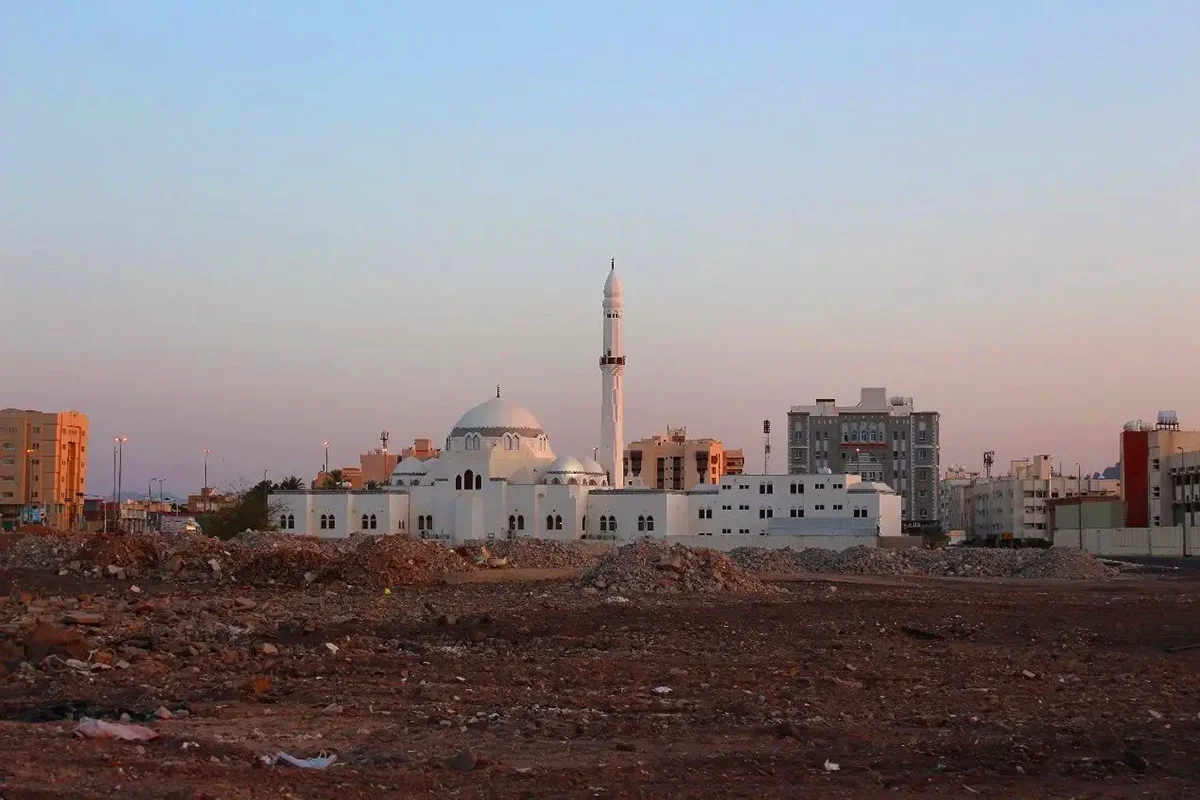
Wadi Ranuna runs through the country between Quba and central Madinah, on the southern side of the city. The Prophet ﷺ prayed the first Jumu'ah after the Hijrah there, among the quarter of the Banu Salim ibn Awf. Masjid al-Jumu'ah stands on the ground, about 900 metres north of Masjid Quba.
Key takeaways
- ✓Wadi Ranuna runs between Quba and central Madinah, on the southern approach to the city.
- ✓The Prophet ﷺ prayed the first Jumu'ah after the Hijrah in this valley, among the Banu Salim ibn Awf of the Khazraj.
- ✓Masjid al-Jumu'ah stands on the ground and is also called Masjid al-Wadi after the valley.
- ✓He was a few kilometres from a city that had invited him and was waiting. He could have arrived first and prayed afterwards.
- ✓Instead the prayer time came while he was in a valley, so he prayed it in the valley with whoever was there.
- ✓The schedule fitted around the prayer, not the other way round. That choice set the pattern.
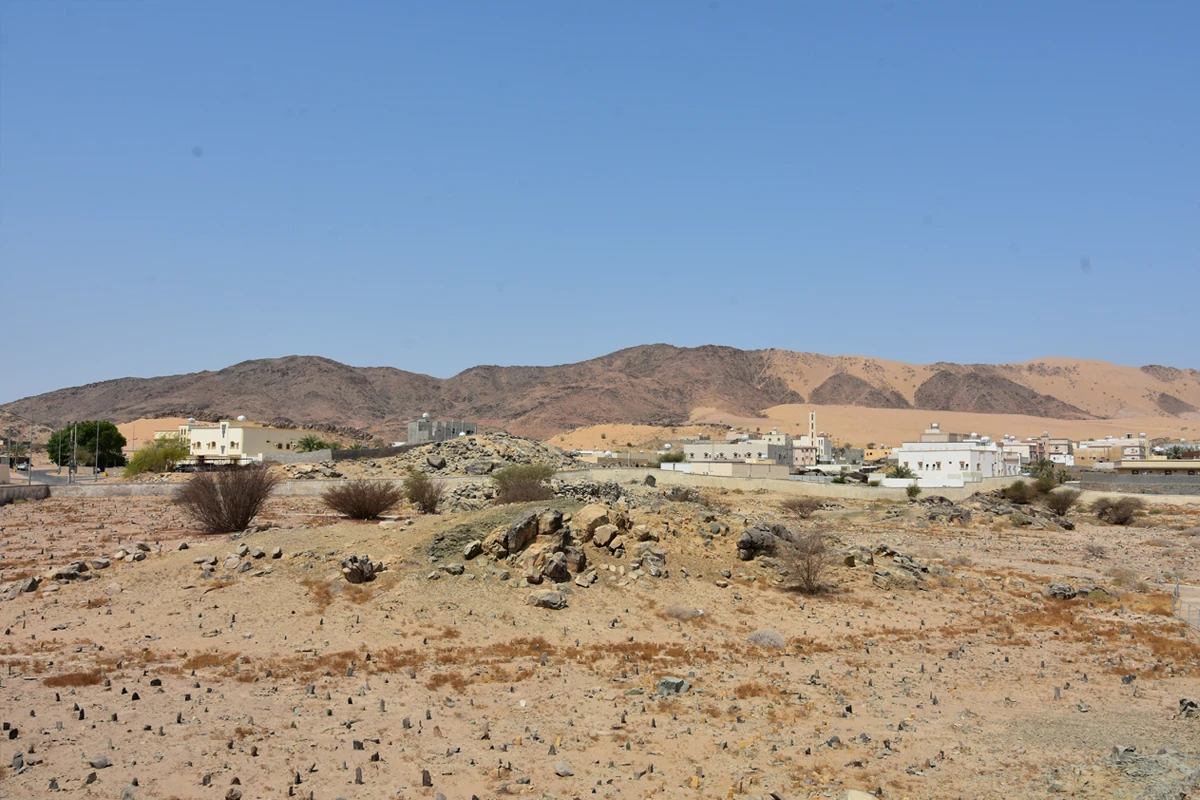
- ✓It is agricultural country: palm cultivation, orchards, walled plots. There is no site to arrive at, and you will pass through it going to Quba.
Quick facts
- City
- Madinah, southern side between Quba and the centre
- What happened
- The first Friday prayer after the Hijrah
- Whose quarter
- Banu Salim ibn Awf, of the Khazraj
- The mosque on it
- Masjid al-Jumu'ah, also called Masjid al-Wadi
- Distance
- About 900 m north of Masjid Quba
- Terrain
- Agricultural: palms, orchards, walled plots
- Part of Umrah or Hajj
- No
- Reward for praying there
- None reported. Quba does have one
- Evidence level
- A for the event; B for the exact ground
Wadi Ranuna runs through the country between Quba and the centre of Madinah, on the southern side of the city.
It is where the Prophet ﷺ prayed the first Jumu'ah after the Hijrah, and where the Banu Salim ibn Awf of the Khazraj had their quarter.
The first Friday
After several days at Quba, he set out for the city itself. The time for the Friday prayer came while he was in this valley, among the Banu Salim, and he stopped, gave the khutbah and led the prayer.
That was the first Jumu'ah he led after arriving in Madinah. Masjid al-Jumu'ah stands on the ground, about 900 metres north of Masjid Quba, and the mosque is also called Masjid al-Wadi after this valley.
The decision in it
It is easy to read past this.
He was a few kilometres from a city that had invited him and was waiting. He could have arrived first and organised the prayer afterwards, and nobody would have thought twice about it.
Instead the prayer time came while he was in a valley, so he prayed it in the valley, with whoever was there.
Everything about how the community was going to run is in that choice. The prayer was not something to be fitted around the schedule. The schedule fitted around the prayer.
The valley itself
Ranuna is agricultural country, and it always has been. Palm cultivation, orchards, walled plots and irrigation, on the southern approach to the city.
It is not dramatic terrain and there is no viewpoint to stand at. It is farmland with a road through it and a mosque on it.
The three valleys
Madinah sits in a basin ringed by harrah, black volcanic lava fields. Three main seasonal valleys drain that country and meet to the north-west of the city:
- Al-Aqiq — the largest, running down the western side.
- Buthhan — the one that runs through the city itself.
- Qanat — running between Mount Uhud and the city centre.
Mahzur is a fourth name you will meet, flowing from Harrat Shawran and once passing close to the Prophet's Mosque and al-Baqi.
These are not streams. They are dry most of the year and then carry flash floods, fast and dangerous, after rain on the harrah. That is why Madinah's history includes dam building, and why the wadi beds are still respected.
The evidence, plainly
- The first Jumu'ah after the Hijrah, in this valley among the Banu Salim: recorded in the seerah and historical literature and universally accepted.
- That the mosque stands on the exact ground: historical tradition and continuous use, level B.
- The valley's identification and location: standard in the Madinah literature and Saudi sources.
- Any reward for praying in the valley or the mosque: none reported. Quba, a kilometre away, does have one.
Is visiting part of Hajj or Umrah?
No. Not a rite of either.
Visiting
- You will pass through it going to Quba. That is the honest way to see it.
- Stop at Masjid al-Jumu'ah if you want a marker on the ground; it takes five minutes.
- Do not go looking for the valley as a site. There is nothing to arrive at.
- The Quba Walking Trail runs through this country, so walking to Quba takes you across it on foot.
Related
- Masjid al-Jumu'ah — the mosque on the ground.
- Masjid Quba — 900 metres south.
- The Hijrah entry route — and the walk you can do.
- Wadi al-Aqiq — the blessed valley on the other side of the city.
Getting there
Madinah's historic sites are scattered across the city, and reaching them one taxi at a time turns a short list into a whole morning. Our Madinah Ziyarat private car covers the round on one fixed fare for the whole vehicle with the driver waiting at every stop, and the Madinah Ziyarat tour is the guided version. For arrival, the Madinah airport transfer has fixed fares.
Accuracy note
That the Prophet ﷺ prayed the first Friday prayer after the Hijrah in the valley of Ranuna, among the quarter of the Banu Salim ibn Awf of the Khazraj, on the way from Quba into Madinah, is recorded in the seerah and historical literature and is universally accepted. That Masjid al-Jumu'ah stands on that exact ground is historical tradition and continuous use rather than a hadith-fixed fact. The valley's location on the southern side of Madinah between Quba and the city centre, and the description of the three main valleys of Madinah as al-Aqiq, Buthhan and Qanat meeting to the north-west, follow standard geographic description and Saudi sources. We know of no reported reward for praying in the valley or in Masjid al-Jumu'ah; Masjid Quba, less than a kilometre away, does have a sound hadith attached to praying in it, and the two should not be blurred. Visiting is not a rite of Hajj or Umrah. Content verified August 2026. Correction? Tell us.
Frequently asked questions
Planning a Saudi trip?
Pre-book a private car, find a stay, or ask us anything on WhatsApp.
Last updated: 8 September 2026·Sources reviewed by the Wadana Go editorial team.