Wadi al-Aqiq: The Only Valley an Authentic Hadith Calls Blessed
Short answer
Wadi al-Aqiq runs about 52 kilometres down the western side of Madinah. Sahih al-Bukhari records that at this valley the Prophet ﷺ was told to pray in this blessed valley and to say an Umrah within a Hajj. The miqat at Dhu al-Hulayfah sits on it. It is being developed as a natural park.
Key takeaways
- ✓Wadi al-Aqiq is Madinah's largest valley, about 52 kilometres long, running down the western side.
- ✓Sahih al-Bukhari records the Prophet ﷺ being told to pray in this blessed valley and to say an Umrah within a Hajj.
- ✓A whole valley being described that way in an authentic hadith is rare. Mountains and wells are named; valleys much less often.
- ✓It was said at Dhu al-Hulayfah, the miqat now called Abyar Ali, which sits on this wadi.
- ✓The name is explained both from the reddish carnelian colour of the ground and from the root meaning to cut through.
- ✓In Umayyad and Abbasid times the valley was where Madinah's wealthy built, including Urwah ibn al-Zubayr and Sukaynah bint al-Husayn.
- ✓It is being developed as a natural park with walkways and cycle paths, with the second phase launched in June 2023.
Quick facts
- City
- Madinah, running down the western side
- Length
- About 52 km
- The hadith
- Sahih al-Bukhari, at Dhu al-Hulayfah
- What sits on it
- The miqat at Abyar Ali
- Name from
- The reddish stone, and the root meaning to cut through
- Historic buildings
- Umayyad and Abbasid palaces on its banks
- Development
- Environmental Rehabilitation Project, phase two from June 2023
- Part of Umrah or Hajj
- No. Walking in it is not a rite
- Evidence level
- A for the hadith; B for the rest
Wadi al-Aqiq runs about 52 kilometres down the western side of Madinah. It is the largest of the city's valleys, and it is the only valley in the Hijaz that an authentic hadith calls blessed.
The hadith
Sahih al-Bukhari records that at this valley the Prophet ﷺ said that someone had come to him in the night from his Lord and told him: pray in this blessed valley, and say: an Umrah within a Hajj.
That is level A, and it is unusual. Mountains are named in hadith. Wells are named. A whole valley being described this way is rare.
The place it was said is Dhu al-Hulayfah, the miqat now called Abyar Ali, which sits on this wadi. So every pilgrim who leaves Madinah for Makkah passes through the blessed valley, and most of them have no idea.
Where the name comes from
Two explanations are given, and they may both be right.
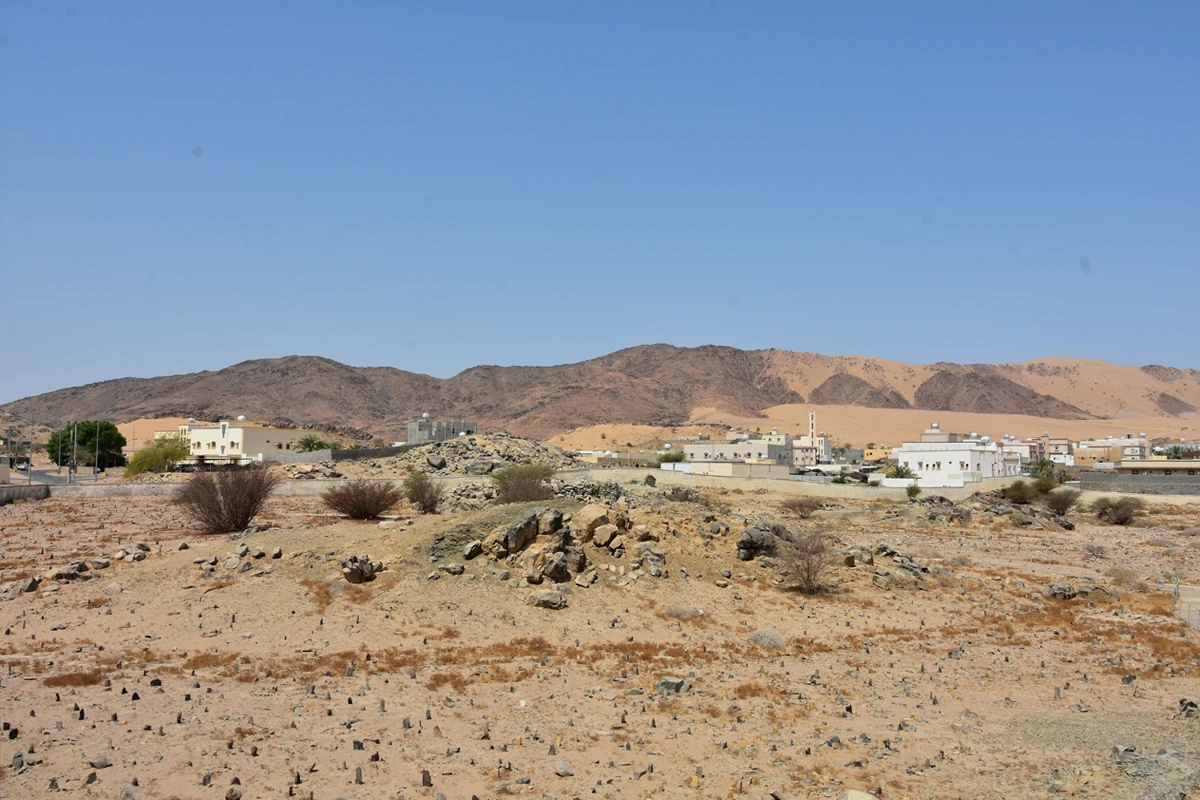
Aqiq is also the word for carnelian, the reddish stone, and the valley's surroundings carry that colour.
The other explanation comes from the root 'aqq, to cut through, from the way the flood water has carved a path through the black lava rock of the harrah.
The valley of palaces
Here is the part almost nobody knows.
In the Umayyad and Abbasid periods, al-Aqiq was where the wealthy of Madinah built. The sources describe it in some eras as resembling a permanently flowing river, with palaces along its banks.
Among those who had estates there were Urwah ibn al-Zubayr, the great early scholar, and Sukaynah bint al-Husayn, may Allah be pleased with them. Some of that building survives.
So the valley has three separate layers: a hadith from year ten or thereabouts, a miqat that hundreds of thousands of people pass through every year, and the remains of the country retreats of Madinah's aristocracy two hundred years later.
The valley today
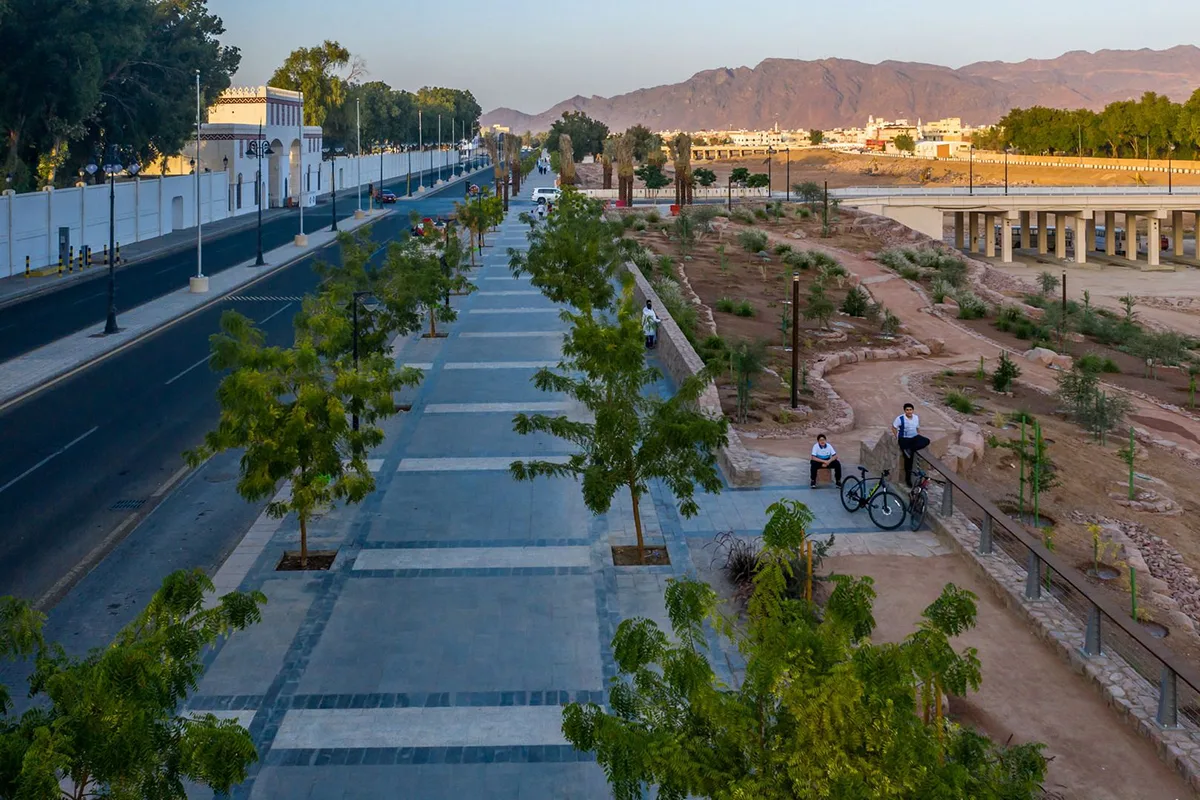
Saudi Arabia is turning it into a park.
The Environmental Rehabilitation Project of Wadi al-Aqiq is developing the valley as a natural park with walkways, cycle paths, green space and family areas. Saudipedia records the second phase, launched in June 2023, extending over about three kilometres, with the valley averaging about 184 metres wide and a walkway of roughly 1,500 metres with seating overlooking the valley and shade trees along it.
Development projects change, so check current access rather than relying on figures from a page.
Why you should notice it
Because you will cross it whether you plan to or not.
Going to the miqat at Abyar Ali, you are in it. Driving out towards Bir Rumah or Qiblatayn, you cross it. If a landscaped section is open when you visit, an hour walking there in the evening is a genuinely pleasant thing to do in a city that offers very little of that kind.
Ten seconds of noticing costs nothing: this is the valley, and there is a hadith about it in Bukhari.
The three valleys
Madinah sits in a basin ringed by harrah, black volcanic lava fields. Three main seasonal valleys drain that country and meet to the north-west of the city:
- Al-Aqiq — the largest, running down the western side.
- Buthhan — the one that runs through the city itself.
- Qanat — running between Mount Uhud and the city centre.
Mahzur is a fourth name you will meet, flowing from Harrat Shawran and once passing close to the Prophet's Mosque and al-Baqi.
These are not streams. They are dry most of the year and then carry flash floods, fast and dangerous, after rain on the harrah. That is why Madinah's history includes dam building, and why the wadi beds are still respected.
Is visiting part of Hajj or Umrah?
No. Walking in the valley is not a rite. What is in the hadith is an instruction given to the Prophet ﷺ about praying there and about combining Umrah with Hajj, and the practical application for you is the miqat.
Do not treat the valley as a place with a reward attached to standing in it. That is not what the report says.
Related
- Dhu al-Hulayfah — the miqat on this valley.
- Bir Urwah — and the water sent to Baghdad.
- Urwah ibn al-Zubayr's palace — on its banks.
- Bir Rumah — in the smaller branch of the same wadi.
Getting there
Madinah's historic sites are scattered across the city, and reaching them one taxi at a time turns a short list into a whole morning. Our Madinah Ziyarat private car covers the round on one fixed fare for the whole vehicle with the driver waiting at every stop, and the Madinah Ziyarat tour is the guided version. For arrival, the Madinah airport transfer has fixed fares.
Accuracy note
The report that the Prophet ﷺ was told to pray in this blessed valley and to say an Umrah within a Hajj is in Sahih al-Bukhari and was given at Dhu al-Hulayfah, which sits on Wadi al-Aqiq. The length of about 52 km, the two explanations of the name from the reddish carnelian colour and from the root meaning to cut through, the palaces built on its banks in the Umayyad and Abbasid periods including those of Urwah ibn al-Zubayr and Sukaynah bint al-Husayn, and the Environmental Rehabilitation Project with its second phase launched in June 2023 extending about three kilometres, an average valley width of about 184 m and a walkway of roughly 1,500 m, follow Saudipedia and Saudi press sources. Development projects change and current access should be checked rather than taken from this page. The hadith is an instruction about prayer and about combining Umrah with Hajj; it does not attach a reward to standing in the valley, and we have said so. Walking in the valley is not a rite of Hajj or Umrah. Content verified August 2026. Correction? Tell us.
Frequently asked questions
Planning a Saudi trip?
Pre-book a private car, find a stay, or ask us anything on WhatsApp.
Last updated: 9 September 2026·Sources reviewed by the Wadana Go editorial team.