Wadi Uranah: The Valley That Does Not Count
Short answer
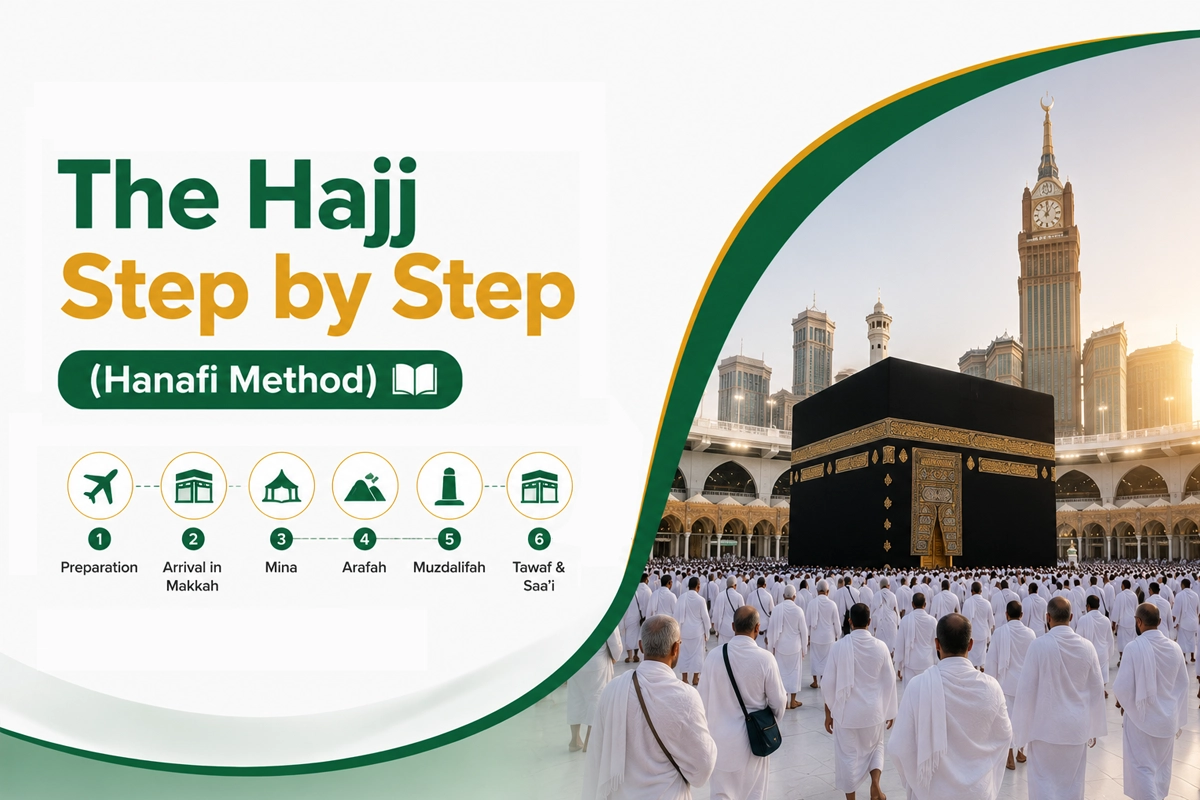
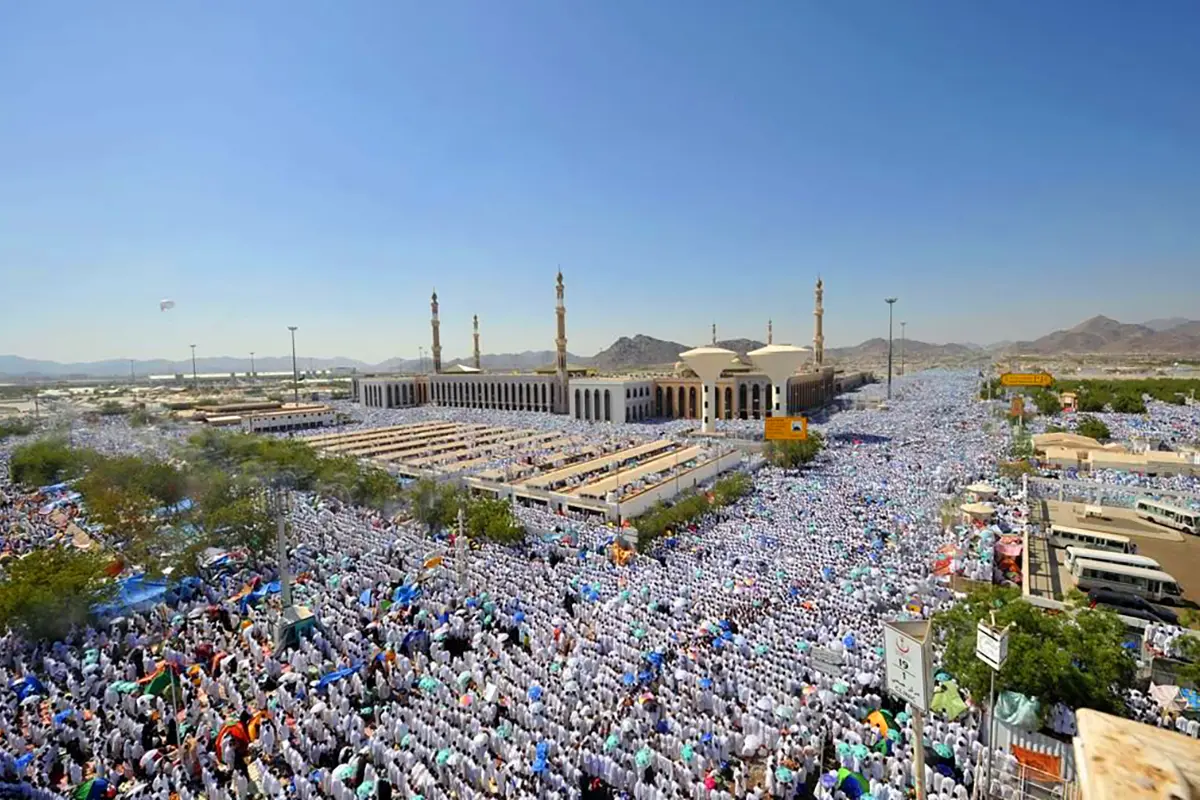
Wadi Uranah is a valley on the western edge of the plain of Arafat, just outside its boundary. The Prophet delivered the sermon on the Day of Arafah there, then moved into Arafat for the standing. He excluded Uranah from the places of standing, so a pilgrim who spends the ninth there has not performed the rite.
Key takeaways
- ✓Wadi Uranah lies on the western edge of Arafat and is outside its boundary.
- ✓The Prophet said all of Arafah is a place of standing, and told pilgrims to keep away from Uranah.
- ✓Standing in Uranah on the ninth does not fulfil the rite.
- ✓He delivered the sermon of the Day of Arafah in Uranah, then moved into Arafat.
- ✓Masjid Namirah stands there, with its front section outside the boundary.
- ✓Boundary markers are set along the line and are worth checking if your camp is at the edge.
- ✓This is the only piece of ground near Arafat where the distinction changes anything.
Quick facts
- Where
- Western edge of the Arafat plain
- Inside Arafat?
- No. Just outside the boundary.
- Valid for the standing?
- No
- What happened there
- The sermon on the Day of Arafah
- What stands there
- Masjid Namirah, partly
- Marked?
- Yes, boundary markers along the line
- Matters when
- 9 Dhul Hijjah, during Hajj
- Part of Umrah?
- No. This belongs to Hajj.
A valley on the edge
Wadi Uranah is a valley running along the western side of the plain of Arafat, on the Makkah side, and it forms part of the boundary of that plain.
Physically it is unremarkable. A shallow dry watercourse in dry country, of the kind there are hundreds of around Makkah. Standing there, nothing tells you that you have crossed a line.
What makes it worth its own page is that the line exists, and that on one day of the year it decides whether a pilgrim's Hajj is valid.
What the Prophet said
In the accounts of the Farewell Pilgrimage, the Prophet said that he had stood there, and that all of Arafah is a place of standing — and then added an exclusion: keep away from the belly of Uranah.
Those two halves belong together and are usually quoted apart.
The first half is generous. It stops anyone claiming that one patch of the plain is better than another, and it means a pilgrim in a tent at the far edge has fulfilled the rite exactly as one at Jabal al-Rahmah has.
The second half is precise. Uranah is out.
So the honest summary is: anywhere in Arafat, and not here.
Why this matters practically
Because the standing is the one thing Hajj cannot do without. The Prophet said that Hajj is Arafah. A pilgrim who spends the afternoon of the ninth in Uranah, believing themselves to be at Arafat, has not done the standing.
In practice this affects very few people, and that is because of how carefully the boundary is managed.
- The line is physically marked. Boundary markers run along it, and they are there for exactly this reason.
- Camps are allocated inside. Groups are not placed on the wrong side of the line by the authorities.
- The main risk is at the edges. If your camp is close to the boundary, and especially if you wander out looking for space or shade, it is worth knowing which way the line runs.
If you are ever unsure on the day, ask. The markers exist, the staff know where the line is, and the question is a completely normal one.
The sermon was given here
Now the part that surprises people, and that makes Uranah more interesting than a technicality.
The Prophet delivered the sermon of the Day of Arafah in Uranah, outside the boundary, and then moved into Arafat for the standing.
That sermon is the one usually called the Farewell Sermon, delivered from the back of his camel to an enormous gathering. In it he addressed the sanctity of life and property, the abolition of the blood feuds and the usury of the pre-Islamic period, the rights of women, and the equality of people before Allah, and he asked them three times whether he had conveyed the message.
So this valley carries one of the most consequential addresses in history, and does not count for the rite performed a few hundred metres away. Both of those facts are true, and neither cancels the other.
It also explains the odd geometry of Masjid Namirah. The mosque was built where the sermon was given, and after expansion its front section falls outside the boundary while its rear falls inside.
Is Uranah forbidden ground?
No, and this is worth clarifying because the wording makes people nervous.
Uranah is not cursed, prohibited or dangerous. There is nothing wrong with being there, praying there, or driving through it. The Prophet himself stood there and preached from it.
The point is narrow and technical: it does not count as Arafat for the purpose of the standing on the ninth of Dhul Hijjah. That is the whole of the ruling. Outside that day and that rite, it is ordinary ground.
Seeing it
There is nothing to visit in the usual sense. You will pass through or beside Uranah on the way into Arafat, and the only visible thing is the boundary marking and the mosque.
- Look for the markers as you approach Arafat. Once you have seen where the line is, the geography of the ninth makes much more sense.
- Two minutes is all it needs. This is a thing to understand rather than a place to spend time.
- Combine it with the plain and the hill, which are a short drive on.
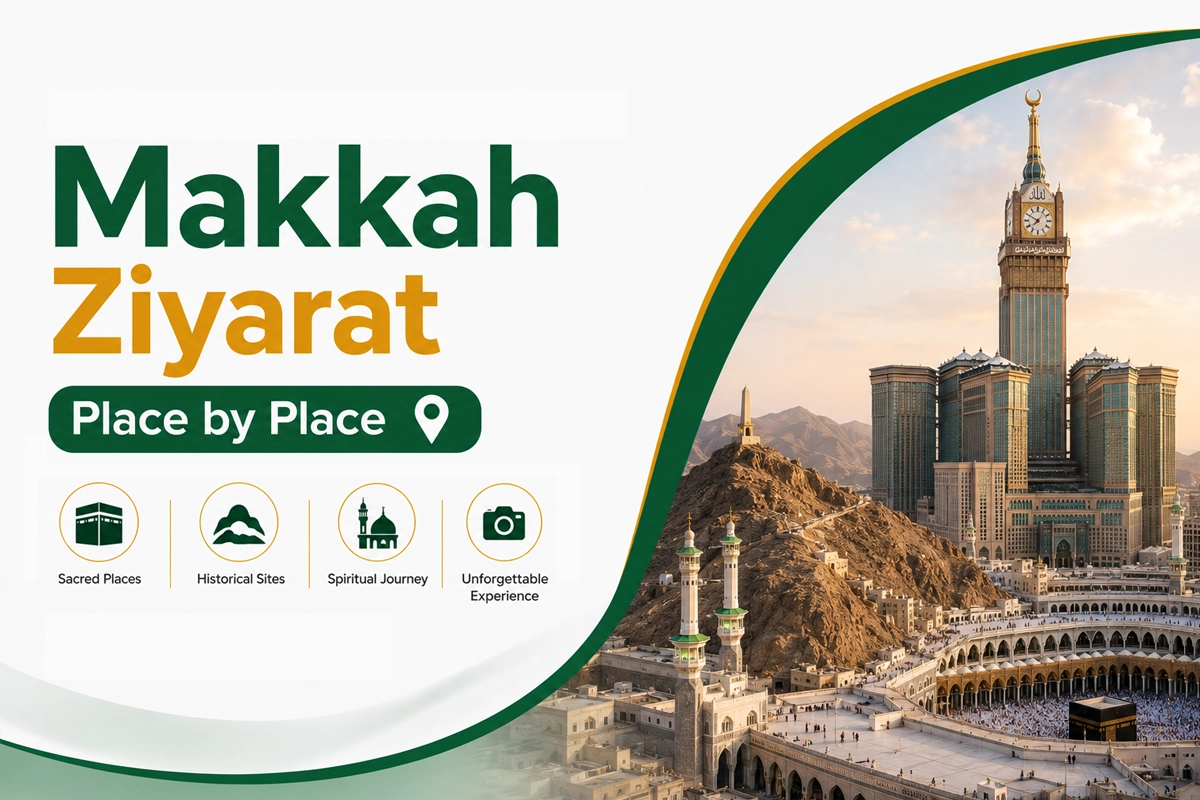
Arafat is the furthest of the three holy sites at about twenty kilometres, and comes last on the road past Mina and Muzdalifah. All three fit into one leg of a Makkah Ziyarat round, from SAR 200 per vehicle with waiting at each stop. Our Hajj step by step guide covers the Day of Arafah in order. Fares reviewed August 2026.
Nearby
| Place | What it is | Counts for the standing? |
|---|---|---|
| Arafat | The plain itself. | Yes, all of it |
| Wadi Uranah | The valley on its western edge. | No |
| Masjid Namirah | Built at Uranah, split by the boundary. | Rear section only |
| Jabal al-Rahmah | The hill in the middle of the plain. | Yes, like the rest |
Accuracy note
That the Prophet said all of Arafah is a place of standing and instructed pilgrims to keep away from the belly of Uranah is recorded in Sahih Muslim within the accounts of the Farewell Pilgrimage. This is established evidence, and it is the basis of the whole article.
That Hajj is Arafah is recorded in the collections of al-Tirmidhi, Abu Dawud and al-Nasa'i and is accepted as authentic.
That the sermon of the Day of Arafah was delivered in Uranah, and that the Prophet then moved into Arafat for the standing, is established from the accounts of the Farewell Pilgrimage. The content of the sermon summarised here follows those accounts.
That Masjid Namirah stands at Uranah, with its front section outside the boundary of Arafat and its rear section inside after expansion, is the position recorded in descriptions of the mosque.
Uranah is not prohibited ground in any general sense, and the exclusion applies specifically to the standing on the ninth of Dhul Hijjah. Boundary markers are maintained by the authorities and pilgrims uncertain on the day should ask rather than guess. Fares are our own published rates, reviewed August 2026. Verified August 2026.
Frequently asked questions
Planning a Saudi trip?
Pre-book a private car, find a stay, or ask us anything on WhatsApp.
Last updated: 11 October 2026·Sources reviewed by the Wadana Go editorial team.