Al-Bara Fortress, Khaybar: On the Heritage List, Not in the Seerah
Short answer
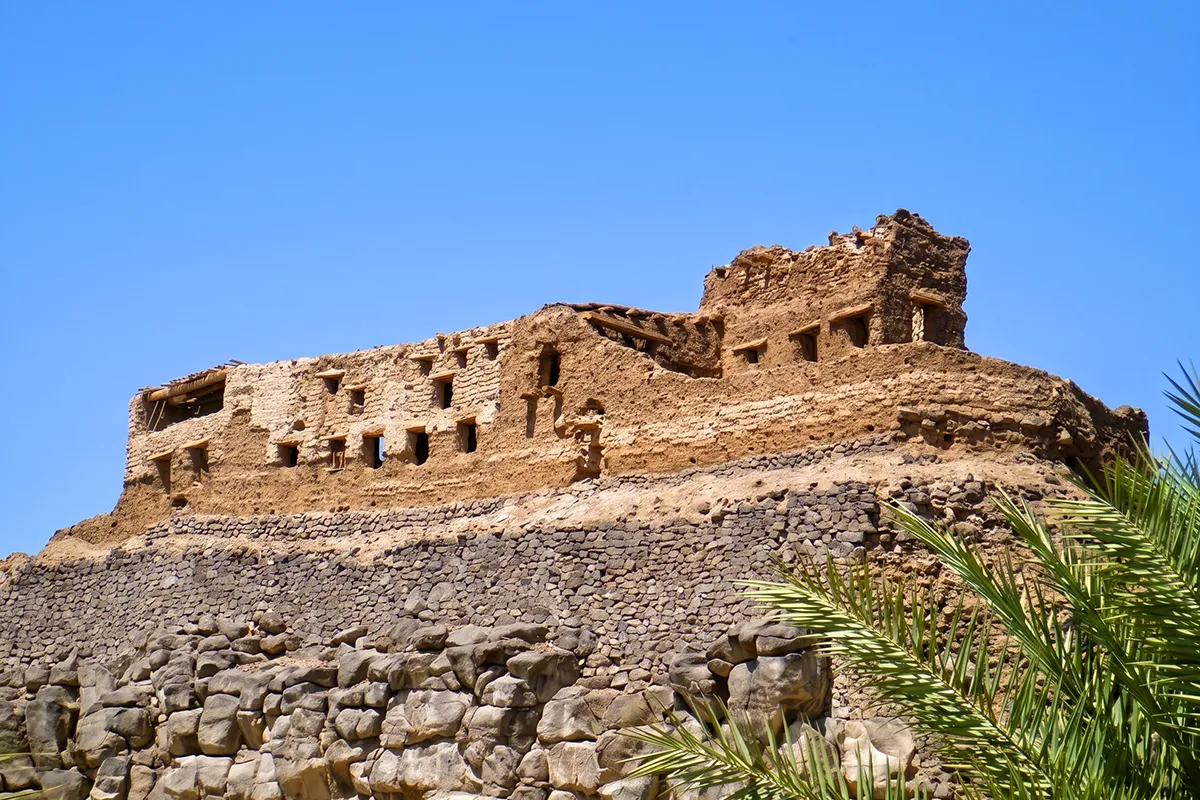
Al-Bara Fortress is named in the modern heritage listing of archaeological remains at Khaybar. It is not among the seven strongholds named in the classical seerah accounts. We could not verify its identification with any of them, its period, exact location, condition or access. Visiting is not a rite of Hajj or Umrah.
Key takeaways
- ✓Al-Bara appears in the modern heritage listing of archaeological sites at Khaybar, not in the classical seerah list of seven.
- ✓Those are two different kinds of list: one records a campaign, the other inventories standing remains.
- ✓A heritage inventory uses local or survey names and includes remains from every period, not only the seventh century.
- ✓Khaybar has been occupied and fortified for a very long time, with pre-Islamic structures, Islamic-era building and villages from living memory.
- ✓The honest description is a real archaeological site whose relationship to the campaign we could not establish.
- ✓Something genuinely important is happening at Khaybar archaeologically, and it has nothing to do with the seerah.
- ✓If you go expecting only the campaign, you will miss most of what is there. The place is older than the story.
Quick facts
- Location
- Khaybar oasis. Exact position not verified
- Which list
- Modern heritage inventory, not the classical seven
- Period
- Not verified by us
- A narration naming it
- Not verified by us
- Condition and access
- Not verified by us
- The classical seven
- Na'im, al-Qamus, al-Katibah, al-Natat, al-Shiqq, al-Watih, al-Sulalim
- Part of Umrah or Hajj
- No
- Can we direct you there
- No
- Evidence level
- Listed as a heritage site; nothing further verified
Al-Bara Fortress is one of the sites named in the heritage listing of archaeological remains at Khaybar.
Like al-Bazah, it is not among the seven strongholds named in the classical seerah accounts of the campaign, and this page says so rather than pretending otherwise.
Two different lists of forts
This confuses people at Khaybar, so it is worth setting out once.
The classical seerah list names seven strongholds involved in the campaign: Na'im, al-Qamus, al-Katibah, al-Natat, al-Shiqq, al-Watih and al-Sulalim, across three regions.
The modern heritage listing of archaeological sites at Khaybar uses a different set of names, including the castle of al-Sa'b ibn Mu'adh, the castle of al-Zubayr near Na'im fort, al-Bazah, al-Watih, Sallam, Qalat and al-Bara.
The two overlap but are not the same. One is a record of a campaign; the other is an inventory of standing remains. A name on one is not automatically a name on the other, and that is the source of most of the confusion you will meet on the ground.
What being on the heritage list means
It is not a lesser thing. It is a different thing.
A modern archaeological inventory records what is standing on the ground. It uses the names sites are known by locally, or names assigned during survey, and it includes remains from every period, not only the seventh century.
Khaybar has been continuously occupied and fortified for a very long time. There are pre-Islamic structures there, structures from the Islamic centuries, and mud-brick villages from within living memory. A fortified site on the heritage list may belong to any of those.
So the honest description of al-Bara is: a real archaeological site at Khaybar, whose relationship to the campaign of the seventh year we could not establish.
What we could not verify
- An identification of al-Bara with any of the seven classical forts.
- A narration in the seerah literature naming it.
- Its period, its exact location within the oasis, or its condition.
- Any visitor access.
The bigger picture at Khaybar
Something genuinely important is happening at Khaybar archaeologically, and it is worth knowing about even though it has nothing to do with the seerah.
The oasis and the surrounding harrah hold structures of considerable antiquity, and work in recent years has been changing the understanding of how long and how densely this landscape was occupied.
If you go to Khaybar expecting only the campaign, you will miss most of what is there. The place is older than the story you came for.
Is visiting part of Hajj or Umrah?
No. Not a rite of either, and in this case we cannot direct you to a specific site in any event.
How to handle fort names on the ground
- Ask what a name rests on. Heritage inventory, local usage, or the seerah? All three are legitimate; they are not the same.
- Do not assume a fort is seventh century because it is at Khaybar. Several periods are on the same ground.
- Do not climb anything. Structures are unsafe and areas are fenced for good reasons.
- Go for the oasis and the lava fields as much as for the history. They are the part nobody warns you about, and they are extraordinary.
Related
- The Khaybar guide — the oasis and how to plan a day.
- Qalat Fortress and al-Qamus — and what a Khaybar fort really was.
- Al-Bazah — the other name we could not place.
- The Battle of Khaybar — the campaign itself.
Getting there, honestly
We do not run a scheduled service to Khaybar and there is no published Wadana Go fare for it. A private car arranged in advance from Madinah or a hire car are the practical options; see driving yourself versus a private driver and renting a car in Saudi Arabia. Ask before you travel, not on the morning. Our Beyond the Haramayn guide covers Khaybar alongside Badr, Taif, Tabuk and al-Hijr.
Accuracy note
Al-Bara Fortress appears as a named site in the modern heritage listing of archaeological remains at Khaybar, alongside the castle of al-Sa'b ibn Mu'adh, the castle of al-Zubayr near Na'im fort, al-Bazah, al-Watih, Sallam and Qalat. It is not among the seven strongholds named in the classical seerah accounts of the campaign, which are Na'im, al-Qamus, al-Katibah, al-Natat, al-Shiqq, al-Watih and al-Sulalim. We could not verify an identification of al-Bara with any of those seven, a narration in the seerah literature naming it, its period, its exact location within the oasis, its condition, or any visitor access, and we have listed those gaps rather than filling them. That Khaybar and the surrounding harrah hold structures of considerable antiquity, and that recent archaeological work has been changing the understanding of how long and densely the landscape was occupied, follows published archaeological reporting; we have kept that general because the detail is a live research area. Visiting is not a rite of Hajj or Umrah. We do not run a scheduled service to Khaybar and have not quoted a fare. Content verified August 2026. If you hold a sourced reference for al-Bara, please send it to us and we will update this page.
Frequently asked questions
Planning a Saudi trip?
Pre-book a private car, find a stay, or ask us anything on WhatsApp.
Last updated: 3 September 2026·Sources reviewed by the Wadana Go editorial team.