Bussa Well (al-Bassah), and What Became of the Seven

Short answer
Bussa Well, more often Bir al-Bassah, is one of the seven wells of Madinah traditionally associated with the Prophet ﷺ. Arabic sources describe it as surviving inside an orchard near Bab al-Awali. We could not verify a specific narration naming it, its condition or any visitor access. Visiting is not a rite of Hajj or Umrah.
Key takeaways
- ✓The seven wells of Madinah are usually listed as Aris, Ghars, Rumah, Bir Ha', Buda'ah, al-Bassah and al-'Ihn.
- ✓Al-Bassah survives inside an orchard near Bab al-Awali, on the right as you cross the bridge from al-Awali towards al-Anbariyah.
- ✓Two of the seven are built over, one is under the mosque floor, one is a working farm, two survive and one we could not pin down.
- ✓The grouping of seven is a later convenience in the sources. It is not a hadith, and the evidence for each well is different.
- ✓Rumah, Bir Ha' and Aris each have accounts in Bukhari. Buda'ah has a ruling in the Sunan collections.
- ✓Al-Bassah and al-'Ihn are carried on the traditional list without a specific authentic narration that we could find.
- ✓Do not go looking for it. It is on private agricultural land with nothing arranged for visitors.
Quick facts
- City
- Madinah, near Bab al-Awali
- Also written
- Bir al-Bassah, al-Busah
- Status
- Survives inside a private orchard
- One of
- The seven traditional wells of Madinah
- Specific narration
- Not verified by us
- Visitor access
- None arranged. Private land
- Part of Umrah or Hajj
- No
- Virtue in the water
- None reported
- Better alternatives
- Bir Rumah and Bir Ghars
- Evidence level
- B for the traditional listing; nothing further verified
Bussa Well, more often written Bir al-Bassah and sometimes al-Busah, is one of the seven wells of Madinah traditionally associated with the Prophet ﷺ.
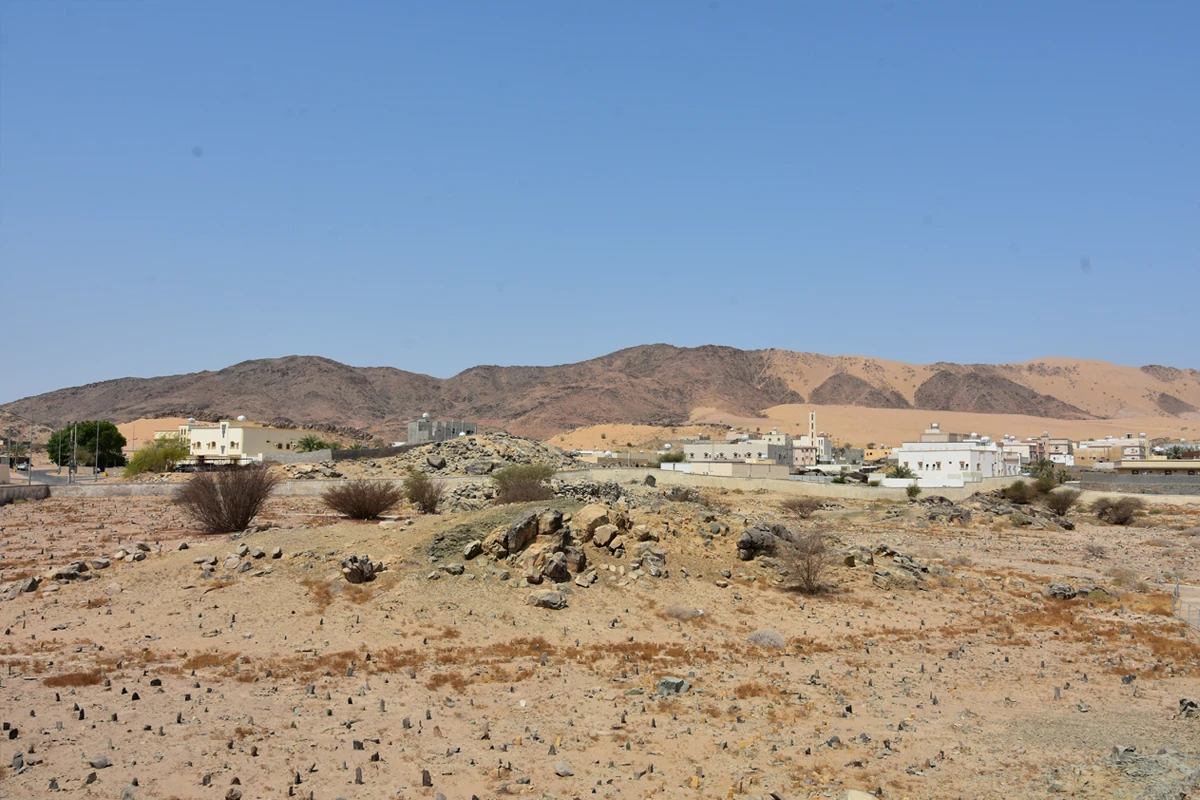
It is also, unusually, still there. Arabic sources describe it as surviving inside an orchard near Bab al-Awali, on the right-hand side as you cross the bridge from al-Awali towards al-Anbariyah.
The seven wells
Madinah's historic wells are usually listed as seven, and the list you will see most often in the Arabic sources is: Aris, Ghars, Rumah, Bir Ha', Buda'ah, al-Bassah and al-'Ihn.
Here is what has become of them, which is more useful than the list on its own:
| Well | Where it is now |
|---|---|
| Aris | Built over during the expansion of Masjid Quba |
| Ghars | Preserved in a walled enclosure east of Quba |
| Rumah | Still pumping, still irrigating a date farm |
| Bir Ha' | Under the floor of Masjid an-Nabawi |
| Buda'ah | Taken into the mosque's outer courtyards |
| Al-Bassah | Still there, inside an orchard near Bab al-Awali |
| Al-'Ihn | Location not something we could verify |
Two of the seven are gone under buildings, one is under a mosque floor, one is a working farm, two are preserved or surviving, and one we cannot pin down. That is a fair picture of what fourteen centuries does to a city's water supply.
One thing to be careful about
You will see the seven described as "the wells the Prophet ﷺ drank from" or "the wells he blessed", as a single package.
Take that apart. The evidence for each one is different:
- Rumah has an explicit hadith about buying it, and Uthman's endowment.
- Bir Ha' has an account in Bukhari about Abu Talha giving it away.
- Aris has two separate Bukhari narrations.
- Buda'ah has a well-known ruling attached to it in the Sunan collections.
- Ghars has documented use plus a weaker report about the washing.
- Al-Bassah and al-'Ihn are carried on the traditional list, and we could not find a specific authentic narration naming either.
The grouping is a later convenience. It is not a hadith.
What is recorded about al-Bassah
Honestly: little, beyond its place on the traditional list of seven and its survival in an orchard near Bab al-Awali.
We could not verify a specific narration naming this well, its dimensions, its condition, or whether visitors are welcome on the land it stands on. It is inside a private orchard, which usually answers the last question.
Evidence level: B for its place on the traditional list, and nothing further that we could confirm.
Is visiting part of Hajj or Umrah?
No. Not a rite of either, and no virtue in the water is reported.
Honest verdict
Do not go looking for it. It is on private agricultural land and there is nothing arranged for visitors.
If you want to see a historic Madinah well, go to Bir Rumah, which still works and has the strongest story attached, or Bir Ghars, which is preserved with a staircase and a walled enclosure. Both are set up for visitors. This one is not.
Related
- Bir Rumah — the one to actually visit.
- Bir Ghars — preserved and accessible.
- Bir Buda'ah — and the hadith on the purity of water.
- Madinah Ziyarat guide — every site with its evidence stated.
Getting there
Madinah's historic sites are scattered across the city, and reaching them one taxi at a time turns a short list into a whole morning. Our Madinah Ziyarat private car covers the round on one fixed fare for the whole vehicle with the driver waiting at every stop, and the Madinah Ziyarat tour is the guided version. For arrival, the Madinah airport transfer has fixed fares.
Accuracy note
The traditional list of the seven wells of Madinah as Aris, Ghars, Rumah, Bir Ha', Buda'ah, al-Bassah and al-'Ihn follows Arabic sources on the historic wells of the city. The survival of al-Bassah, also written al-Busah, inside an orchard near Bab al-Awali, on the right as one crosses the bridge from al-Awali towards al-Anbariyah, follows the same sources. That Buda'ah was taken into the recent expansion of the Prophet's Mosque and its ground became part of the outer courtyards, at roughly sixty metres north-west of the north-west corner of the courtyard wall, is also reported there. We could not verify a specific authentic narration naming al-Bassah, its dimensions, its condition, or any visitor access, and we have said so; it stands on private agricultural land. The grouping of the wells as a set of seven is a later convenience in the sources, not a hadith, and the evidence for each individual well differs. No virtue in the water is reported and visiting is not a rite of Hajj or Umrah. Content verified August 2026. If you hold sourced detail on this well, please send it.
Frequently asked questions
Planning a Saudi trip?
Pre-book a private car, find a stay, or ask us anything on WhatsApp.
Last updated: 12 September 2026·Sources reviewed by the Wadana Go editorial team.