Masjid Addas, Taif: A Bunch of Grapes and the Only Man Who Believed
Short answer
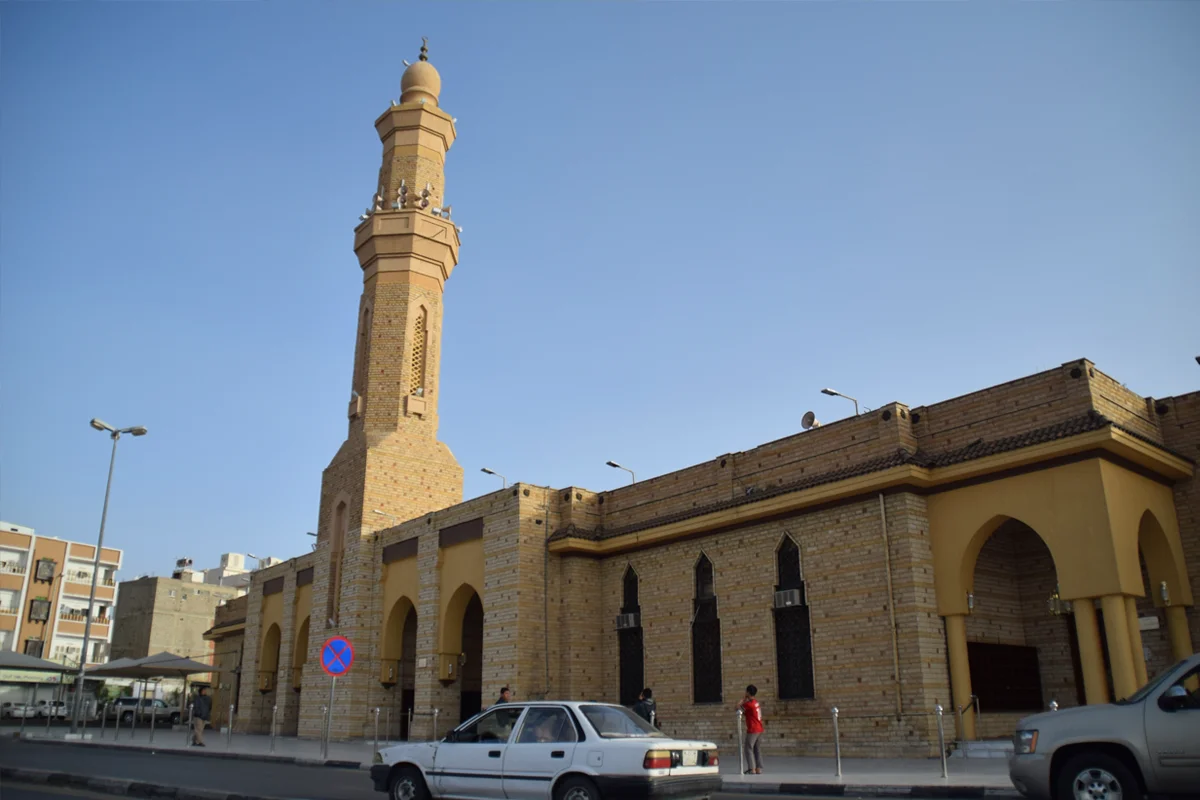
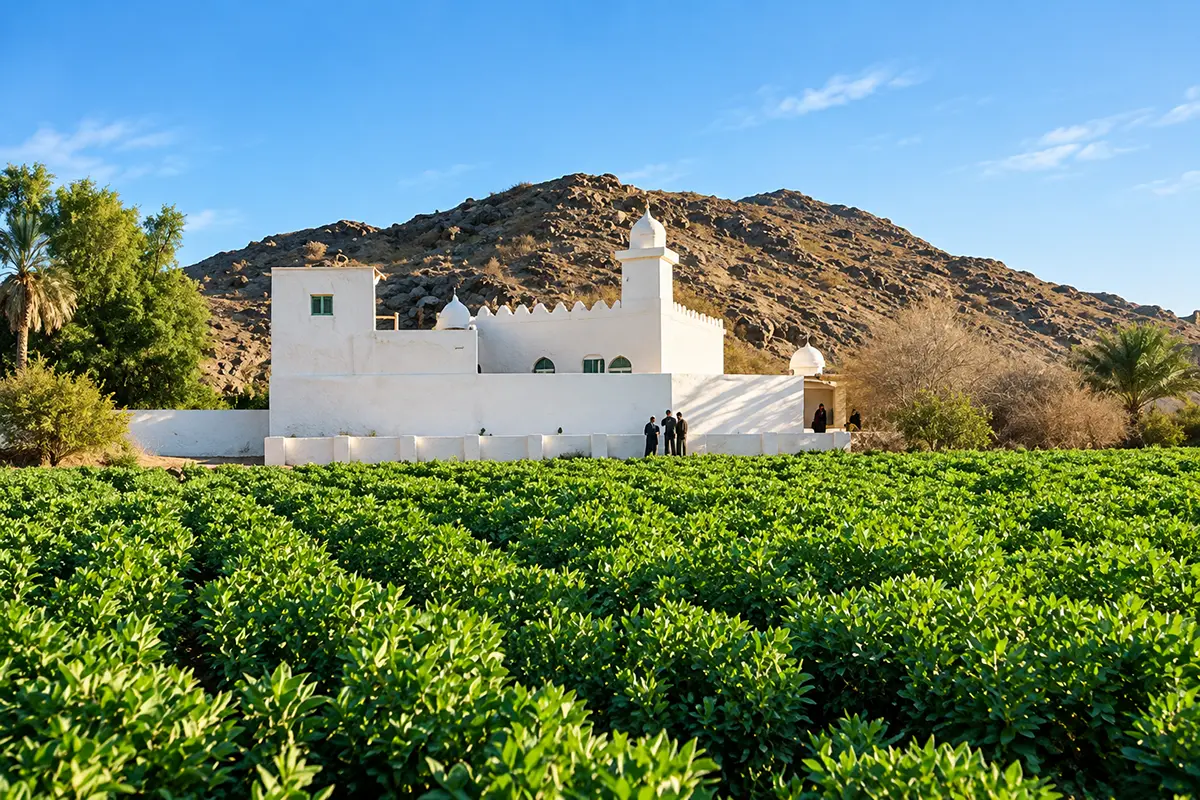
Masjid Addas is a mosque in Taif built on the site traditionally identified as the vineyard where the Prophet Muhammad rested after being driven out of the city. A Christian slave named Addas was sent to bring him grapes there and accepted Islam. The events are recorded in the early biographies of the Prophet.
Key takeaways
- ✓Masjid Addas in Taif stands on the site traditionally identified as the vineyard of Utbah and Shaybah.
- ✓The Prophet went to Taif after the deaths of Abu Talib and Khadijah, seeking support.
- ✓He was rejected, driven out and injured, and took shelter in the vineyard.
- ✓Addas, a Christian slave from Nineveh, brought him grapes and accepted Islam.
- ✓The story is recorded in the early biographies, which is reliable history rather than hadith.
- ✓The hadith of the angel of the mountains, connected with this journey, is in Bukhari and Muslim.
- ✓The famous du'a of Taif is from the seerah and is not established as an authentic hadith.
Quick facts
- City
- Taif, Makkah Province
- What it marks
- The vineyard where Addas brought grapes
- Whose garden
- Utbah and Shaybah, sons of Rabi'ah
- Who was Addas
- A Christian slave from Nineveh
- Evidence level
- Early seerah, not authentic hadith
- Car access
- Yes, in the city
- Taif from Makkah
- About 90 minutes by road
- Part of Umrah?
- No. Not a rite of Hajj or Umrah.
Why he went to Taif
To understand the mosque, you have to understand how bad things were when this happened.
In the tenth year of his call, the Prophet lost his uncle Abu Talib, who had protected him for decades without ever accepting his message, and then lost Khadijah, his wife of twenty-five years. That period is remembered as the Year of Sorrow.
With Abu Talib gone, the protection that had kept him alive in Makkah went with him. The pressure increased immediately.
So he travelled to Taif, about seventy or eighty kilometres away in the highlands, to ask the leaders of Thaqif for support. It was a reasonable place to try. Taif was the second city of the region and the Thaqif were powerful.
They refused. Then they set the young men and the slaves of the town on him, lining the streets and throwing stones as he left, until his feet were bleeding.
The garden
He got clear of the town and took shelter in the shade of a wall, in a vineyard belonging to two brothers of Quraysh from Makkah, Utbah and Shaybah, the sons of Rabi'ah.
There is an irony in that which the sources do not comment on and which is hard to miss. These two men were among his opponents in Makkah. Both were killed at Badr a few years later, fighting against him.
Watching from their garden, they saw the state he was in, and something moved them. They told their slave to take him a bunch of grapes.
Addas
The slave was a Christian from Nineveh, and his name was Addas.
He brought the grapes over and set them down. The Prophet said bismillah before eating.
Addas stopped. He said that people in this country did not say that, and asked what it meant.
The Prophet asked him where he was from and what his religion was. Addas said he was a Christian from Nineveh. And the Prophet said: from the town of the righteous man, Yunus the son of Matta.
Addas asked how he knew about Yunus. The Prophet answered that Yunus was his brother, that he had been a prophet and that he himself was a prophet.
The account says Addas bent over him and kissed his head, his hands and his feet.
His masters watched this from across the garden. When he came back, they asked him what he thought he was doing, and told him not to leave his religion, since his religion was better than that man's. Addas answered that there was nothing on earth better than this man, and that he had told him something only a prophet could know.
On the worst day of his life, the Prophet gained one follower, and it was the slave sent to feed him.
How firm is this?
Time to separate the layers, because they are not all the same.
The journey to Taif, the rejection and the stoning are established. They are referred to in an authentic hadith in Sahih al-Bukhari and Sahih Muslim, where Aisha asks the Prophet whether any day was harder than Uhud and he answers by describing what happened at Taif, and the angel of the mountains offering to crush the people of Makkah between the two hills. That hadith is on our page for Jabal Qu'ayqi'an.
The story of Addas comes from the early biographies of the Prophet, principally Ibn Ishaq. That is reliable historical material and it is the same class of source that gives us most of the Makkan period. It is not an authentic hadith, and nobody should quote it as one.
The famous du'a of Taif is weaker still. The long supplication beginning with a complaint of weakness and helplessness, widely shared and often printed on posters, comes from the seerah literature. It is not established as an authentic hadith. Scholars have pointed this out repeatedly, and it keeps circulating anyway. Say it if you like the words. Do not attribute it to the Prophet as a sound narration.
The identification of this specific garden, and so of the mosque built on it, is a site tradition in Taif. It is not established by the Qur'an or by authentic hadith.
The mosque today
Masjid Addas is a small mosque in Taif, built on the place identified by tradition as the garden. It is a working neighbourhood mosque rather than a monument, plain and modest.
There is no exhibition, no visitor centre and nothing marked inside explaining what happened. If you go without knowing the story, you will see a small mosque.
No prayer is prescribed there, no reward for praying in it is established, and visiting is not part of Hajj or Umrah.
Visiting it
- Taif is about ninety minutes from Makkah by road, up a mountain highway.
- Time it with a prayer if you want to go inside, since small mosques are often locked between prayers.
- Fifteen minutes covers it. It is one stop on a Taif Ziyarat round, not a destination on its own.
- Taif is cooler than Makkah, sometimes by ten degrees or more, which is the other reason people make the trip.
Our Taif day trip guide covers the road and what else is worth seeing, and the Taif Ziyarat tour runs the Islamic sites. On our fixed fares a Taif Ziyarat round is SAR 430 for a standard sedan, SAR 480 for an SUV, SAR 580 for a van and SAR 730 for a minibus, per vehicle with waiting included. Fares reviewed August 2026.
Nearby in Taif
| Place | What it is |
|---|---|
| Wadi Hunayn | The battle valley on the road up from Makkah. |
| Awtas | Where Hawazin regrouped after Hunayn. |
| Al Shafa | The high viewpoints above the city. |
| Taif rose farms | What the city is best known for today. |
The Taif destination guide covers the city as a whole.
Accuracy note
That the Prophet travelled to Taif after the deaths of Abu Talib and Khadijah, was rejected by Thaqif and driven out, is established. The authentic reference point is the hadith in Sahih al-Bukhari and Sahih Muslim in which Aisha asks whether any day was harder than Uhud, and he describes Taif and the angel of the mountains.
The account of the vineyard of Utbah and Shaybah, the grapes, and the exchange with Addas about Yunus ibn Matta comes from the early biographies of the Prophet, principally Ibn Ishaq. That is reliable historical material rather than authentic hadith, and we have said so.
The long supplication commonly called the du'a of Taif comes from the seerah literature and is not established as an authentic hadith. We have flagged this because it is very widely circulated as though it were.
The identification of the site of the mosque as the garden in question is a local site tradition and is not established by the Qur'an or authentic hadith. No prayer or reward is established at the mosque and visiting is not part of Hajj or Umrah.
Fares are our own published Taif Ziyarat rates, reviewed August 2026. Verified August 2026.
Frequently asked questions
Planning a Saudi trip?
Pre-book a private car, find a stay, or ask us anything on WhatsApp.
Last updated: 10 October 2026·Sources reviewed by the Wadana Go editorial team.