Wadi Muhassir: The Valley You Are Meant to Cross Quickly
Short answer
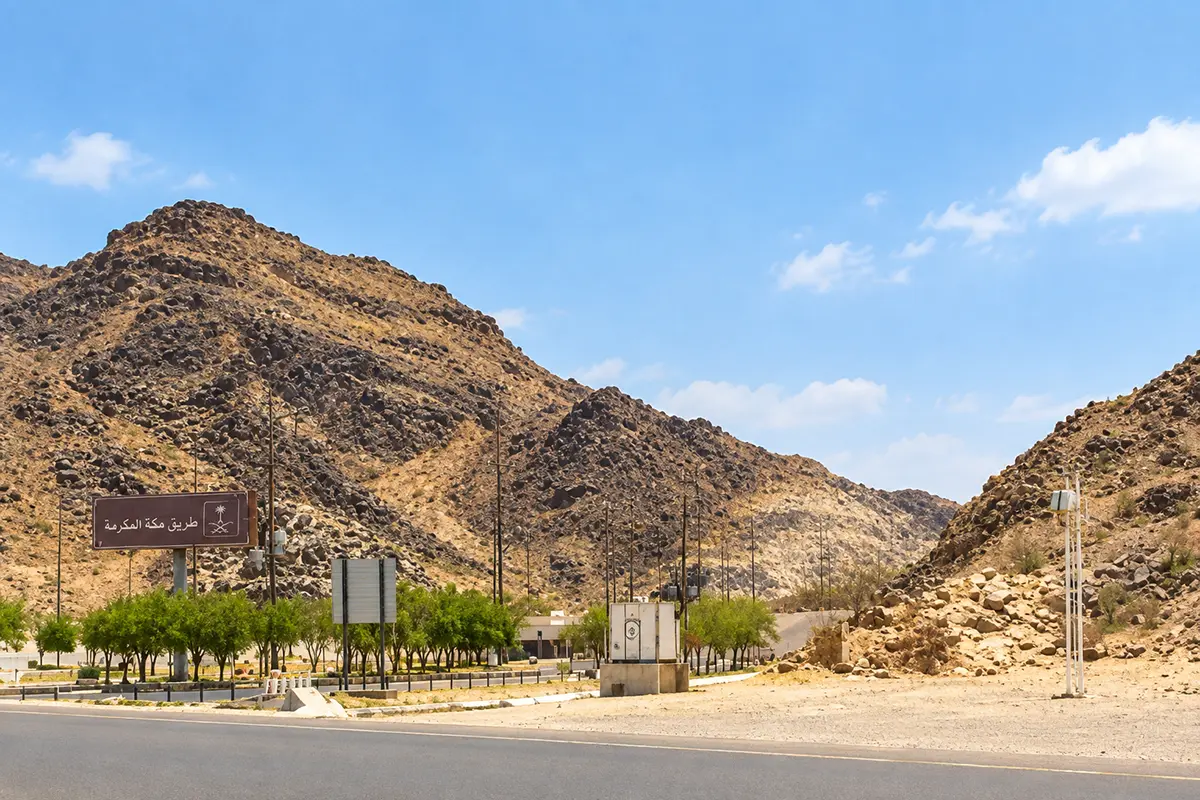
Wadi Muhassir is a valley about two kilometres long and twenty metres wide, lying between Muzdalifah and Mina. It belongs to neither and forms the boundary between them. On the morning of the tenth of Dhul Hijjah the Prophet moved through it more quickly than the rest of the journey, and pilgrims follow that.
Key takeaways
- ✓Wadi Muhassir lies between Muzdalifah and Mina and is part of neither.
- ✓Saudipedia gives it as about two kilometres long and twenty metres wide.
- ✓Its eastern bank forms the western boundary of Muzdalifah.
- ✓The Prophet moved through it more quickly on the morning of the tenth.
- ✓Pilgrims follow that, walking briskly or moving on without stopping.
- ✓Tradition connects the valley with the Army of the Elephant halting there.
- ✓You cannot stop overnight here and have it count as either site.
Quick facts
- Where
- Between Muzdalifah and Mina
- Length
- About 2 km
- Width
- About 20 m
- Part of Mina?
- No
- Part of Muzdalifah?
- No
- What to do
- Move through it briskly
- Traditionally linked to
- The Army of the Elephant
- Part of Umrah?
- No. This belongs to Hajj.
A gap between two places
Wadi Muhassir is a valley running between Muzdalifah and Mina. Saudipedia gives it as about two kilometres long and twenty metres wide.
The important thing about it is negative: it is not part of either. Its eastern bank forms the western boundary of Muzdalifah, and Mina begins on the other side of it. The valley itself belongs to neither site.
That has a practical consequence. Nobody can spend the night in Wadi Muhassir and count it as having spent the night at Muzdalifah, and nobody camps there for the days of Tashreeq and counts it as Mina.
Today it is crossed by road and by the pedestrian way, and most pilgrims pass through it without realising they have.
Why you move through it faster
In Jabir's long account of the Farewell Pilgrimage in the authentic collections, the Prophet travelled from Muzdalifah towards Mina on the morning of the tenth, and when he reached the middle of Wadi Muhassir he urged his camel on a little, moving faster than he had been.
That is the basis of the practice. Pilgrims walking or riding through the valley move briskly, and do not stop in it.
The hadith records the action without stating a reason. Commentators have offered explanations, and the one usually given connects it to what tradition says happened in that valley. But the instruction people follow is simply what he did, and following it does not require knowing why.
The tradition about the elephant
The account attached to this valley is that it is where the elephant of Abraha stopped.
The story is that Abraha the Abyssinian marched on Makkah with an army including an elephant, intending to destroy the Kaaba, and that the elephant refused to move forward towards the city. Saudipedia records that connection with the valley, noting that Abraha's elephant ceased its movement there.
Two levels here, and they need separating.
The Army of the Elephant is in the Qur'an. Surah al-Fil describes what happened to the companions of the elephant, the birds sent against them and their being made like eaten straw. That the event happened is established.
The identification of this particular valley as the place comes from the historical and topographical literature about Makkah, not from the Qur'an or an authentic hadith. It is a serious old tradition, recorded by Saudi official reference material, and it is still a tradition rather than a text.
The hadith about moving quickly through the valley does not give this as the reason, which is worth knowing before you repeat the connection as though the two were linked in the sources.
What this means on the day
Very little, and that is the honest answer.
- You will cross it between Muzdalifah and Mina on the morning of the tenth, in the dark or the early light.
- Move through without stopping. If you are walking, walk a little faster. If you are on a bus, this is out of your hands and nothing is required of you.
- Do not try to camp or rest in it. It counts as neither site.
- Do not go looking for the spot where the elephant stopped. Nothing is marked and nothing is established.
Most pilgrims today cross by vehicle or on the pedestrian path, and the whole thing takes a few minutes.
Is anything prescribed here?
No prayer is prescribed in Wadi Muhassir, no reward for being there is established, and it is not a station of Hajj.
The only thing connected with it is the manner of passing through, taken from the Prophet's practice. That is a sunnah of movement rather than an act of worship performed at a place.
Seeing it outside Hajj
There is not much to see. It is a dry valley crossed by modern infrastructure, and without a marker you would not know where Muzdalifah ends and Mina begins.
What it is useful for is understanding the geography. The three holy sites are often drawn on maps as separate blobs, and standing at the boundary makes it obvious that they are one continuous stretch of valley with lines drawn across it.
You cross it in both directions on a Ziyarat round without stopping. Mina, Muzdalifah and Arafat lie one after another on the same road, so all three fit into one leg of a Makkah Ziyarat round, from SAR 200 per vehicle with waiting at each stop. Fares reviewed August 2026.
The boundaries in order
| Ground | Status | What happens there |
|---|---|---|
| Mina | Holy site | Four or five nights, the stoning. |
| Wadi Muhassir | Neither | Cross it briskly. |
| Muzdalifah | Holy site | The night of the tenth in the open. |
| Wadi Uranah | Outside Arafat | The sermon, but not the standing. |
| Arafat | Holy site | The standing on the ninth. |
Our Hajj step by step guide covers the sequence of days across all of them.
Accuracy note
Wadi Muhassir's dimensions of about two kilometres long and twenty metres wide, and its position forming the boundary between Muzdalifah and Mina with its eastern bank marking the western limit of Muzdalifah, come from Saudipedia.
That the Prophet urged his mount on when he reached the middle of Wadi Muhassir on the morning of the tenth is recorded in the authentic collections within Jabir's account of the Farewell Pilgrimage. This is established evidence, and the hadith records the action without giving a reason for it.
The Army of the Elephant is described in the Qur'an in Surah al-Fil. The identification of this valley as the place where the elephant halted is recorded in the historical and topographical literature about Makkah and by Saudipedia, and is a tradition rather than something established by the Qur'an or authentic hadith. We have marked it as such, and have not presented it as the reason for the sunnah of moving quickly.
No prayer or reward is established in the valley, and it is not a station of Hajj. Nothing marks any particular spot within it. Fares are our own published rates, reviewed August 2026. Verified August 2026.
Frequently asked questions
Planning a Saudi trip?
Pre-book a private car, find a stay, or ask us anything on WhatsApp.
Last updated: 11 October 2026·Sources reviewed by the Wadana Go editorial team.