Wadi Wajj, Taif: The Valley That Made the City, and a Disputed Hadith
Short answer
Wadi Wajj is the valley running through Taif whose springs irrigate its orchards and rose farms. A hadith reported by Abu Dawud and Ahmad from al-Zubayr ibn al-Awwam describes hunting and the trees of Wajj as inviolable. Scholars have generally graded that report weak, though al-Shafi'i acted on it. Taif is not a haram like Makkah or Madinah.
Key takeaways
- ✓Wadi Wajj runs through Taif and its springs water the city's orchards and rose farms.
- ✓It is why Taif has grapes, pomegranates, citrus and roses in otherwise bare country.
- ✓A hadith from al-Zubayr describes the game and trees of Wajj as inviolable.
- ✓That report is recorded by Abu Dawud and Ahmad and is generally graded weak.
- ✓Al-Shafi'i nonetheless gave it weight in his reasoning, which scholars still discuss.
- ✓Taif is not a sanctuary in the way Makkah and Madinah are.
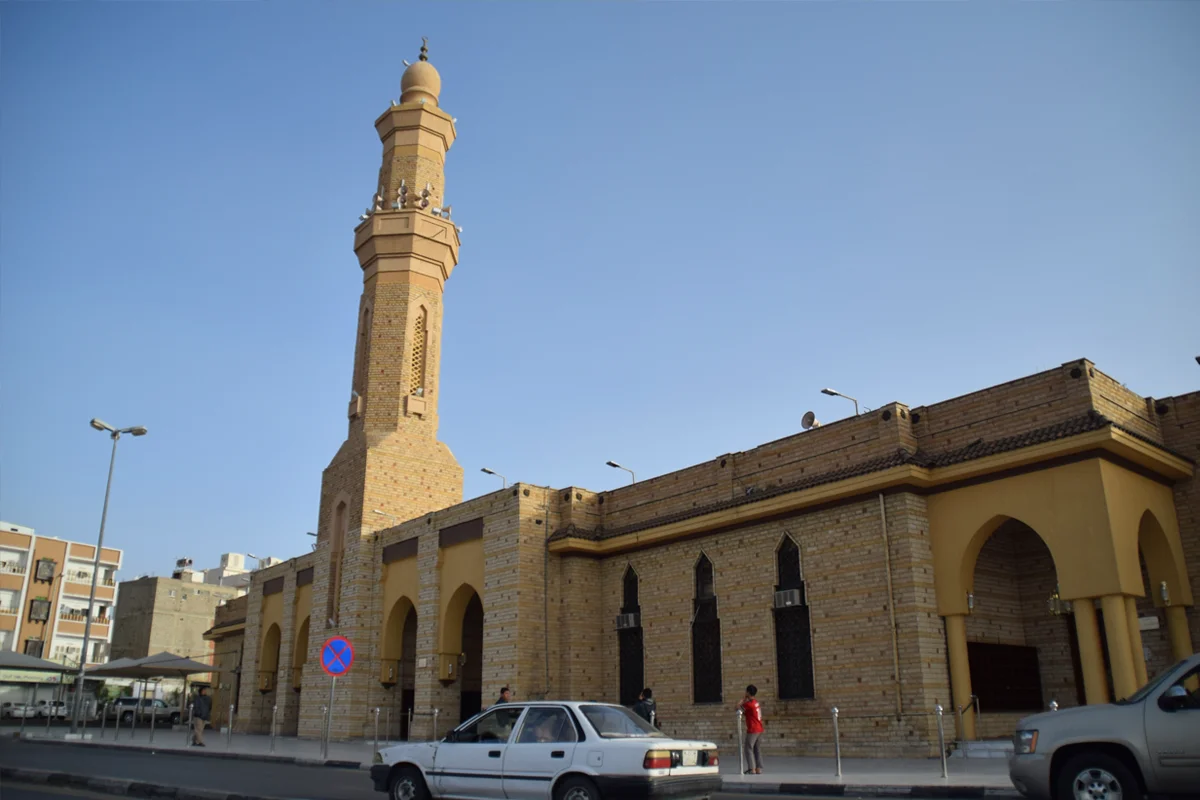
- ✓Several of Taif's historic mosques stand along the valley.
Quick facts
- City
- Taif, Makkah Province
- What it is
- The valley running through Taif
- Why it matters
- Its springs irrigate the city's farmland
- Grows
- Grapes, pomegranates, citrus, Taif roses
- Hadith about it
- Abu Dawud and Ahmad, from al-Zubayr
- Grading
- Generally weak
- Is Taif a haram?
- No, unlike Makkah and Madinah
- Part of Umrah?
- No. Not a rite of Hajj or Umrah.
Why Taif is green
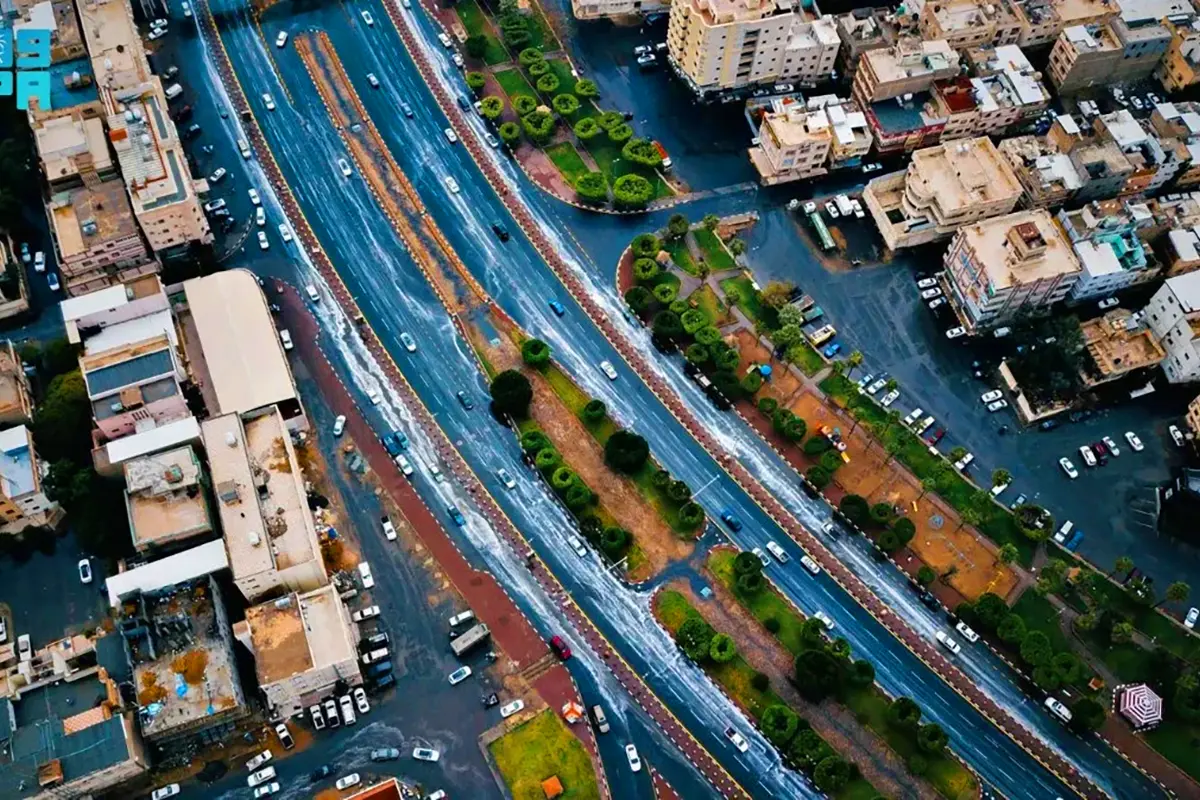
Drive up from Makkah and the country is rock and gravel the whole way. Then you reach Taif, and there are orchards.
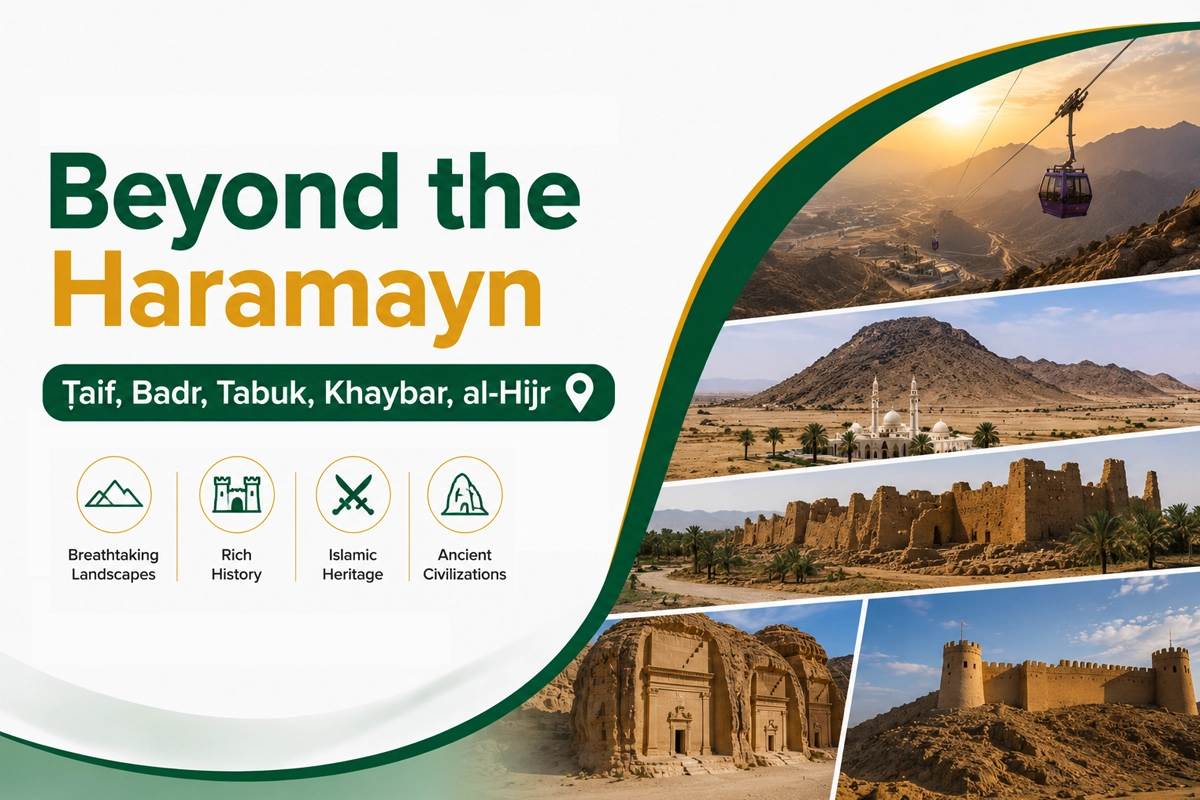
Wadi Wajj is the reason. It is the valley running through the city, and its springs irrigate the farmland: grapes, pomegranates, citrus, and the roses Taif is famous for.
Saudi Press Agency describes al-Ku' Mosque as standing in the northern part of al-Muthnah, a small village surrounded by farms along Wadi Wajj, whose springs water exactly those crops. Several of the city's historic mosques sit along the same valley, which is not a coincidence: water decides where villages are, and villages decide where mosques are.
Taif sits at altitude, and between the height and the water it is a different climate from the coast and the plain. It is commonly ten degrees or more cooler than Makkah, which is why people have retreated there in summer for as long as there have been people in Makkah.
The hadith about Wajj
There is a narration about this valley, and it is worth setting out properly because it is a good example of how to weigh a report.
The report, from al-Zubayr ibn al-Awwam, has the Prophet saying that the game of Wajj and its thorny trees are inviolable, made sacred by Allah. It is recorded by Abu Dawud and Ahmad.
If that were established, it would mean Taif had a protected status something like Makkah's, where hunting and cutting trees are forbidden.
The report is generally graded weak. Its chain has been criticised, and hadith scholars have not treated it as sound.
What makes it interesting rather than simply dismissible is that al-Shafi'i gave it weight anyway, putting it ahead of analogical reasoning in his method, while being aware of the weakness in the chain. Scholars have discussed that ever since.
So the honest position: the report exists, it is recorded by two respected collections, it is generally graded weak, and at least one major imam still gave it standing. That is a fair summary and it is more useful than either quoting the hadith as fact or pretending it is not there.
Taif is not a haram
The practical conclusion matters more than the technical discussion, so we will state it plainly.
Taif does not have the status of a sanctuary in the way Makkah and Madinah do.
There is no boundary you enter. There is no ihram required to go there. The rules about hunting and cutting trees that apply within the Haram of Makkah do not apply in Taif in the same established way.
If somebody tells you that you need to be in a particular state to enter Taif, or that the city carries the same sanctity as the two Harams, that is not correct. You go to Taif the way you go anywhere: in normal clothes, by car, up a good road.
What the weak report and al-Shafi'i's treatment of it do support is a general attitude of respect towards the valley's trees and wildlife, which is unobjectionable and requires no hadith to justify.
The valley in the history
Wajj appears in accounts of the Prophet's time in connection with Taif, and the valley is part of the geography of the siege that followed Hunayn, when the Muslim army besieged the city and did not take it.
It is also, less dramatically and more continuously, the reason Taif existed at all as a place worth going to. A walled city with water and orchards in the highlands above Makkah was valuable for straightforward reasons: food, cool air and a defensible position.
That is why Thaqif were powerful enough for the Prophet to travel there seeking support after the deaths of Abu Talib and Khadijah, and why the refusal recorded on our Masjid Addas page mattered as much as it did.
The valley today
Farmland, terraces, villages and roads. The rose farms are the best-known part, and they are a working agricultural industry rather than a visitor attraction, though several receive visitors.
Taif roses are distilled into rose water and oil, much of which goes to Makkah, where rose water is used in the washing of the Kaaba. That is a real connection between this valley and the Haram, and it is a better one than any disputed hadith.
- The rose harvest is in spring, roughly April, and that is when the farms are worth seeing.
- The valley is farmland, so respect that people live and work there.
- There is no single viewpoint for Wadi Wajj. You see it by driving through the agricultural areas.
Our Taif rose farm tour covers the farms, and Al Shafa gives the high views over the escarpment.
Is visiting it prescribed?
No. Wadi Wajj is not a rite of Hajj or Umrah, no prayer is prescribed there, and no reward for visiting is established in authentic evidence.
It is geography, and it is geography that explains a lot about the seerah, which is a good enough reason to notice it.
Getting there
Taif is about ninety minutes from Makkah up a mountain highway. Our Taif day trip guide covers the road and what fills a day, and the Taif Ziyarat tour runs the Islamic sites.
On our fixed fares a Taif Ziyarat round is SAR 430 for a standard sedan, SAR 480 for an SUV, SAR 580 for a van and SAR 730 for a minibus, per vehicle with waiting included. Fares reviewed August 2026.
Along the valley
| Place | What it is |
|---|---|
| Al-Kou Mosque | At al-Muthnah, among the farms along the valley. |
| Masjid Addas | The garden where the grapes were brought. |
| Al-Hunud Mosque | In the central area of the city. |
| Wadi Hunayn | The battle valley on the road up from Makkah. |
The Taif destination guide covers the city as a whole.
Accuracy note
That Wadi Wajj runs through Taif and that its springs irrigate the grape, pomegranate and citrus orchards and the Taif rose farms comes from Saudi Press Agency reporting on the historic mosques of Taif, which describes al-Ku' Mosque as standing among those farms along the valley.
The report from al-Zubayr ibn al-Awwam that the game of Wajj and its thorny trees are inviolable is recorded by Abu Dawud and by Ahmad. It has generally been graded weak on account of its chain. Al-Shafi'i nonetheless gave it weight in his legal reasoning while being aware of that weakness, and scholars have discussed the point since. We have set out both facts rather than treating the report as established or ignoring it.
Taif does not have the status of a sanctuary in the way Makkah and Madinah do, and no ihram or special state is required to enter it.
The use of Taif rose water in the washing of the Kaaba is a documented modern practice. No prayer or reward is established in the valley and visiting is not part of Hajj or Umrah. Fares are our own published Taif Ziyarat rates, reviewed August 2026. Verified August 2026.
Frequently asked questions
Planning a Saudi trip?
Pre-book a private car, find a stay, or ask us anything on WhatsApp.
Last updated: 10 October 2026·Sources reviewed by the Wadana Go editorial team.