Yalamlam Miqat: The Ihram Point for Pilgrims Coming from the South
Short answer
Yalamlam is the miqat the Prophet ﷺ fixed for the people of Yemen, recorded in Sahih al-Bukhari and Sahih Muslim. It lies in al-Lith Governorate, about 85 km southwest of Makkah on the coastal road. Pilgrims today enter ihram at the modern al-Sa'diyah Mosque nearby. It applies to anyone whose route passes it, not only to Yemenis.
Key takeaways
- ✓Yalamlam is one of the four mawaqit named directly by the Prophet ﷺ in a hadith recorded in both Bukhari and Muslim. The evidence is as strong as it gets.
- ✓The miqat belongs to your road, not your nationality. Anyone approaching Makkah from the south passes it, whatever passport they hold.
- ✓The miqat point is in al-Lith Governorate, about 85 km southwest of Makkah on the coastal road. Wadi Yalamlam itself runs about 110 km.
- ✓Pilgrims today stop at the al-Sa'diyah Mosque, roughly 130 km from Makkah and about 21 km from the original miqat point.
- ✓Published distances range from 85 km to 130 km because they measure different points. Use the place on the ground, not the number.
- ✓If you are already in Makkah and want a second Umrah, you go to Masjid Aisha at Taneem, not to Yalamlam.
- ✓Crossing a miqat without ihram when you intend Umrah is a real problem. Ask a scholar before you start tawaf, not after.
Quick facts
- City / region
- Al-Lith Governorate, Makkah Province
- Distance from Makkah
- Miqat point about 85 km southwest; al-Sa'diyah Mosque about 130 km
- Serves
- Yemen, southern Saudi regions, and anyone whose route passes it
- Part of Umrah
- Yes, if this is your route. Ihram must begin here or before
- Can a car reach it
- Yes. The mosque sits on the road with parking
- Facilities
- Mosque for over 4,000, reception hall, washing areas, desalination plant
- Evidence level
- A. Named in an authentic hadith in Bukhari and Muslim
- Best time to stop
- Whenever your route reaches it. Change before you arrive if you can
Yalamlam is the miqat for pilgrims coming to Makkah from the south. It is the least talked about of the four mawaqit the Prophet ﷺ named, mostly because far fewer pilgrims arrive that way today. But the ruling attached to it has not changed, and if your road passes it, it is your miqat.
This page covers the hadith, where Yalamlam actually is, the modern mosque pilgrims use instead of the old spot, and what to do if you realise you have already passed it.
The hadith that fixed it
Abdullah ibn Abbas, may Allah be pleased with him and his father, reported that the Messenger of Allah ﷺ fixed the mawaqit: Dhul-Hulayfah for the people of Madinah, al-Juhfah for the people of Sham, Qarn al-Manazil for the people of Najd, and Yalamlam for the people of Yemen.
He then added that these places are for the people named and for anyone else who comes through them intending Hajj or Umrah. Whoever lives inside the boundary enters ihram from where he is, and the people of Makkah enter ihram from Makkah.
This is recorded in Sahih al-Bukhari and Sahih Muslim. It is the clearest and strongest evidence in the whole subject, which is why nobody disputes it.
Read that second half again, because it is the part pilgrims get wrong. The miqat belongs to the road, not to the passport. A Pakistani, a Nigerian and a Malaysian travelling up the coastal road from the south all use Yalamlam. A Yemeni who flies to Madinah first does not; he uses Dhul-Hulayfah, like everyone else leaving Madinah.
Where Yalamlam is
The name belongs to a large valley, Wadi Yalamlam, which runs for about 110 km. Its water comes down from the al-Shafa mountains southwest of Taif, then flows west, passing south of Makkah, towards the Red Sea coast.
The miqat point itself sits in al-Lith Governorate, about 85 km southwest of Makkah, on the coastal road. That figure comes from Saudipedia, the Saudi national encyclopaedia.
You will see other numbers online, from 85 km up to 130 km. They are not all wrong. They measure different things: the old miqat point, the modern mosque, straight-line distance, and road distance are four different measurements. Do not spend energy trying to reconcile them. What matters for your ihram is the point on the ground, not the number on a website.
Al-Sa’diyah: the mosque pilgrims actually use
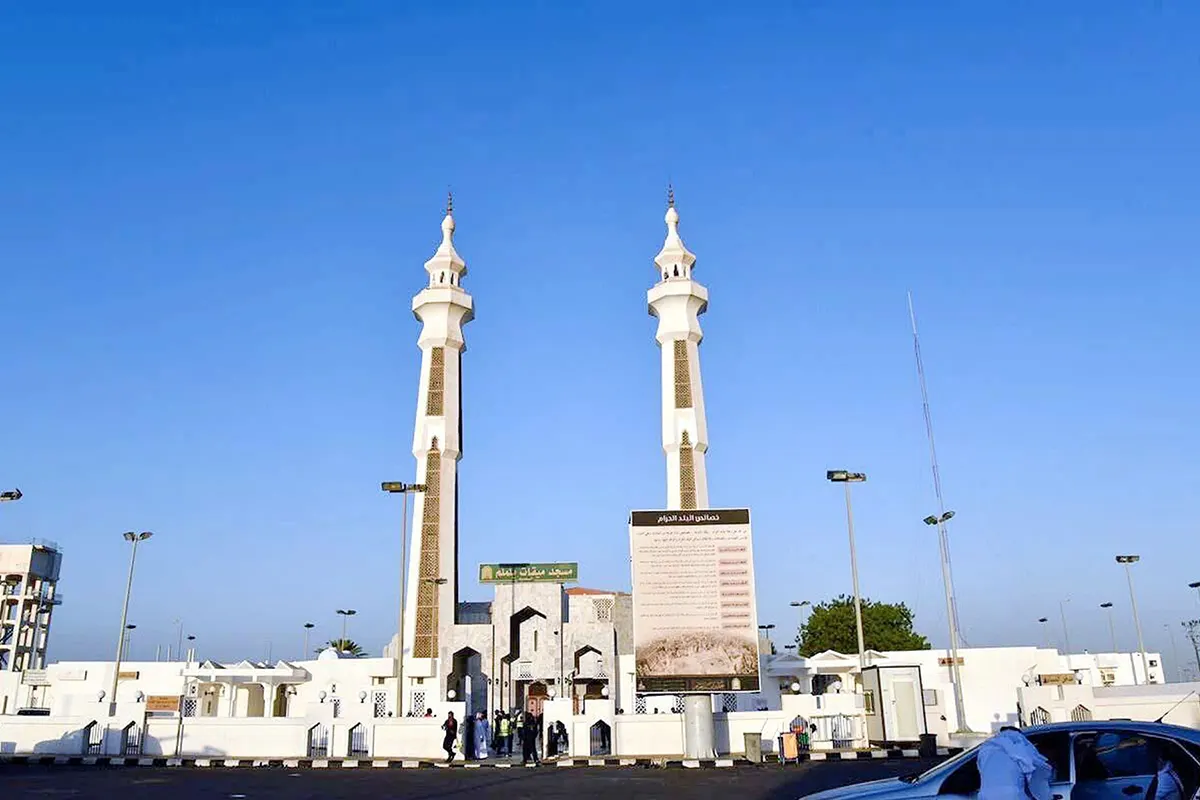
Most people who say “we stopped at Yalamlam” mean they stopped at the al-Sa’diyah Mosque. This is the modern miqat facility, and it is the one your driver will take you to.
According to Saudipedia it stands on the northern bank of Wadi Yalamlam, near the al-Sa’diyah well, about 130 km from Makkah and roughly 21 km from the original miqat location.
The building is substantial. It covers around ten thousand square metres and holds more than four thousand worshippers, with a reception hall of about six thousand square metres, a water desalination plant and a permanent staff of around a hundred people. So this is not a roadside shelter. It is a proper facility built for the job.
What you can do there is what you would do at any miqat mosque: wash, change into ihram, pray two rak’ahs if you wish, and make your intention before you move on.
| Yalamlam at a glance | |
|---|---|
| Named in the hadith for | The people of Yemen |
| Used today by | Yemen, the southern regions of Saudi Arabia, and anyone whose road passes it |
| Governorate | Al-Lith, Makkah Province |
| Miqat point | About 85 km southwest of Makkah, on the coastal road |
| Modern mosque | Al-Sa’diyah, about 130 km from Makkah |
| Valley | Wadi Yalamlam, about 110 km long |
Who Yalamlam is for
Saudipedia describes it as the miqat for the people of Yemen, for the southern provinces of the Kingdom, and for those who pass by it.
In practice that means:
- Pilgrims travelling overland from Yemen.
- Pilgrims from Jazan, Asir, al-Baha, Najran and other southern areas coming up the coastal or southern roads.
- Anyone flying into Abha or Jazan and continuing to Makkah by road on that side.
- Anyone at all, of any nationality, whose route brings them past it.
If you are flying into Jeddah, this is not your miqat. Jeddah arrivals normally enter ihram in the air over the miqat line, or at the airport before leaving, and our ihram guide explains how that works and what to prepare before you fly.
The rules that matter at any miqat
These are agreed and worth knowing before you travel:
- If you intend Hajj or Umrah, you must not cross the miqat without ihram. Not “should not”. Must not.
- Ihram is the intention plus the state, not the cloth. Changing clothes at home or at the airport is fine and convenient. Nothing begins until you make the intention.
- You may enter ihram before the miqat, and many pilgrims do. You may not delay past it.
- Two rak’ahs at the miqat are not obligatory. Many pilgrims pray them, and there is room for that, but do not let anyone tell you your Umrah depends on it.
- Living inside the mawaqit changes things. Someone resident in Jeddah, for example, begins from where they are.
If you passed Yalamlam without ihram
It happens, usually to people who did not know they were on that road.
The position of the majority of scholars is that if you cross a miqat intending Hajj or Umrah and do not enter ihram, you go back to the miqat and enter ihram there. If you cannot go back, the majority hold that a compensatory sacrifice, a dam, becomes due, and your Umrah is still valid.
Please do not settle this from a blog, including this one. The details change with your circumstances, and the honest answer is that this is a question for a scholar. Ask at your hotel, at the Haram, or through the official guidance channels, and ask before you begin tawaf rather than after.
If you are already in Makkah
Here is where a lot of readers actually are. You are in Makkah, you have finished one Umrah, and you want to do a second one. You have read that you need to leave the Haram boundary and enter ihram from outside it.
You do not go to Yalamlam for this. It is 130 km away and there is no reason to do it. Pilgrims in Makkah go to Masjid Aisha at al-Taneem, which is the nearest point outside the Haram boundary and takes minutes rather than hours. Our guide on doing a second Umrah from Taneem walks through it.
Masjid Aisha is also a standard stop on the Makkah Ziyarat round, so many people combine the two. Our Makkah Ziyarat private car covers that circuit, including Taneem, on a fixed fare for the whole vehicle rather than per person.
The other mawaqit
Five points are used today. Knowing which is yours is a five minute job before you travel, and it saves a great deal of worry later:
- Al-Juhfah — for pilgrims from Sham, Egypt and the west.
- Rabigh — the modern stop most pilgrims on that road actually use.
- Qarn al-Manazil, also called al-Sayl al-Kabir — for those coming from Najd and the Taif side.
- Dhul-Hulayfah, also called Abyar Ali — for everyone leaving Madinah.
- Yalamlam — this page.
For how these fit into a whole trip, from arrival to the last day, see our first-time Umrah travel guide, and the wider Makkah Ziyarat guide for what to visit once you are there.
Practical notes for the drive
If you are coming up the coastal road from the south:
- Change before you get close. Stopping to change is easier at a rest area of your choosing than at a busy miqat mosque.
- Fix your intention point. Agree with your driver where the miqat is on your route so nobody is guessing at 100 km/h.
- Allow real time. The distances on this side are long and the road is not the Jeddah expressway. Do not build a schedule that leaves no slack.
- Take unscented soap and toiletries. Once in ihram, scent is off the list, and the miqat mosque is not the place to discover your shampoo is perfumed.
Getting there and getting on to Makkah
There is no rail link on this side and no shuttle to the miqat. Anyone using Yalamlam is arriving by road, either in their own vehicle or with a driver.
Wadana Go does not run scheduled service from the far south, so we will not pretend otherwise. What we do handle is the part most pilgrims need help with: private cars around Makkah and Madinah, airport transfers, and the intercity runs between them. If you want a car waiting when you reach Makkah, or a driver for the Ziyarat sites once you are settled, our Ziyarat private car guide explains how the fares and waiting time work, and how to book a private car for Umrah covers the booking side.
One thing worth doing early: book your onward transport before you arrive, not at the roadside. Prices are fixed in advance, the driver knows the route, and you are not negotiating in ihram with a bag in your hand.
Accuracy note
The hadith of the mawaqit is narrated by Abdullah ibn Abbas and recorded in Sahih al-Bukhari and Sahih Muslim. Distances, the al-Lith location, the al-Sa’diyah Mosque figures, the well and the length of Wadi Yalamlam are taken from Saudipedia, the Saudi national encyclopaedia. Where sources give different distances we have said so rather than picking one. The ruling on missing a miqat is summarised from the position of the majority of scholars and is not a fatwa; ask a qualified scholar about your own case. We give no opening times or prices for the miqat mosque because we have not verified any. Content verified August 2026. If anything here is out of date, tell us and we will fix it.
Frequently asked questions
Planning a Saudi trip?
Pre-book a private car, find a stay, or ask us anything on WhatsApp.
Last updated: 9 October 2026·Sources reviewed by the Wadana Go editorial team.