Rabigh: The Modern Miqat That Replaced al-Juhfah
Short answer
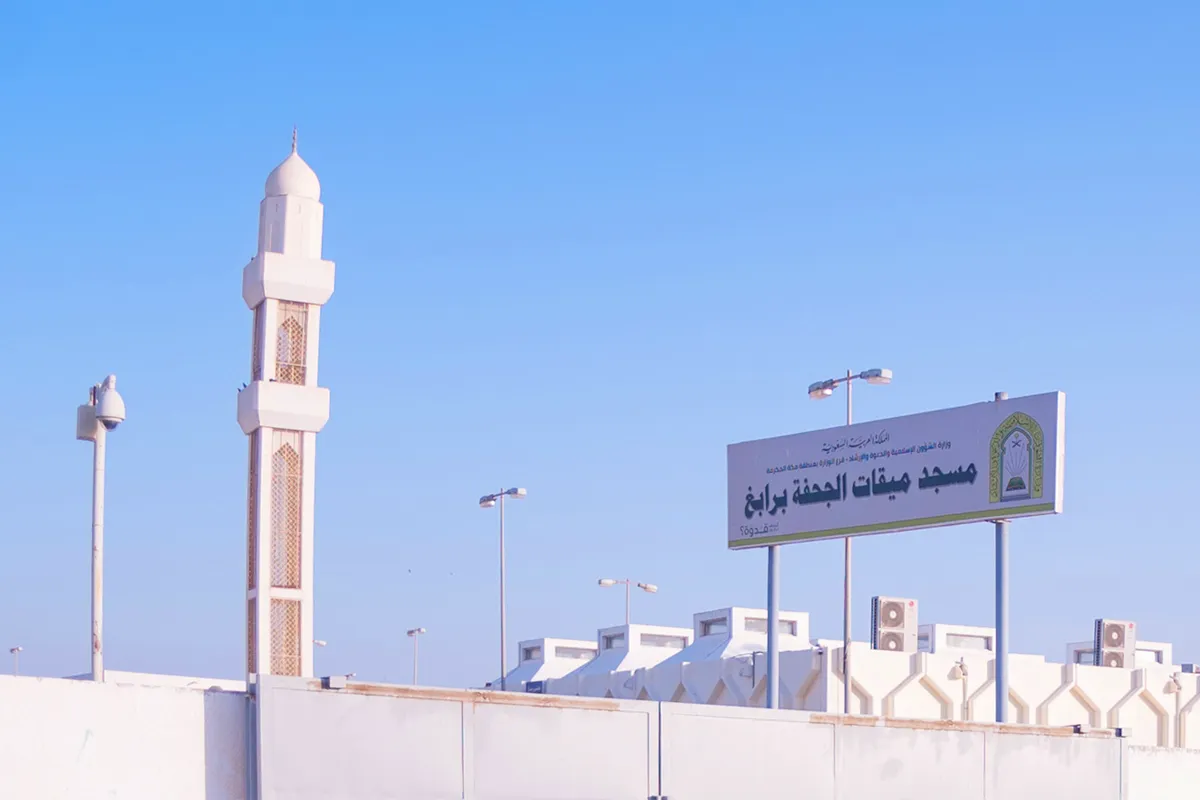
Rabigh is a town on the Red Sea coast road north of Jeddah that serves as the working miqat for pilgrims approaching Makkah from the north-west. It replaced al-Juhfah, the miqat named by the Prophet, which lies about 17 kilometres away and is now an archaeological ruin with no facilities.
Key takeaways
- ✓Rabigh is the miqat pilgrims actually use on the road from the north-west.
- ✓It replaced al-Juhfah, which is about 17 km away and is now a ruin.
- ✓Al-Juhfah is one of the five miqats the Prophet named. Rabigh is its working substitute.
- ✓Entering ihram at Rabigh is valid, and is the recognised practice.
- ✓It applies to anyone whose route passes it, not to any particular nationality.
- ✓It is a functioning town with a purpose-built mosque and facilities.
- ✓Pilgrims flying into Jeddah do not use it. Their miqat is passed in the air.
Quick facts
- Where
- Red Sea coast road, north of Jeddah
- Replaces
- Al-Juhfah, about 17 km away
- Serves
- Anyone approaching from the north-west by road
- Valid?
- Yes, the recognised practice
- Facilities
- Purpose-built mosque, parking, washrooms
- For air arrivals?
- No. That miqat is passed in the air.
- Car access
- Yes, on the main highway
- Allow
- 45 minutes to an hour
The one people actually use
If you are travelling towards Makkah by road from the north-west, along the coast or down from Madinah on that side, Rabigh is where you enter ihram.
The miqat the Prophet named for that direction is al-Juhfah. Saudipedia records plainly that al-Juhfah has been replaced by another miqat in Rabigh, which is only seventeen kilometres away.
Rabigh is a functioning town on the modern highway, with a mosque built for the purpose, parking and washrooms. Al-Juhfah is an archaeological site with none of those things.
Why the change happened
It is not a change of ruling. It is a change of ground.
Al-Juhfah was once a town with a pool, wells, homes, a market and a fortress. Archaeology has found the remains of a walled city there. That town is gone. What is left is excavated basalt walls in open country.
A miqat has to work in practice. Hundreds of thousands of people need to stop, wash, change, pray and set off again. That needs a road, a building, water and washrooms. Rabigh has those and al-Juhfah does not.
So the working point moved a short distance to somewhere that could carry the traffic.
Is it valid?
Yes, and it is worth understanding why rather than just accepting it.
The rule about the mawaqit is about crossing a boundary, not about touching a specific building. The hadith names places on the roads of the seventh century so that travellers from each direction know where the line runs.
Scholars have long held that a person who enters ihram from a point aligned with a named miqat has done what is required. That is the same principle that governs pilgrims arriving by aircraft, who cannot stop at any of the five, and the same principle behind the scholar-designated miqat at Wadi Muharram.
Rabigh sits on that line, slightly ahead of al-Juhfah for someone travelling towards Makkah, which is the cautious side to be on. Entering ihram there is the recognised and settled practice.
Nobody needs to detour into the desert to find a ruin in order to start their Umrah correctly. If somebody tells you otherwise, they are adding a difficulty the law does not impose.
Who uses Rabigh
Anyone whose road to Makkah passes it. In practice:
- Pilgrims driving down from Madinah on the coastal route.
- Pilgrims arriving by sea or by road from the north-west.
- Anyone travelling that highway intending Hajj or Umrah, whatever their nationality.
Not pilgrims flying into Jeddah. If you arrive by air, your miqat is the point your aircraft crosses, and you should be in ihram before that. Landing at Jeddah and then driving north to Rabigh to enter ihram is not how it works, and it is a mistake people really do make.
Our Qarn al-Manazil page has the full table of the five miqats and who each one serves.
At the miqat
- Ghusl beforehand if you can. The washrooms are busy at peak times.
- Change into ihram at the mosque or before you set out.
- Pray two units if it is not a disliked time. Recommended, not required.
- Make the intention and start the talbiyah before you pass the point.
- Allow 45 minutes to an hour, and more in Ramadan.
Our ihram guide covers the restrictions, and the Umrah duas guide covers the talbiyah and what follows.
Practical notes
- It is on the main highway, so there is no detour.
- Coastal heat and humidity are the issue here rather than altitude. It is a different discomfort from the highland miqats.
- Tell your driver you are stopping to enter ihram, so the timing is built into the journey.
- Do not sleep through it on a night drive. This is the commonest way people miss a miqat.
Our Makkah to Madinah private car runs that road, and the transport guide compares the road with the Haramain train. If you are flying in first, the Jeddah airport transfer is the usual leg. Fares reviewed August 2026.
On the same road
| Place | What it is |
|---|---|
| Al-Juhfah | The named miqat, 17 km away, now a ruin. |
| Usfan | A fortress stage on the road towards Makkah. |
| Al-Abwa | Where the sources place Aminah's grave. |
| The Hijrah route | The whole journey between the two cities. |
Accuracy note
That al-Juhfah, one of the five mawaqit designated by the Prophet, has been replaced by a miqat at Rabigh about seventeen kilometres away is recorded by Saudipedia.
The five mawaqit and the regions they serve are established in the authentic collections. The principle that entering ihram from a point aligned with a named miqat fulfils the requirement is the settled position of the scholars, and is the same reasoning applied to pilgrims arriving by air and to the scholar-designated miqat at Wadi Muharram.
That the miqat is determined by the route travelled rather than by the pilgrim's nationality follows from the wording of the hadith of the mawaqit, which includes those who pass by them from other peoples.
Pilgrims arriving by air cross their miqat in flight and should be in ihram before that point, rather than travelling to Rabigh after landing. Facilities and access arrangements at the miqat can change. Fares are our own published rates, reviewed August 2026. Verified August 2026.
Frequently asked questions
Planning a Saudi trip?
Pre-book a private car, find a stay, or ask us anything on WhatsApp.
Last updated: 27 August 2026·Sources reviewed by the Wadana Go editorial team.