Which Side of Masjid an-Nabawi Is Best to Stay On? Madinah Hotel Guide for Families, Couples & Seniors
Short answer
There is no single best side of Masjid an-Nabawi. Families travelling with women usually do best on the northern or western side of the Central Area, nearest the women’s prayer access. Elderly travellers should take a front-row hotel. Fit couples can save money at 200–500 metres and still walk comfortably.
Key takeaways
- ✓The best Madinah hotel is not always the hotel with the smallest advertised distance to Masjid an-Nabawi.
- ✓Families travelling with women should pay particular attention to the northern and northwestern approaches to the mosque.
- ✓Elderly travellers and guests with limited mobility benefit most from a front-row hotel and the shortest real walking route.
- ✓For most fit couples and families, roughly 200–500 metres from the mosque can offer an excellent balance of price and convenience.
- ✓A 300-metre hotel on the wrong side of the mosque may involve more daily walking than a slightly farther hotel aligned with the entrance you use.
- ✓Check the actual hotel entrance, pedestrian route and mosque side before booking — not only the straight-line distance shown on a booking site.
- ✓Ramadan and other high-demand periods make location more valuable because crowds, walking times and hotel rates all increase.
- ✓Gate and access arrangements can change, so travellers should confirm current mosque access and Rawdah instructions before and during their visit.
Quick facts
- Best overall rule
- Choose by real walking route and mosque side, not advertised metres alone
- Best for elderly travellers
- Front-row Central Area, under roughly 200 m (steps–5 min walk)
- Best balance for most travellers
- Approximately 200–500 m, about a 5–12 minute walk
- Best starting area for families with women
- Northern or northwestern Central Area
- Best for fit couples
- Central Area 200–500 m, depending on rate and route
- Best for budget-focused long stays
- 500 m–1 km or farther, if the group can comfortably walk or use transport
- Main hotel zone
- Markaziyah / Central Area
- Main landmark
- Masjid an-Nabawi / the Prophet's Mosque
- City
- Madinah, Saudi Arabia
- Important check
- Confirm actual hotel entrance and current mosque access before booking
There is a mistake people make when choosing a hotel in Madinah: they look at one number.
“250 metres from Masjid an-Nabawi.”
It sounds perfect. But that number does not tell you which side of the Prophet's Mosque the hotel is on, where the hotel entrance actually faces, which mosque entrance your family will normally use, or how much walking is involved once thousands of people are moving across the courtyards after prayer.
That is why two hotels advertised at almost the same distance can feel completely different after three days in Madinah.
If you are travelling with children, elderly parents, women who intend to pray regularly at the mosque, or anyone with limited walking ability, the side of Masjid an-Nabawi can matter almost as much as the distance.
This guide answers that narrower question. For our complete explanation of hotel zones, price bands and distance from the mosque, use the main Where to Stay in Madinah guide. Here, we are concentrating on something different: which side works best for your particular group.
The short answer
For many families travelling with women, the northern or northwestern side of the Central Area is an excellent place to begin your hotel search because it can reduce unnecessary walking around the mosque complex to reach women's prayer access.
For elderly travellers, however, direction comes second to genuine door-to-gate walking distance. If a parent struggles to walk, a front-row hotel beside a practical entrance may be worth considerably more than a cheaper room several blocks away.
Fit couples and younger travellers have more freedom. They can usually widen the search to roughly 200–500 metres from Masjid an-Nabawi, where you remain close enough to walk comfortably while often gaining better room choice or value.
The rule we would use when booking: first choose the mosque side that suits your group, then compare hotels by real walking route, room quality and price.
First, understand the Central Area
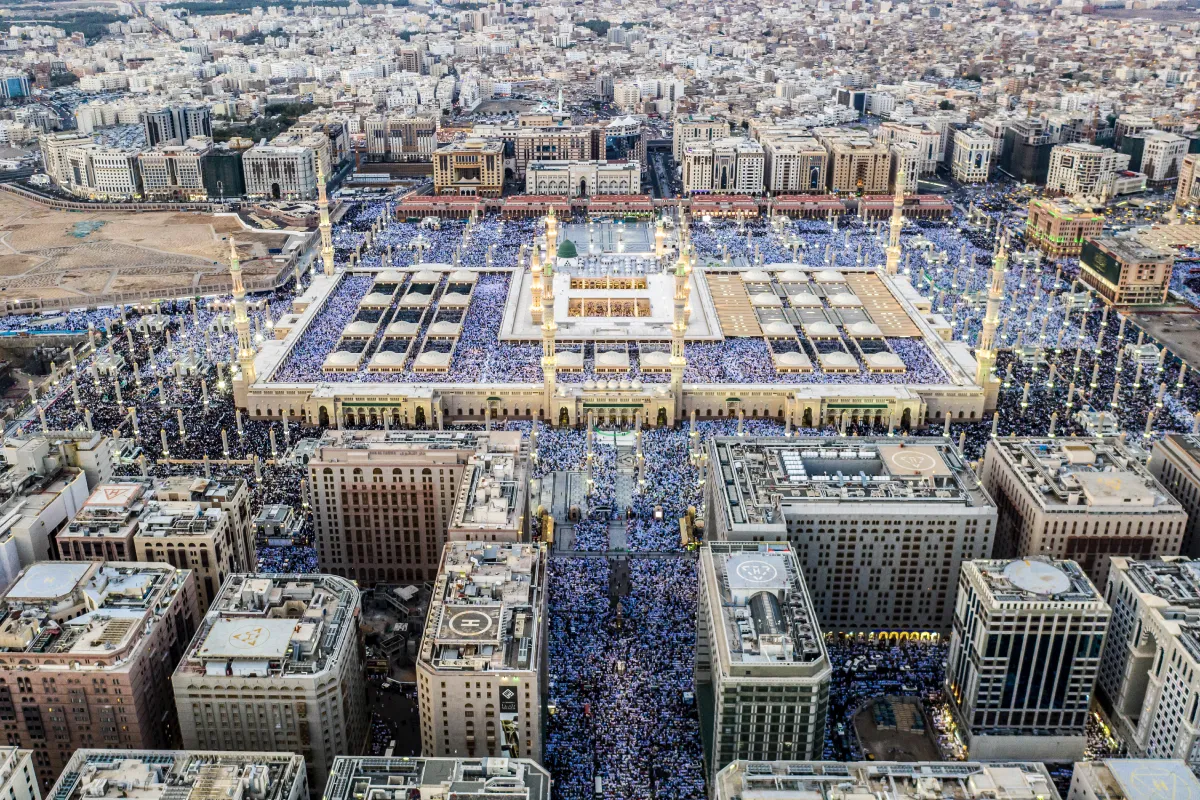
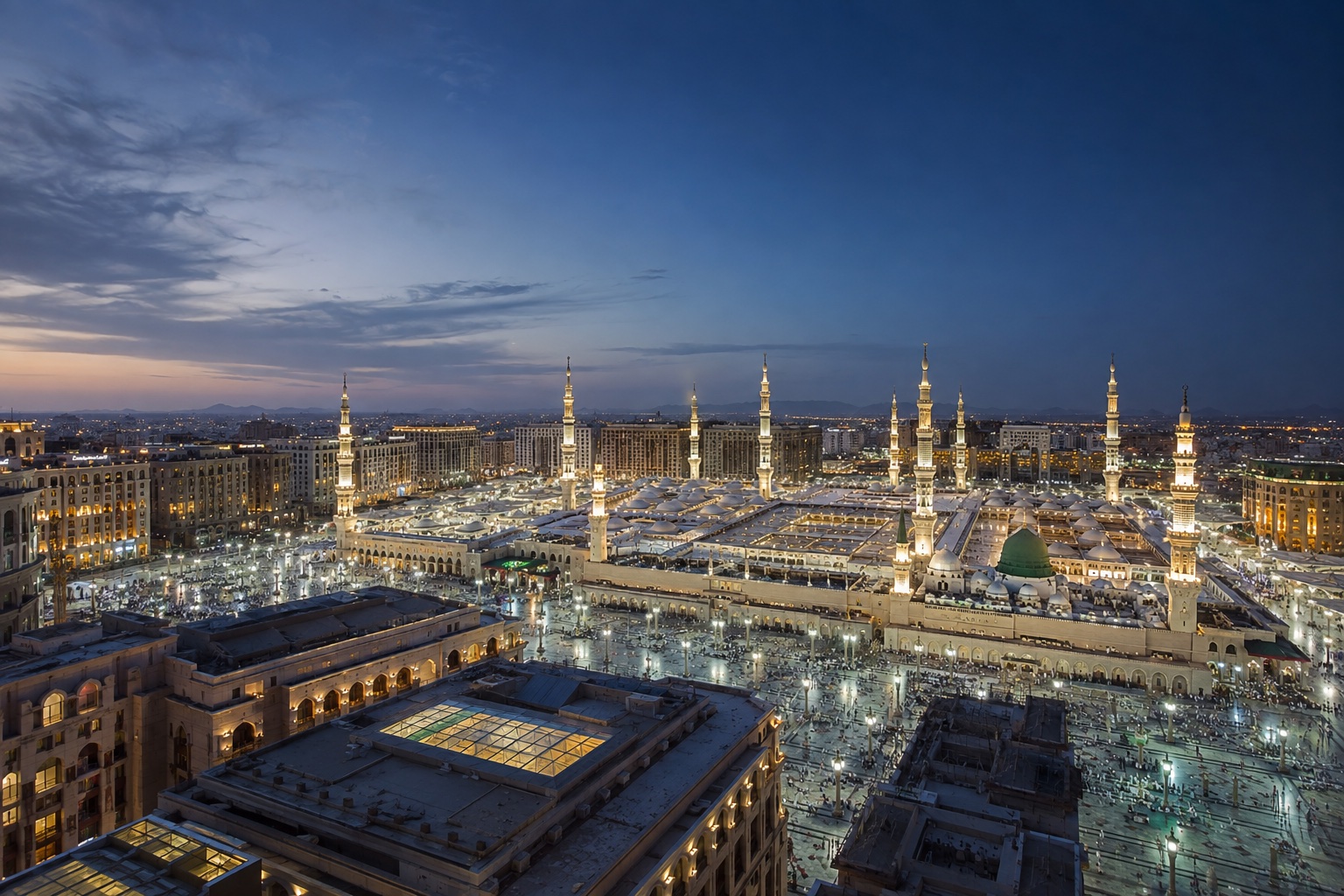
The hotel district immediately surrounding Masjid an-Nabawi is commonly called Markaziyah, or the Central Area. This is where most visitors searching for “hotels near Masjid Nabawi” eventually end up.
It helps to think about the Central Area in two ways at the same time:
- Distance: how far the hotel is from the mosque.
- Direction: which side of the mosque you approach from.
Wadana Go’s Madinah accommodation data groups front-row properties at roughly under 200 metres, the next Central Area band at around 200–500 metres, and hotels farther out beyond that. Our Where to Stay in Madinah guide describes the same zones in walking time, which is the more honest measure: inner Markaziyah is a walk of steps to about five minutes, outer Markaziyah roughly five to twelve minutes, and anything beyond the Central Area around fifteen to twenty-five minutes or a shuttle ride. For many travellers the 200–500 metre band — outer Markaziyah — is a particularly useful balance, because the walk stays short without automatically paying the highest front-row premium.
But distance by itself is not enough.
Why the side of the mosque matters
Masjid an-Nabawi is an enormous complex. You are not walking to a single front door.
You are walking toward a large mosque surrounded by courtyards, multiple entrances, pedestrian flows and different prayer areas. During busy periods, the route you take can matter much more than it appears on a hotel booking map.
Imagine two hotels:
- Hotel A is advertised as 250 metres from the mosque.
- Hotel B is advertised as 350 metres away.
If Hotel B faces the side your family normally uses, while Hotel A requires you to walk around a large part of the mosque complex, Hotel B may actually produce the easier daily journey.
Multiply that difference by several mosque visits per day and by a four- or five-night stay. Suddenly the “extra” 100 metres on the booking page may mean less walking overall.
Which gates sit on which side
“Choose the right side” is far easier to act on once you can name what you are walking towards. In broad terms:
- North: the King Fahd Gate group is the main entrance from the north, and the northern gates serve the large modern prayer halls, including the women’s areas on the upper levels.
- West: Bab as-Salam, Bab Abu Bakr and Bab ar-Rahmah run along the western wall, together with the women’s assembly area commonly cited around Gate 25.
- East: Bab Jibril, Bab an-Nisa and Bab al-Baqi sit on the eastern wall, closest to the burial chamber and to Al-Baqi itself.
- South: the southern gates, among them Bab Makkah and Bab Bilal, sit behind the original mosque and near the Rawdah queueing areas.
Two warnings before you use that list. Gate numbers differ between maps, apps and printed guides, so match on the gate name and the compass side rather than a number you found online. And gate usage is managed actively: entrances are opened, closed, redirected and reassigned by season, by time of day and by crowd level. Treat this as a way to picture the mosque before you book, then follow signage, staff direction and your current Nusuk booking on the day.
North and northwest: a strong choice for families travelling with women
If your group includes women who expect to pray frequently at Masjid an-Nabawi, the northern and northwestern Central Area deserves particular attention.
Women’s prayer access is concentrated on the northern and western sides of the complex. The large modern women’s prayer halls are reached most easily from the northern gates, and the women’s assembly for the Rawdah is commonly organised near Gate 25, on the western–northern flank. The historic Bab an-Nisa — literally the women’s gate — sits on the eastern wall, which is a useful reminder that the historic arrangement and the current one are not the same thing. Wadana Go’s existing Madinah guide makes the same recommendation: judge a hotel by its proximity to the women’s entrances rather than by the smallest advertised distance.
This becomes particularly important when travelling with:
- an elderly mother or grandmother;
- women attending several prayers each day;
- children accompanying their mother;
- a family planning a Rawdah visit;
- anyone visiting during hot weather or a busy season.
A hotel that removes an unnecessary walk around the mosque can make mornings, late-night returns and repeated prayer visits noticeably easier.
Important: exact gate usage, pedestrian routing and Rawdah arrangements can change. Treat hotel-side planning as a way to reduce unnecessary walking, not as a guarantee that one particular gate will always operate in the same way. Check current instructions in Nusuk and follow mosque signage and staff guidance on the day.
West and northwest: convenient for a mixed family group
The western and northwestern approaches are also practical for many mixed family groups because they keep you inside the dense Central Area hotel zone while offering access to shops, restaurants, pharmacies and services used by pilgrims.
This can work particularly well when different people in the same family have different routines. Someone may return to the room after Fajr, another may stay around the mosque, and children may need food or rest between prayers.
For families, that everyday convenience often matters more than having a spectacular Haram-view room.
If two properties are similarly priced, we would usually choose the one with:
- the simpler pedestrian route;
- better lifts;
- a genuine family room rather than extra beds squeezed into a double room;
- breakfast that starts early enough for your schedule;
- easy access to groceries, pharmacies and food;
- strong recent reviews specifically mentioning the walk to the mosque.
South: useful, but check the women's walking route carefully
The southern side can still be an excellent choice, particularly when you find a good Central Area property at the right price. It also places you naturally toward the Quba side of the city, which may suit travellers combining their Madinah stay with visits farther south.
But families travelling with women should not assume that “very close to the mosque” automatically means “very close to the entrance we will use most.”
A south-side hotel can be extremely convenient for one member of the family and involve a longer courtyard walk for another.
This does not make the south side bad. It simply means you should inspect the real route before paying a non-refundable rate.
East: consider the Al-Baqi side and your itinerary
The eastern side is closely associated with the area around Al-Baqi, one of Madinah’s most important historic landmarks beside the Prophet’s Mosque.
For travellers whose Madinah plans include spending time around the eastern side of the mosque and the surrounding heritage area, an eastern approach may be convenient.
Again, however, hotel quality and actual pedestrian access matter more than the compass direction on its own.
Our advice is not “always stay north” or “always stay east.” The point is to understand why a hotel's side matters before comparing two apparently identical distances.
Best location for families
For a typical family travelling for Umrah or Ziyarat, we would begin with the Central Area within roughly 200–500 metres and then narrow the choice according to who is travelling.
If women in the family plan to attend prayers frequently, look seriously at northern or northwestern access.
If there are very young children, being able to return to the room easily becomes valuable. Children may need sleep, food, a change of clothes or a break while adults want to return to the mosque later.
Also remember that a family hotel decision is not just a mosque-distance decision. Check:
- room size;
- number of real beds;
- connecting rooms;
- lift capacity;
- breakfast;
- laundry;
- nearby food;
- luggage storage;
- and the hotel's pickup point for your driver.
A marginally farther hotel with a much better family room can easily be the better overall stay.
Best location for couples
A fit couple usually has the most flexibility.
You may not need to pay for the closest possible room if both of you can comfortably walk. Properties around 200–500 metres from Masjid an-Nabawi often deserve serious comparison because you remain within the Central Area while opening up more choices.
For a husband and wife travelling together, however, remember that the “best entrance” may differ. If the wife intends to spend considerable time in the mosque, choosing the appropriate side can still save a surprising amount of walking during the trip.
Couples should therefore compare total convenience per riyal, not simply the cheapest nightly price.
Best location for seniors and limited mobility
This is where we would spend more for location.
If someone in your group struggles with walking, uses a wheelchair, tires easily, or needs to return to the room regularly, the closest practical hotel can genuinely improve the trip.
A saving that looks large on the booking screen can feel far less valuable when an elderly parent has to repeat a long walk several times every day.
For these travellers, start with the front-row Central Area, ideally around the under-200-metre band, and then investigate the real route.
Ask four questions:
- How far is the hotel entrance from the courtyard?
- Which mosque side does it approach?
- Is the route flat and practical?
- How long is the lift wait immediately after major prayers?
That last question is overlooked surprisingly often. A hotel may be extremely close to the mosque but have busy lifts that add considerable time when hundreds of guests return together.
The 200–500 metre “sweet spot”
For most healthy travellers, this is the band we would compare first.
In walking time that is roughly five to twelve minutes — outer Markaziyah. It is usually close enough that returning to your room between prayers remains realistic, yet far enough from the absolute front row to give you more choice.
The important word is usually. A property advertised at 400 metres with a direct, obvious pedestrian route may be much easier than one listed at 250 metres where the entrance faces away from the mosque.
This is why Wadana Go recommends comparing Madinah stays by both district and walk time, rather than sorting only by straight-line distance.
When staying farther away makes sense
Moving outside the immediate Central Area can make sense when:
- you are staying for a week or longer;
- everyone in the group is reasonably fit;
- you have arranged transport;
- room size matters more than being steps from the courtyard;
- or the saving is substantial.
But calculate the real cost.
A cheaper hotel may create more taxi journeys, more waiting, more walking and more time spent organising transport around prayers.
With an elderly parent or small children, those hidden costs can easily outweigh the room saving.
Do not trust the words “near Masjid Nabawi” by themselves
Hotel listings use phrases such as “steps from the Haram,” “near the Prophet's Mosque” and “Haram view” very freely.
Before booking, verify:
- The map pin. Is the hotel where the listing claims?
- The hotel entrance. A large property may have an entrance on the opposite side of the building.
- The walking route. Use the pedestrian route, not straight-line distance.
- The mosque side. Does it suit the people travelling with you?
- Recent guest reviews. Search specifically for comments about “walk,” “women's entrance,” “elderly,” “wheelchair” and “lift.”
Those five checks are more useful than a marketing photograph of the Green Dome taken with a zoom lens.
Ramadan changes the calculation
During Ramadan and other high-demand periods, a small difference in hotel location becomes more significant.
There are more people moving around the Central Area, hotels sell earlier, pedestrian journeys can take longer and rates increase sharply.
If your group includes elderly travellers or small children and you are visiting during a busy period, treat proximity as part of the trip's comfort budget rather than as a luxury upgrade.
Book early enough that you still have a choice of side, not merely a choice of whatever rooms remain.
Our decision table
| Traveller | Where we would start looking | Main reason |
|---|---|---|
| Family with women | Northern / northwestern Central Area | More practical access for frequent women's mosque visits |
| Elderly parents | Front-row Central Area, ideally under ~200 m | Reduce repeated walking |
| Couple | 200–500 m Central Area | Strong balance of price and walkability |
| Family with small children | Front row or 200–500 m | Easy room breaks between prayers |
| Fit budget traveller | 500 m–1 km or farther | More accommodation value if walking is comfortable |
| Long stay | Compare outer Central Area and serviced apartments | Nightly savings become more meaningful |
How we would choose between two Madinah hotels
Suppose one hotel is SAR 80 more expensive per night but saves an elderly parent or mother an awkward extra walk several times every day.
Over four nights, that difference is SAR 320.
Whether it is worth paying depends on your budget, but at least now you are comparing the right things: money against actual daily effort, rather than money against a number of metres on a screen.
That is the decision we recommend making.
Arriving in Madinah
Your hotel choice is only one part of the arrival.
If you are travelling from Makkah, compare the Haramain train and private-car options before choosing your arrival time. Families with several bags, elderly parents or children may value a hotel-door drop-off more than a station transfer.
If you are flying directly into Madinah, arrange your airport transfer around the exact hotel entrance, not simply the hotel name. This is particularly useful in the Central Area, where vehicle access and pedestrian areas can make the final few hundred metres confusing on a first visit.
Once you are settled, most visits to Masjid an-Nabawi are naturally made on foot. Sites such as Quba, Uhud and Qiblatayn are better treated as separate Ziyarat trips rather than reasons to choose a hotel outside the Central Area.
Final recommendation
If you remember only one thing from this guide, remember this:
Do not book your Madinah hotel by distance alone.
Choose it according to the people travelling with you.
For elderly parents, reduce walking. For families travelling with women, pay attention to the mosque side. For healthy couples, compare the 200–500 metre Central Area before paying a large premium for the front row. For a longer budget trip, moving farther away can make sense — provided you understand the daily walk or transport commitment.
Madinah is a city where much of your day naturally revolves around Masjid an-Nabawi. A well-chosen hotel does not need to be the most luxurious property in the city. It simply needs to make those days easier.
Next: compare live Madinah hotels by district and walking distance, read the complete Where to Stay in Madinah guide for detailed hotel zones, or plan your Makkah-to-Madinah and Madinah Airport transfers before arrival. Booking Makkah on the same trip? Our Where to Stay in Makkah comparison applies the same logic to the Haram.
Accuracy note: Reviewed August 2026. Location guidance was cross-checked against Wadana Go's current Madinah accommodation and destination data together with current Saudi tourism information. Hotel availability, rates, pedestrian routing, mosque entrances and Rawdah arrangements can change. Always confirm current details before making a non-refundable booking.
Step by step
- 1
Decide who has the greatest mobility need
Choose the hotel for the least-mobile person in your group rather than the strongest walker.
- 2
Choose the most useful mosque side
Families travelling with women should pay particular attention to northern and northwestern access; other travellers should consider their normal prayer and sightseeing routine.
- 3
Check the real walking route
Look at the hotel entrance and the route to the relevant mosque entrance instead of relying only on the property's advertised distance.
- 4
Compare the 0–200 m and 200–500 m bands
Pay for front-row proximity when mobility or convenience matters most; otherwise compare the better-value middle band.
- 5
Check room practicality
For families, confirm beds, lifts, breakfast, luggage space and family-room configuration before choosing purely on location.
- 6
Book transport around the stay
Arrange the Madinah airport transfer, Makkah–Madinah journey and Ziyarat separately so hotel location does not complicate arrival or departure.
Frequently asked questions
Planning a Saudi trip?
Pre-book a private car, find a stay, or ask us anything on WhatsApp.
Last updated: 22 August 2026·Sources reviewed by the Wadana Go editorial team.