Mount Jamdan: The Hill Where the Prophet ﷺ Spoke About the Mufarridun
Short answer
Mount Jamdan is a mountain on the old caravan road north of Makkah. Sahih Muslim records that the Prophet ﷺ passed it and said the mufarridun had gone ahead, meaning the men and women who remember Allah much. It is usually identified with a hill in Khulais Governorate, about 90 km north of Makkah. Visiting it is not part of Hajj or Umrah, and no prayer is prescribed there.
Key takeaways
- ✓The hadith is authentic. Sahih Muslim records that the Prophet ﷺ passed a mountain called Jumdan on the road to Makkah and said the mufarridun had gone ahead.
- ✓The mufarridun are simply the men and women who remember Allah a great deal. The Prophet ﷺ defined the word himself in the same hadith.
- ✓The exact mountain is not fixed by any authentic text. The identification with a hill in Khulais Governorate, roughly 90 km north of Makkah, comes from classical geography books and local naming.
- ✓Visiting Jamdan is not part of Hajj or Umrah, and no special prayer or reward for going there is authentically reported.
- ✓There is no visitor site. No mosque, no marker, no path, no facilities. It is open rocky country beside an old road.
- ✓The reward in the hadith belongs to dhikr, not to the place. You can act on it in a car, a plane or a hotel room.
- ✓If you do go, build it into a Makkah to Madinah journey along the inland road with Usfan, Al-Juhfah and Rabigh, rather than driving out and back.
Quick facts
- Region
- Khulais Governorate, Makkah Province
- Distance from Makkah
- About 90 km north, on the old inland road
- Part of Umrah or Hajj
- No. Not a ritual site and not a miqat
- Prescribed prayer
- None reported
- Can a car reach it
- The area yes, by the old road via Usfan. There is no site to park at
- Facilities
- None known. No mosque, marker, shade or shops
- Evidence level
- Hadith authentic. Exact location historically identified, not textually fixed
- Best time
- Early morning, and only as part of a longer route
Most travellers pass Mount Jamdan without knowing it is there. It is a bare rocky hill on the old road north of Makkah. Nothing marks it. No sign, no gate, no mosque, no car park. Yet one short sentence spoken beside it is recorded in Sahih Muslim, and Muslims have been repeating that sentence for fourteen centuries.
This page explains what was said at Jamdan, what the words mean, where the mountain is thought to be, and what you will actually find if you go looking for it.
What the Prophet ﷺ said at Jumdan
Abu Hurayrah, may Allah be pleased with him, reported that the Messenger of Allah ﷺ was travelling on the road to Makkah. He passed a mountain called Jumdan and said:
“Proceed. This is Jumdan. The mufarridun have gone ahead.”
The Companions asked who the mufarridun were. He answered: “The men and women who remember Allah much.”
This is recorded in Sahih Muslim, in the book on the remembrance of Allah. It is an authentic report. The name of the mountain is part of the hadith itself, which is why Jamdan is remembered at all.
Read the hadith again and notice what is not in it. The Prophet ﷺ did not stop. He did not pray at the mountain. He did not tell anyone to return to it later. He named the place, made a point about dhikr, and carried on riding. That detail matters, and we come back to it below.
Who the mufarridun are
The Arabic word mufarridun comes from a root meaning to be alone, or to go on ahead by yourself. Both senses are used by the scholars who explained this hadith.
One reading: they are the ones who race ahead of everybody else and arrive first. Another reading: they are people who keep going in the remembrance of Allah even when nobody around them is doing it, so they end up travelling alone.
The Prophet ﷺ settled the meaning himself in the next line. The mufarridun are simply the men and women who remember Allah a great deal. Not scholars only. Not people with a particular job or a particular level of Arabic. Anyone whose tongue and heart stay busy with Allah.
The image is easy to picture because of where it was said. A caravan is strung out along a track. Some riders are far ahead, some are still labouring at the back. The Prophet ﷺ used that scene to describe the Day of Judgement. The people who remembered Allah most are the ones out in front.
Where Mount Jamdan is
The hadith gives no coordinates. It says only that the Prophet ﷺ was on the road to Makkah. Everything more precise than that comes from geography books, not from the hadith text.
Classical Arabic geographers, including Yaqut al-Hamawi in Mu’jam al-Buldan, list Jumdan among the mountains on the old route between Makkah and Madinah. That route did not follow today’s expressway. It ran inland through Usfan and the Khulais valley.
Today the name is usually attached to a mountain in Khulais Governorate, in Makkah Province, west of Wadi Khulais and roughly 90 km north of Makkah. It sits near the older road that passes through Usfan.
Be careful with how firm you make that identification. Nothing in the Qur’an or in an authentic hadith fixes the exact peak. What we have is a name preserved in early geography books and still used locally. That is reasonable evidence for a general area. It is not the same class of proof as the hadith itself. If a driver or a local points at a slightly different ridge, there is no need to argue about it.
What is actually there today
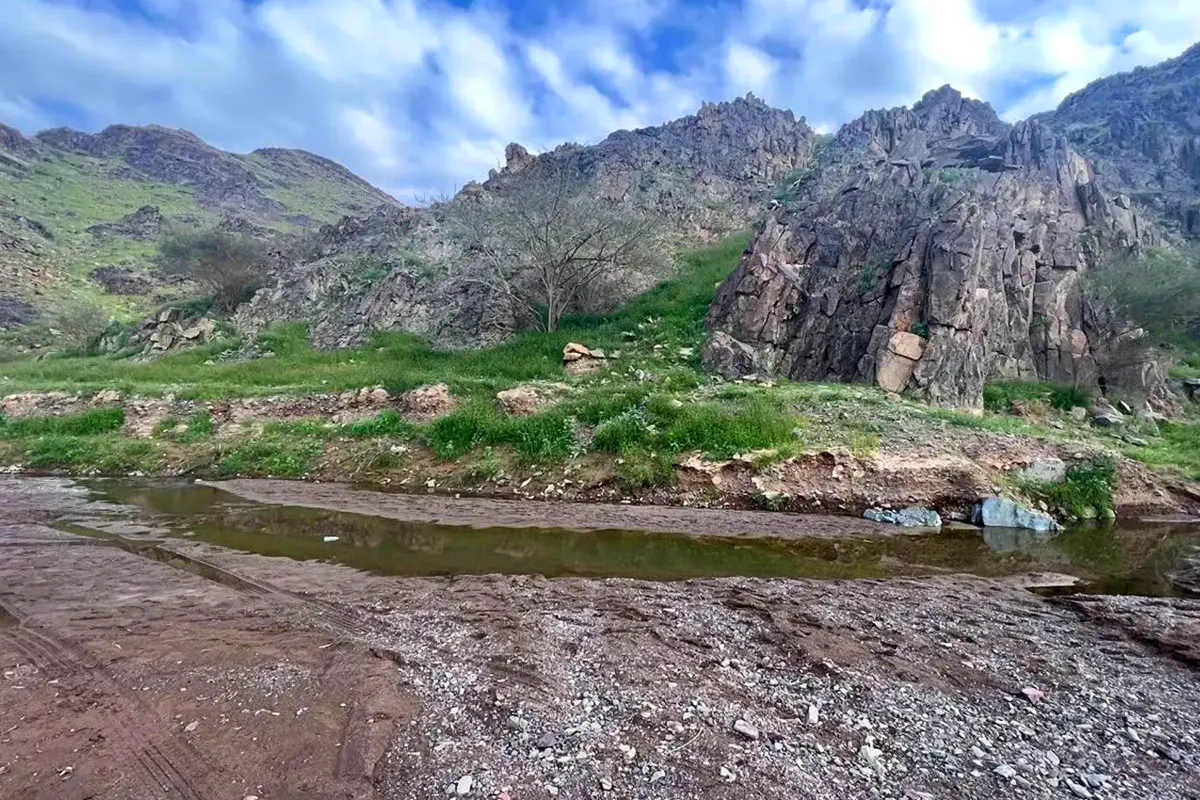
Bare rock and open country. Jamdan has never been developed as a visitor site, and we have found no record of any mosque, marker, viewing point, path or facility built for people coming to see it.
So if you drive out expecting a place to arrive at, you will be disappointed. There is nothing to arrive at. There is a mountain, a valley, some scattered farms and settlements in the Khulais area, and a road going past.
That is not a problem. It is the honest situation, and knowing it in advance saves you a wasted afternoon.
Is visiting Jamdan part of Hajj or Umrah?
No. Visiting Mount Jamdan is not part of Hajj and not part of Umrah. It is not a miqat. Nothing about your ihram, your tawaf or your sa’i depends on it.
There is also no prayer prescribed there, and no authentic report giving a special reward for standing at the mountain or touching it. Anyone who tells you otherwise is adding something the sources do not contain.
The reward in the hadith is attached to dhikr, not to the mountain. This is the useful part for a pilgrim. You do not have to find Jamdan to benefit from what was said there. You can be one of the mufarridun in the back seat of a car on the expressway, in a hotel room in Makkah, or in a queue at the airport.
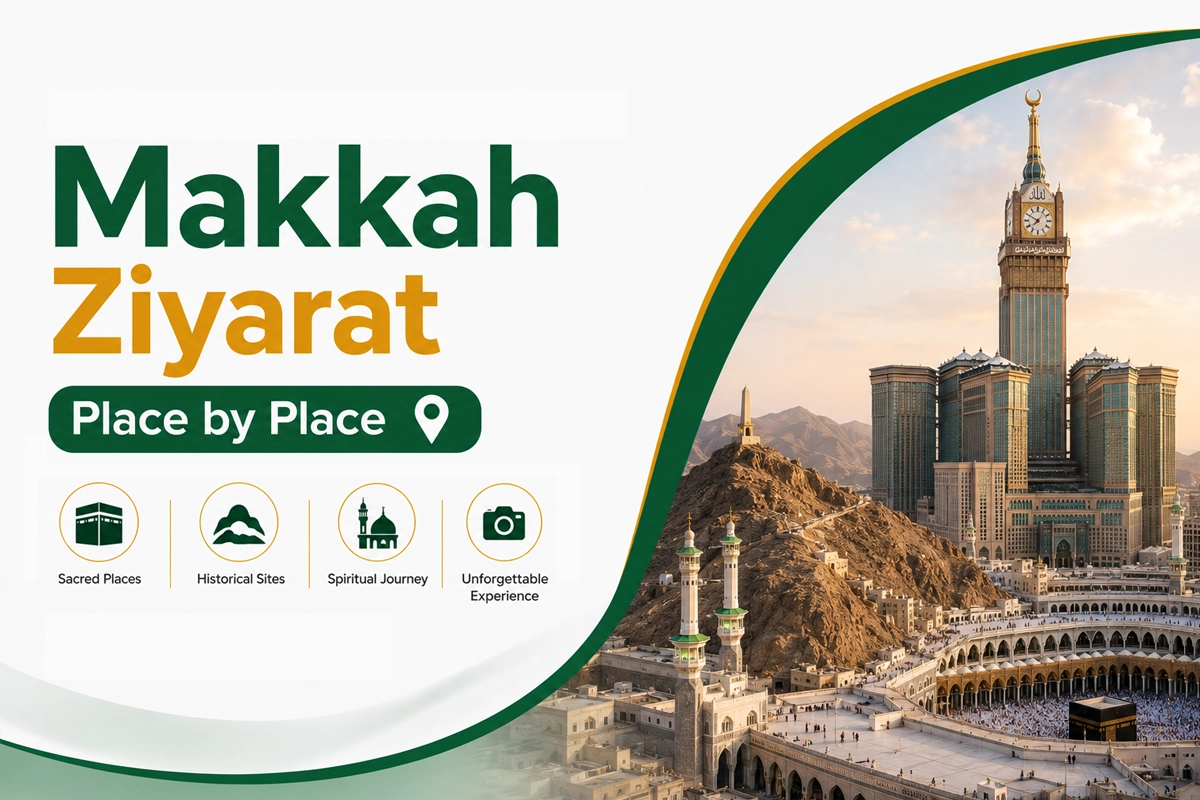
If you are planning your Ziyarat days around Makkah, our Makkah Ziyarat guide covers the sites that are genuinely worth the drive and the order that saves the most time.
If you still want to see it
Some people do want to look at it, and that is fine. A few practical points, all of them honest ones:
- It is off the main expressway. The modern Makkah–Madinah highway is not the old caravan road. Seeing the Khulais and Usfan country means taking the older inland route.
- Nobody is going to guide you. There is no ticket office and no guide service. Ask your driver in advance whether he knows the area at all. Many Makkah drivers do not.
- Do not plan a climb. These are hot, loose, unshaded rock slopes with no path and no water. There is no reason in the religion to go up, and no safe way to do it casually.
- Bring water and go early. Standard advice for any open ground in Makkah Province, and it applies here more than most places because there is nothing at all in the way of shade or shops.
- Treat it as one stop on a longer route, not as a destination on its own. On its own it does not justify half a day.
Other places on the same old road
Jamdan makes much more sense as part of a run along the historic Makkah–Madinah route. Several places on that line have far more to see, and they are all documented:
- Usfan — an old watering station on the same inland road, with a historic fort.
- Al-Juhfah — the miqat for pilgrims coming from Syria, Egypt and the west.
- Rabigh — where most pilgrims on this road actually enter ihram today.
- Al-Abwa — the place linked with the grave of the Prophet’s mother, Aminah bint Wahb.
- The Hijrah route from Makkah to Madinah — the whole journey, stage by stage.
Together they make a real day. Jamdan alone does not.
Getting there
There is no public transport to Jamdan and no organised tour. Anyone going will be going by car.
The practical way to do it is to build the old road into a Makkah to Madinah transfer rather than driving out and back from Makkah. You are travelling between the two cities anyway. Taking the inland route costs you time, not a second journey.
Our Makkah to Madinah private car page shows the fixed fares for that trip by vehicle size. If you want stops added along the way, say so when you book, because the driver needs to know before he sets off. For how the wider Ziyarat car service works, including waiting time at each stop, see the Ziyarat private car guide.
Two honest cautions. First, the old road is longer and slower than the expressway, so allow extra hours. Second, we cannot promise any particular driver knows exactly which hill is Jamdan, and we would rather tell you that now than have you find out on the day.
What is worth taking from Jamdan
A named hill, one sentence, and a lesson that costs nothing to act on.
The Prophet ﷺ was on a journey. He was tired, in a moving caravan, in hard country, and the thing he chose to say was about people who keep remembering Allah while they travel. Umrah is a journey too. Long flights, crowded buses, waiting rooms, queues.
Those hours are exactly where the mufarridun get ahead.
Accuracy note
The hadith of Jumdan is recorded in Sahih Muslim, in the book of dhikr and supplication, narrated by Abu Hurayrah. The wording quoted here follows that report. The identification of the modern mountain in Khulais Governorate rests on classical Arabic geography, including Yaqut al-Hamawi’s Mu’jam al-Buldan, and on continued local use of the name. It is not fixed by the Qur’an or by an authentic hadith, and we have written it that way on purpose. We state no opening times, ticket prices or facilities at Jamdan because there are none that we can verify. Distances given for the Makkah to Madinah transfer are from our own published route pages. Content verified August 2026. If you find something here that is out of date, please tell us and we will correct it.
Frequently asked questions
Planning a Saudi trip?
Pre-book a private car, find a stay, or ask us anything on WhatsApp.
Last updated: 9 October 2026·Sources reviewed by the Wadana Go editorial team.