Multazam: The Part of the Kaaba Between the Door and the Black Stone
Short answer
The Multazam is the short stretch of the Kaaba's wall between the Black Stone and the Kaaba's door, usually given as about two metres wide. Some Companions of the Prophet placed their chest, face and hands against it and made personal dua. Standing there is allowed, but it is not one of the rites of Umrah or Hajj, and no fixed prayer is prescribed for it.
Key takeaways
- ✓The Multazam runs from the Black Stone corner to the Kaaba's gold door, roughly two metres of wall.
- ✓The name means the place that is held on to, from the Arabic word for clinging.
- ✓Two Companion reports describe pressing the chest, face and hands against it; both chains carry a weak narrator but scholars accepted them together.
- ✓There is no authentic hadith that every dua made at the Multazam is accepted. Be careful with that claim.
- ✓It is not part of Umrah or Hajj. Your Umrah is complete without ever reaching it.
- ✓During tawaf only the Black Stone and the Yamani corner are touched, not the Multazam.
- ✓If the crowd keeps you away, facing it from a distance and making dua is enough.
Quick facts
- City
- Makkah
- Where
- On the Kaaba itself, inside Masjid al-Haram
- Size
- About two metres of wall, door to Black Stone
- Part of Umrah
- No
- Prescribed dua
- None fixed; personal dua in any language
- Can a car reach it
- No, you arrive on foot from inside the mosque
- Best time to try
- Late night, outside Ramadan and Hajj season
- Wheelchair access
- No; wheelchair tawaf runs on upper levels away from the wall
- Evidence level
- Location established; the practice rests on supporting reports
What the Multazam actually is
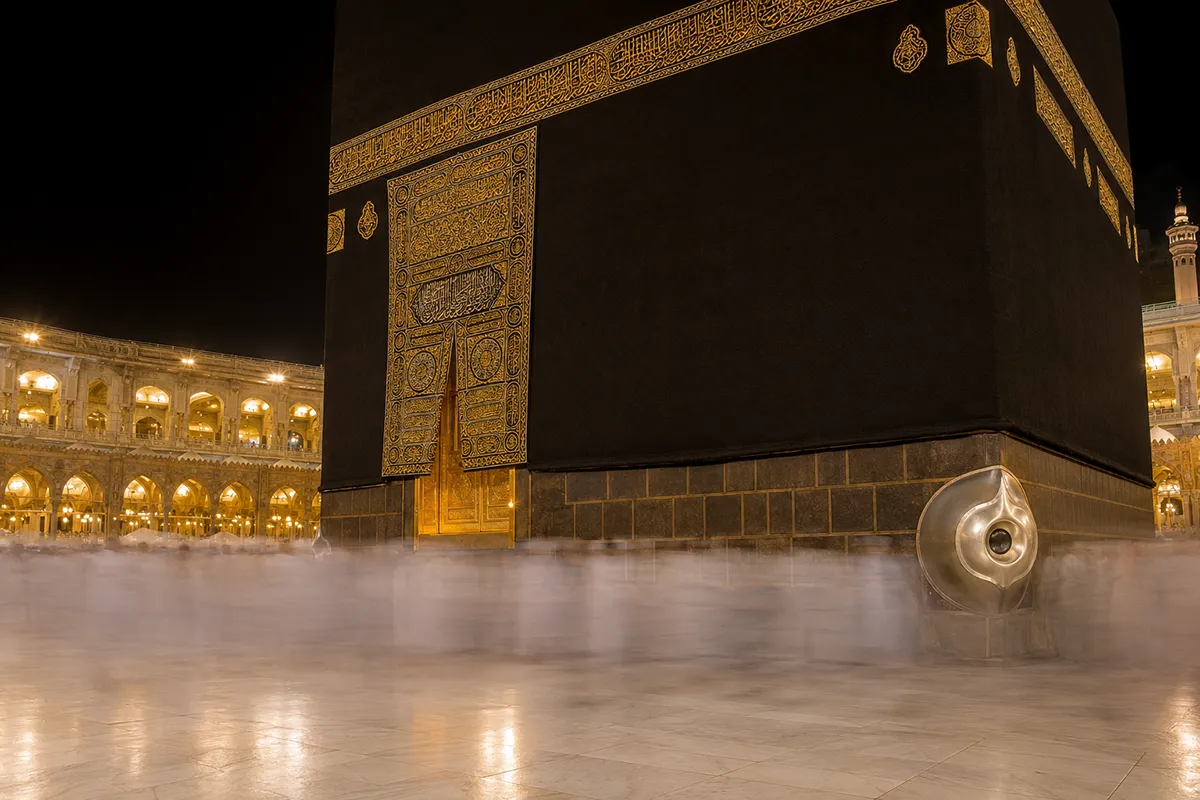
The Multazam is a short piece of the Kaaba's wall. It runs from the corner that holds the Black Stone across to the Kaaba's door. Most descriptions give it as about two metres wide. That is the whole of it. No sign marks it, and nothing about the stonework looks different from the rest of the wall.
The name comes from an Arabic word that means to hold on to something and not let go. That is what gives the spot its name: pilgrims who reach it press themselves against the wall and ask Allah for what they need.
If you have already read our article on the Black Stone, you know that corner well. The Multazam starts right there and ends at the raised golden door.
Finding it while you are standing in the mataf
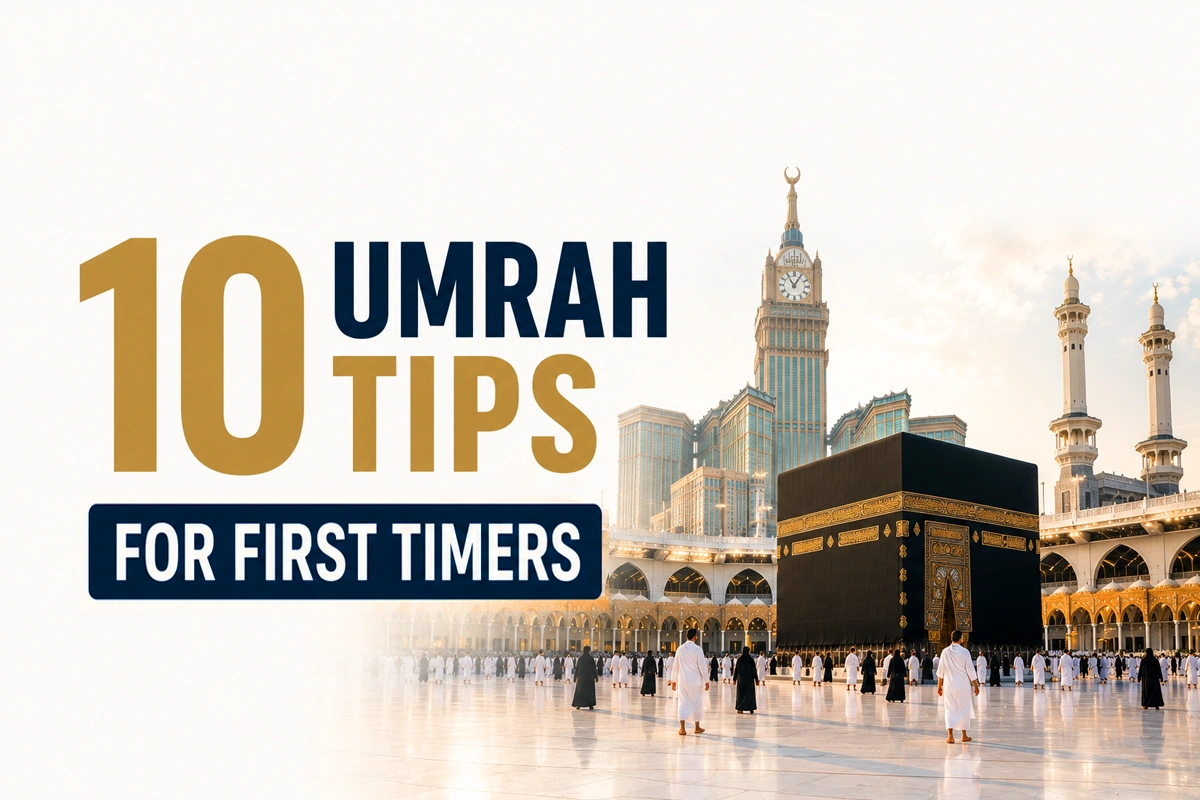
Stand in the mataf, the open marble floor around the Kaaba, and look for the gold door. It sits high up on the wall, roughly at chest height of a tall man above the ground, on the side of the Kaaba that faces east. To the door's right, as you look at it, is the corner where the Black Stone is set in its silver frame.
Everything between those two points is the Multazam. That is the simplest way to find it, and it is the way most guides on the ground will describe it to you.
It is not the same as Hijr Ismail, which is the low curved wall on the opposite side, and it is not Maqam Ibrahim, the small gold and glass structure standing out in the mataf.
What the evidence says, and what it does not
The reports about clinging to it
Two reports are usually quoted here. In one, 'Abd al-Rahman ibn Safwan describes the Prophet and his Companions touching the Kaaba between the door and the Black Stone, with their cheeks against the wall. In the other, 'Amr ibn Shu'ayb reports that 'Abdullah stood between the corner and the door and placed his chest, face, forearms and palms against the Kaaba, and said that this is what he had seen the Messenger of Allah do.
Both of these chains have a weak narrator in them. Scholars who examined them found Yazid ibn Abi Ziyad weak in the first, and al-Muthanna ibn al-Sabah weak in the second. Because the two reports say much the same thing and come by different routes, Shaykh al-Albani judged the evidence together to be strong enough to act on.
So the practice has a basis. Scholars have long said that standing at the Multazam and making dua is allowed, as long as you do not push or crowd anyone to get there.
The claim you will hear that is not established
You will read on many websites that every dua made at the Multazam is accepted. Please treat that carefully. There is no authentic hadith that says it. Repeating a claim often does not make it evidence, and a pilgrim who travels a long way deserves to be told the difference.
Ask Allah there sincerely, by all means. Ask Him sincerely in your hotel room too. What the reports establish is that this is a place where some of the earliest Muslims stood and asked. They do not establish a guarantee.
Is the Multazam part of Umrah?
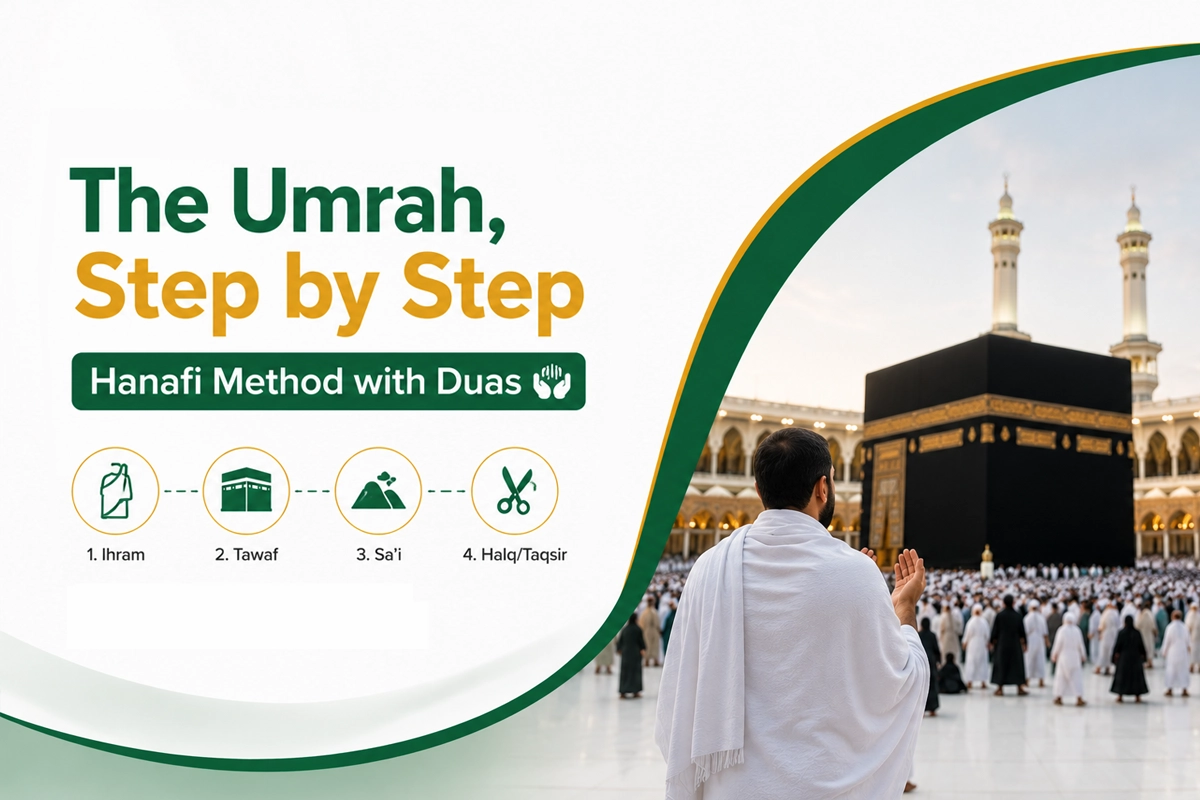
No. Umrah is ihram from the miqat, tawaf around the Kaaba, sa'i between Safa and Marwah, and then cutting or shaving the hair. Going to the Multazam is not one of those steps, and leaving it out takes nothing away from your Umrah.
It is also worth knowing that during tawaf itself, only two parts of the Kaaba are touched: the Black Stone and the Yamani corner. The rest of the wall, including the Multazam, is not touched as part of the circuits. Pilgrims who go to the Multazam usually do so after they have finished tawaf, or near the end of a stay in Makkah.
Our first-time Umrah guide sets out the required steps in order, if you want the method rather than the history.
How pilgrims stand there
There is no fixed wording to say. The reports describe a posture, not a script.
- Face the wall between the door and the Black Stone.
- Place your chest, face, forearms and open hands against it.
- Ask Allah, in your own words, in whatever language you speak.
- Keep it short if people are waiting behind you.
Any dua you like is fine. If you want ready-made supplications for other parts of the journey, our Umrah duas guide collects the ones that are actually reported.
The honest reality of reaching it today
Most pilgrims never touch the Multazam, and there is nothing wrong with that.
The area right against the Kaaba is the busiest few square metres in the mosque. The Black Stone corner draws a permanent crowd, and the Multazam sits directly beside it. Haram staff manage the space by how full the mataf is at that moment, and in busy seasons they may keep people moving and away from the wall entirely.
If you cannot get near it, face it from wherever you are standing and make your dua. Scholars have said plainly that this is enough. Nothing is lost.
Two practical points from pilgrims who do reach it. Late night is quieter than any other hour, especially outside Ramadan and the Hajj season. And a crowded wall is not a safe place to bring a small child or to stand for a long time.
Wheelchair users should know that tawaf for wheelchairs and mobility carts runs on the designated upper levels of the mosque, which do not come near the Kaaba wall at all. Our guide to wheelchair access at the Haram explains how those levels work.
What stands beside it
Almost everything on the Kaaba's eastern side is within a few steps of the Multazam.
| The Black Stone | Set in the corner at one end of the Multazam. |
| The Kaaba door | The raised gold door at the other end. |
| Maqam Ibrahim | Out in the mataf, roughly opposite the door. |
| Hijr Ismail | The low curved wall on the far side of the Kaaba. |
| Zamzam taps | Lined along the edges of the mataf and the galleries. |
Our visitor guide to Masjid al-Haram covers the gates, the levels and how to find your way back to a family that has wandered off.
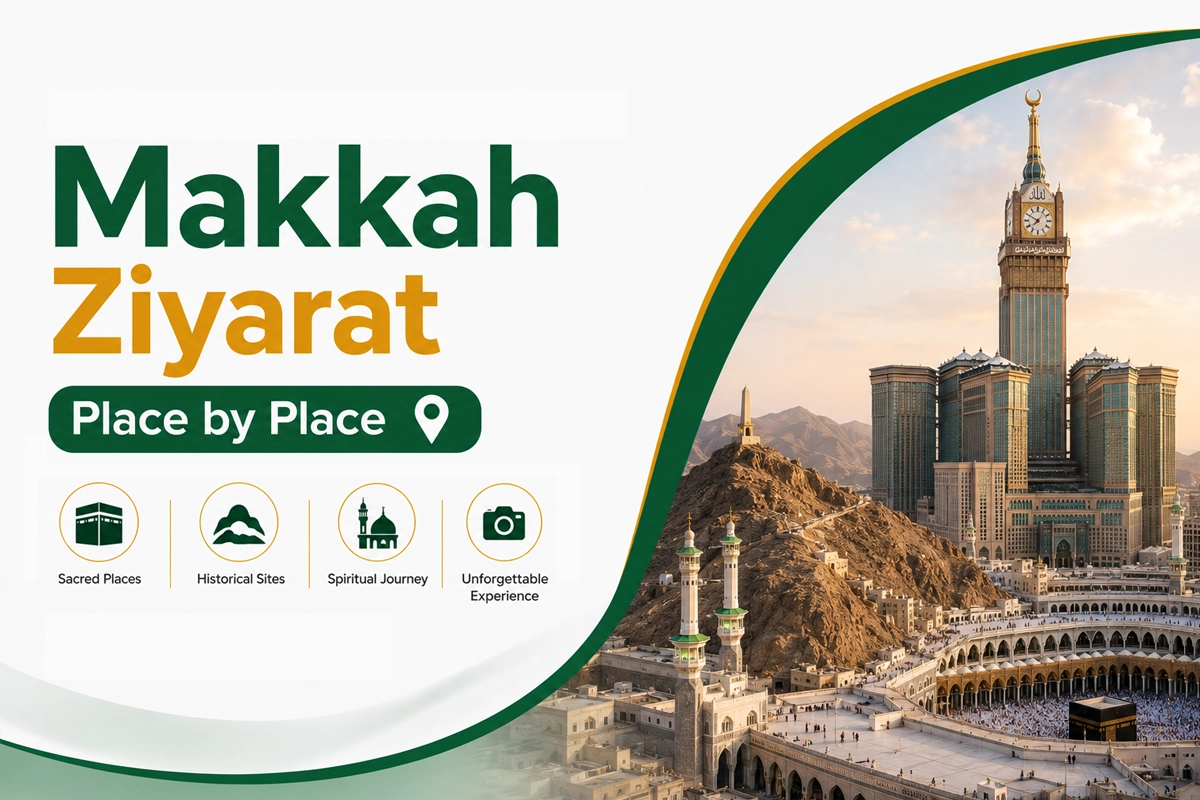
Once you leave the mosque, the historic sites of the city are a separate trip. Our Makkah Ziyarat guide sets out the usual half-day route.
Getting to the Haram in the first place
You reach the Multazam on foot, from inside the mosque. There is no drop-off point for it and no vehicle goes anywhere near.
What a car does decide is how tired you are when you arrive. Most pilgrims land at Jeddah and travel in by road, and a hotel close to the mosque saves you a long walk in the heat at both ends of the day. Our Jeddah Airport to Makkah transfer runs door to door, and where to stay in Makkah compares the walking distance from each hotel area.
Accuracy note
The location of the Multazam between the Black Stone and the Kaaba door is well established in the reports of the Companions. The practice of clinging to it rests on two narrations whose individual chains contain weak narrators, and which scholars have accepted together on the strength of their agreement. The widely repeated claim that every dua made there is answered has no authentic hadith behind it, and we have not written it as though it did.
Access conditions inside the mataf change with the crowd and are managed by Haram staff on the day. Verified August 2026. Check current conditions with your group leader or hotel before you plan around them.
Frequently asked questions
Planning a Saudi trip?
Pre-book a private car, find a stay, or ask us anything on WhatsApp.
Last updated: 26 August 2026·Sources reviewed by the Wadana Go editorial team.