Sallam Fortress, Khaybar: The Man Who Drew Up the Defence
Short answer
Sallam Fortress appears in the heritage listing of archaeological sites at Khaybar, named for Sallam ibn Mishkam, a Banu Nadir leader recognised as captain of the oasis garrison. The sources record his defensive plan: families at al-Watih and al-Sulalim, stores at Na'im, fighters at al-Natat. Visiting is not a rite of Hajj or Umrah.
Key takeaways
- ✓Sallam ibn Mishkam was a leading figure of the Banu Nadir, who had left Madinah and settled at Khaybar.
- ✓He was recognised as captain of the garrison: the man responsible if the oasis had to be defended.
- ✓His plan gave each fort a job: wealth and children at al-Watih and al-Sulalim, weapons and stores at Na'im, fighting men at al-Natat.
- ✓That is coherent: non-combatants furthest back, supplies in the middle, fighters forward.
- ✓It was a good plan against the wrong opponent. Splitting functions makes every fort essential and none self-sufficient.
- ✓Al-Zubayr fell when its water was cut, al-Sa'b ibn Mu'adh fell with the food, and the forts holding the families ended by negotiating.
- ✓A dispersed defence works when the enemy must take everything at once. It fails against one willing to take things one at a time.
Quick facts
- Location
- Khaybar oasis. Exact position not verified
- Named after
- Sallam ibn Mishkam, captain of the Khaybar garrison
- His tribe
- Banu Nadir, who had left Madinah
- The plan
- Families back, stores middle, fighters forward
- Why it failed
- Every fort essential, none self-sufficient
- Which list it is on
- The modern heritage listing, not the classical seven
- Access and condition
- Not verified by us
- Part of Umrah or Hajj
- No
- Evidence level
- B. Seerah and historical literature
Sallam Fortress appears in the heritage listing of archaeological sites at Khaybar. The name points to Sallam ibn Mishkam, who commanded the defence of the oasis.
And the plan he drew up is the most useful thing on this page, because it explains why Khaybar was laid out the way it was.
Who he was
Sallam ibn Mishkam was a leading figure of the Banu Nadir, the tribe that had left Madinah and settled at Khaybar, where they were received by the existing community and looked to as leaders.
He was recognised as captain of the garrison: the man responsible if the oasis ever had to be defended.
The defensive plan
When it became clear a Muslim force was coming, the sources record that the people of Khaybar consulted, listened to Sallam as their chief, and settled on a plan.
It had three parts, and each fort was given a job:
| What | Where |
|---|---|
| Wealth and children | The fortified quarters of al-Watih and al-Sulalim |
| Weapons and stores | Na'im |
| Fighting men | Al-Natat, under Sallam's command |
That is a coherent military plan: non-combatants furthest back, supplies in the middle, fighters forward.
Why it did not hold
It was a good plan against the wrong opponent.
Splitting the functions between forts means every fort becomes essential and none is self-sufficient. Take the one with the stores and the fighters cannot resupply. Take the one with the water and the men inside have to come out. Take the fighters' position and the families are left with no defence but walls.
That is exactly what happened, fort by fort. Al-Zubayr fell when its water was cut. Al-Sa'b ibn Mu'adh fell with the food. And al-Watih and al-Sulalim, holding the families, ended by negotiating terms rather than fighting.
A dispersed defence works when the enemy has to take everything at once. It fails against an opponent willing to spend the time taking one thing at a time.
Two different lists of forts
This confuses people at Khaybar, so it is worth setting out once.
The classical seerah list names seven strongholds involved in the campaign: Na'im, al-Qamus, al-Katibah, al-Natat, al-Shiqq, al-Watih and al-Sulalim, across three regions.
The modern heritage listing of archaeological sites at Khaybar uses a different set of names, including the castle of al-Sa'b ibn Mu'adh, the castle of al-Zubayr near Na'im fort, al-Bazah, al-Watih, Sallam, Qalat and al-Bara.
The two overlap but are not the same. One is a record of a campaign; the other is an inventory of standing remains. A name on one is not automatically a name on the other, and that is the source of most of the confusion you will meet on the ground.
The site today
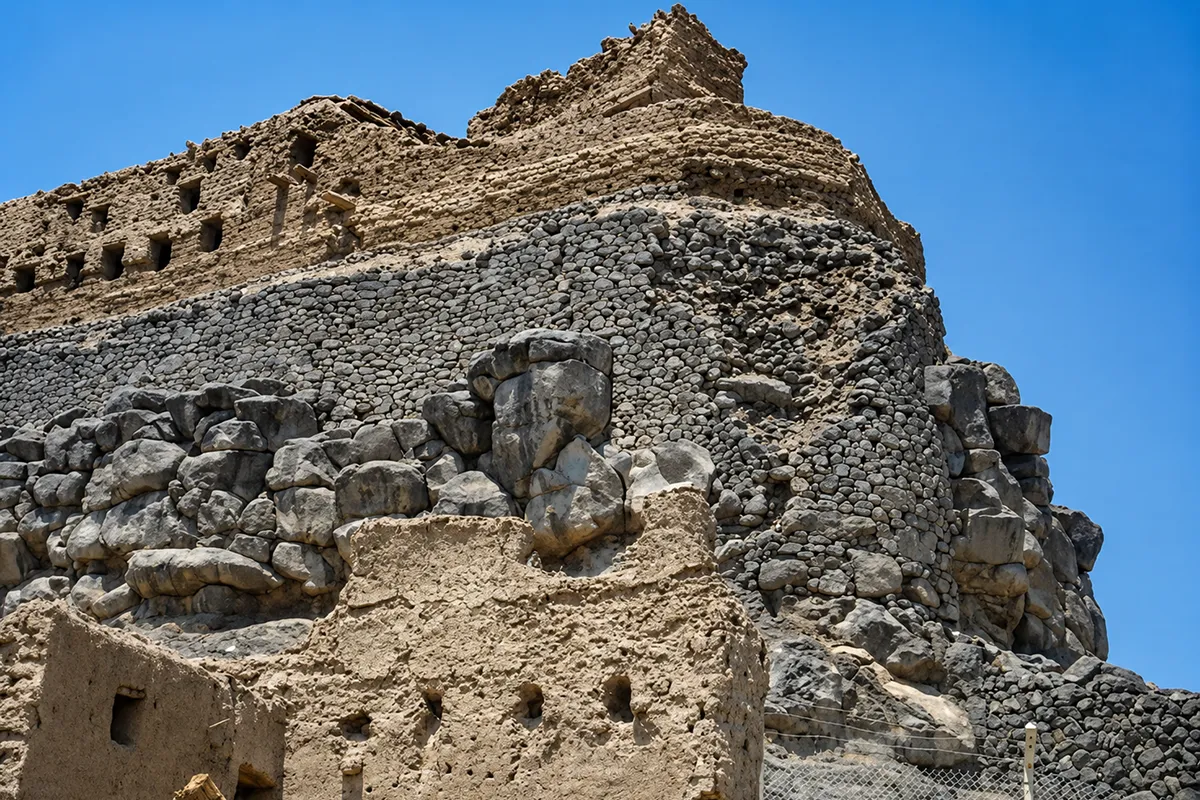
Sallam Fortress is named in the heritage listing of Khaybar's archaeological sites. We could not verify its exact location within the oasis, its condition, or any visitor access.
The main fortress area at Khaybar is fenced off as unsafe and under archaeological study.
The evidence, plainly
- Sallam ibn Mishkam as a Nadir leader at Khaybar and captain of its garrison, and the three-part defensive plan: recorded in the seerah and historical literature. Level B.
- Sallam Fortress as a named site in the heritage listing: verified.
- Its exact location, condition or access: not verified by us.
- Any prescribed prayer or reward for visiting: none.
Is visiting part of Hajj or Umrah?
No. Not a rite of either.
Related
- The Khaybar guide — the oasis and the practicalities.
- The Battle of Khaybar — the campaign in detail.
- Qalat Fortress and al-Qamus — the strongest of them.
- Al-Watih — where the families were, and where it ended.
Getting there, honestly
We do not run a scheduled service to Khaybar and there is no published Wadana Go fare for it. A private car arranged in advance from Madinah or a hire car are the practical options; see driving yourself versus a private driver and renting a car in Saudi Arabia. Ask before you travel, not on the morning. Our Beyond the Haramayn guide covers Khaybar alongside Badr, Taif, Tabuk and al-Hijr.
Accuracy note
Sallam ibn Mishkam as a leading figure of the Banu Nadir who settled at Khaybar after leaving Madinah, his recognition as captain of the garrison, and the defensive plan placing wealth and children in the fortified quarters of al-Watih and al-Sulalim, weapons and stores at Na'im, and the fighting men at al-Natat under his command, are recorded in the seerah and historical literature and are level B. Sallam Fortress appears as a named site in the modern heritage listing of archaeological sites at Khaybar, alongside the castle of al-Sa'b ibn Mu'adh, the castle of al-Zubayr near Na'im fort, al-Bazah, al-Watih, Qalat and al-Bara; that listing is distinct from the classical seerah list of seven strongholds and the two overlap without matching. The analysis of why a dispersed defence failed against a sequential siege is our own reading of the recorded sequence, not a claim from the sources. We could not verify the fort's exact location within the oasis, its condition or any visitor access; the main fortress area at Khaybar is fenced off as unsafe and under archaeological study. Visiting is not a rite of Hajj or Umrah. We do not run a scheduled service to Khaybar and have not quoted a fare. Content verified August 2026. Correction? Tell us.
Frequently asked questions
Planning a Saudi trip?
Pre-book a private car, find a stay, or ask us anything on WhatsApp.
Last updated: 3 September 2026·Sources reviewed by the Wadana Go editorial team.