Wadi Fatimah: The Valley the Old Pilgrim Roads Ran Through
Short answer
Wadi Fatimah is a 210 km valley in Makkah Province running from near Taif to the Red Sea south of Jeddah. Older sources call it Marr al-Zahran. Historical accounts record that the Prophet ﷺ halted his army there before the conquest of Makkah in Ramadan 8 AH. It was a Hajj station on the old pilgrim roads. Visiting is not part of Hajj or Umrah.
Key takeaways
- ✓Wadi Fatimah is the valley the seerah calls Marr al-Zahran. Same place, different age of the name.
- ✓Historical sources record the army halting there before the conquest of Makkah and lighting thousands of fires, which is what convinced Quraysh not to fight.
- ✓The conquest of Makkah is established history. The campsite and the fires come from the seerah literature, which is strong but a different class of evidence.
- ✓Saudipedia records the valley as a historical Hajj station, with rock drawings and inscriptions from before and after Islam.
- ✓Al-Jumum, in this valley, sat on the Syrian pilgrim road, and a surviving pond there is about a hundred metres across.
- ✓There is no ticketed site, no visitor centre and no marked trail that we can confirm. Today it is farmland, greenhouses and small towns.
- ✓Visiting is not part of Hajj or Umrah, and no prayer or reward is reported for it.
Quick facts
- City / region
- Makkah Province, across Taif, al-Jumum and Jeddah governorates
- Historic name
- Marr al-Zahran, also Batn Marr
- Length
- About 210 km, running east to west
- Why it mattered
- Reliable water and grazing on the pilgrim and caravan roads
- Part of Umrah or Hajj
- No. Historical, not a rite
- Can a car reach it
- Yes. The Jeddah to Makkah road crosses it
- Facilities
- No visitor centre or marked heritage trail that we can verify
- Evidence level
- B. Documented history and geography, not a hadith-fixed site
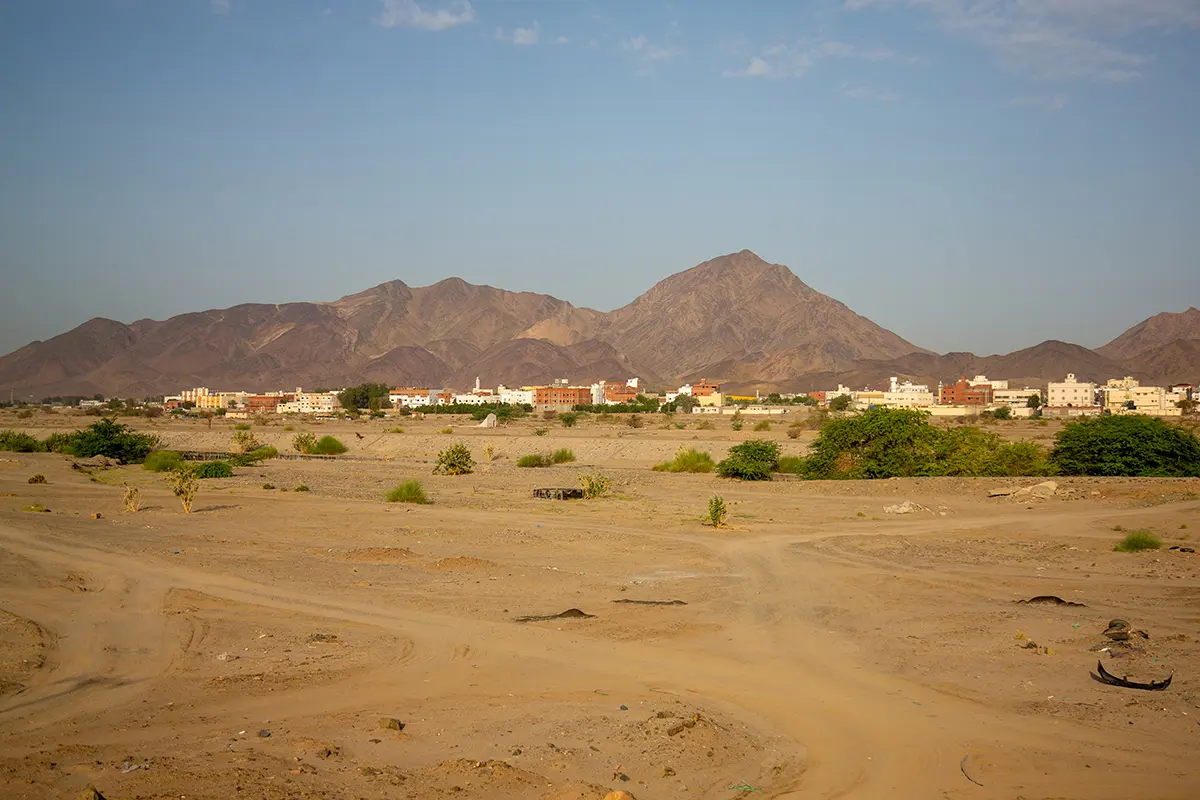
Wadi Fatimah is the wide green valley you cross on the road between Jeddah and Makkah, near al-Jumum. Most pilgrims see it from a car window without registering it. Under an older name it is one of the most important places in the whole story of the Prophet's return to Makkah.
That older name is Marr al-Zahran. If you have read the seerah, you have read about this valley.
The valley itself
Wadi Fatimah runs roughly 210 km, east to west, across Makkah Province. It starts in the high Sarat mountains near Taif and ends at the Red Sea near the al-Khumra district in the south of Jeddah, passing through the governorates of Taif, al-Jumum and Jeddah on the way. Those figures are from Saudipedia, the Saudi national encyclopaedia.
Its importance is simple and has nothing to do with scenery: it has water. In this part of Arabia a valley with reliable water and grazing is not a pretty feature of the landscape. It is infrastructure. Caravans planned around it. Armies planned around it. Pilgrim roads bent to reach it.
That is why the valley is full of history rather than monuments.
Marr al-Zahran, and the night of ten thousand fires
In the older books the valley is called Marr al-Zahran, and sometimes Batn Marr. It is the same place.
In Ramadan of the eighth year after the Hijrah, the Prophet ﷺ left Madinah for Makkah with an army the sources put at around ten thousand. The conquest of Makkah that followed is established history and is referred to in the Qur'an and the hadith literature. What historians and the seerah writers record about this valley is the stage just before it.
Historical sources record that the army halted at Marr al-Zahran, and that the Prophet ﷺ ordered every man to light a fire. Thousands of fires burned across the valley floor at once. Quraysh had no idea an army was that close, and their scouts, Abu Sufyan among them, came out to look and saw the whole valley lit up.
It worked. Makkah was taken with almost no fighting. Something that could have been a massacre became, in the end, an entry.
Two notes on evidence, because they matter. The conquest itself is established. The detail of the campsite and the fires comes from the seerah and history literature, which is strong material but a different class of proof from an authenticated hadith. And nobody today can point to the exact patch of ground where a particular fire burned. The valley is 210 km long.
What is documented in the valley
Saudipedia records several things about Wadi Fatimah that are worth knowing:
- It was one of the historical stations of the Hajj, a place caravans stopped.
- It holds rock drawings and inscriptions in several scripts, from the pre-Islamic period and the early Islamic centuries.
- It gained lasting significance after the Hijrah and the conquest of Makkah, and a mosque was later built at a site connected with the Prophet's stay there.
On that last point we will be careful. Saudipedia connects a mosque site in the valley with the Prophet's stay before he went on to Makkah. We are not able to verify from primary sources exactly which building stands there now, what condition it is in, or whether visitors can enter it. So we are reporting the connection and not dressing it up as a visitable Ziyarat site. If someone tells you there is a definite, marked spot, ask them what their source is.
Al-Jumum and the Syrian pilgrim road
The town of al-Jumum sits in this valley, and it was a real node on the pilgrim network. Saudipedia describes it as lying on the Shami Hajj road, the route used by pilgrims coming down from Syria, and as a meeting point for pilgrim caravans, traders and Arabs travelling to perform Hajj.
Among the surviving remains of the Makkah to Madinah pilgrim route is a pond at al-Jumum roughly a hundred metres across. That is a serious piece of engineering. A basin that size was not built for a village. It was built to water a caravan.
This is the useful way to think about Wadi Fatimah. Not one site with a fence around it, but a corridor that carried people for centuries.
The historic pilgrimage roads, briefly
Several great roads fed Makkah, and their names still appear on heritage lists:
- Darb Zubaydah, the Kufa road from Iraq, with its wells, pools and staging posts. Its famous water project is covered in our article on Ayn Zubaydah.
- The Shami road from Syria, running down through the Hijaz past al-Juhfah and through this valley.
- The Egyptian road, arriving by land and sea on the Red Sea side.
- The Yemeni road from the south, which is why Yalamlam is a miqat.
- The Makkah to Madinah road itself, the one the Prophet ﷺ travelled on the Hijrah. See our piece on the Hijrah route.
Wadi Fatimah sat where several of these came together, or near enough to matter.
What you will actually see today
Farms. Palm groves. Greenhouses. Small towns. A busy road.
Wadi Fatimah is one of the most agriculturally productive areas near Makkah, and it looks like it. If you are expecting an empty desert wadi with an atmosphere, you will be surprised by how ordinary and how populated it is.
There is no ticketed heritage site, no visitor centre and no marked trail that we can confirm. What there is, is a valley you can cross while knowing what happened in it. For many people that is enough, and it costs nothing extra because you are driving through anyway.
Is Wadi Fatimah part of Hajj or Umrah?
No. It is not part of either. It is not a miqat. No prayer is prescribed there, and there is no authentic report of a reward for visiting the valley.
It is history, and history is worth knowing. It is not a rite, and nobody should tell you it is.
Fitting it into a journey
The sensible way to see Wadi Fatimah is on a road you were already taking.
The Jeddah to Makkah road runs through this country, so almost every pilgrim arriving at Jeddah airport crosses it on the way in, usually without knowing. If you are landing at Jeddah, our Jeddah airport to Makkah transfer page gives the fixed fares, and the prices and tips guide covers timing, the Hajj terminal and what to expect at arrival.
The Makkah to Madinah road also runs up this side. If you want a driver who will slow down and point things out rather than treat it as a race, say so when you book. Our Makkah to Madinah private car page has the fares by vehicle size.
Related places
- Usfan — another watering station on the old northern road.
- Al-Hudaybiyah — west of Makkah, where the treaty was made two years before the conquest.
- Rabigh — the modern miqat on the Syrian and Egyptian road.
- Makkah Ziyarat guide — the sites inside and around the city, with the evidence for each one set out honestly.
Accuracy note
The length of Wadi Fatimah, its course, the governorates it crosses, its status as a historical Hajj station, the rock inscriptions, the al-Jumum pond and the position of al-Jumum on the Shami Hajj road are taken from Saudipedia, the Saudi national encyclopaedia. The identification of Wadi Fatimah with the historic Marr al-Zahran, and the account of the army halting there and lighting fires before the conquest of Makkah in Ramadan 8 AH, come from the seerah and history literature; the conquest itself is established, the campsite detail is historical reporting. We do not name a precise campsite because none can be verified. We give no opening hours, prices or access rules for any site in the valley because we have not verified any. Content verified August 2026. If something here is wrong or out of date, tell us.
Frequently asked questions
Planning a Saudi trip?
Pre-book a private car, find a stay, or ask us anything on WhatsApp.
Last updated: 9 October 2026·Sources reviewed by the Wadana Go editorial team.